
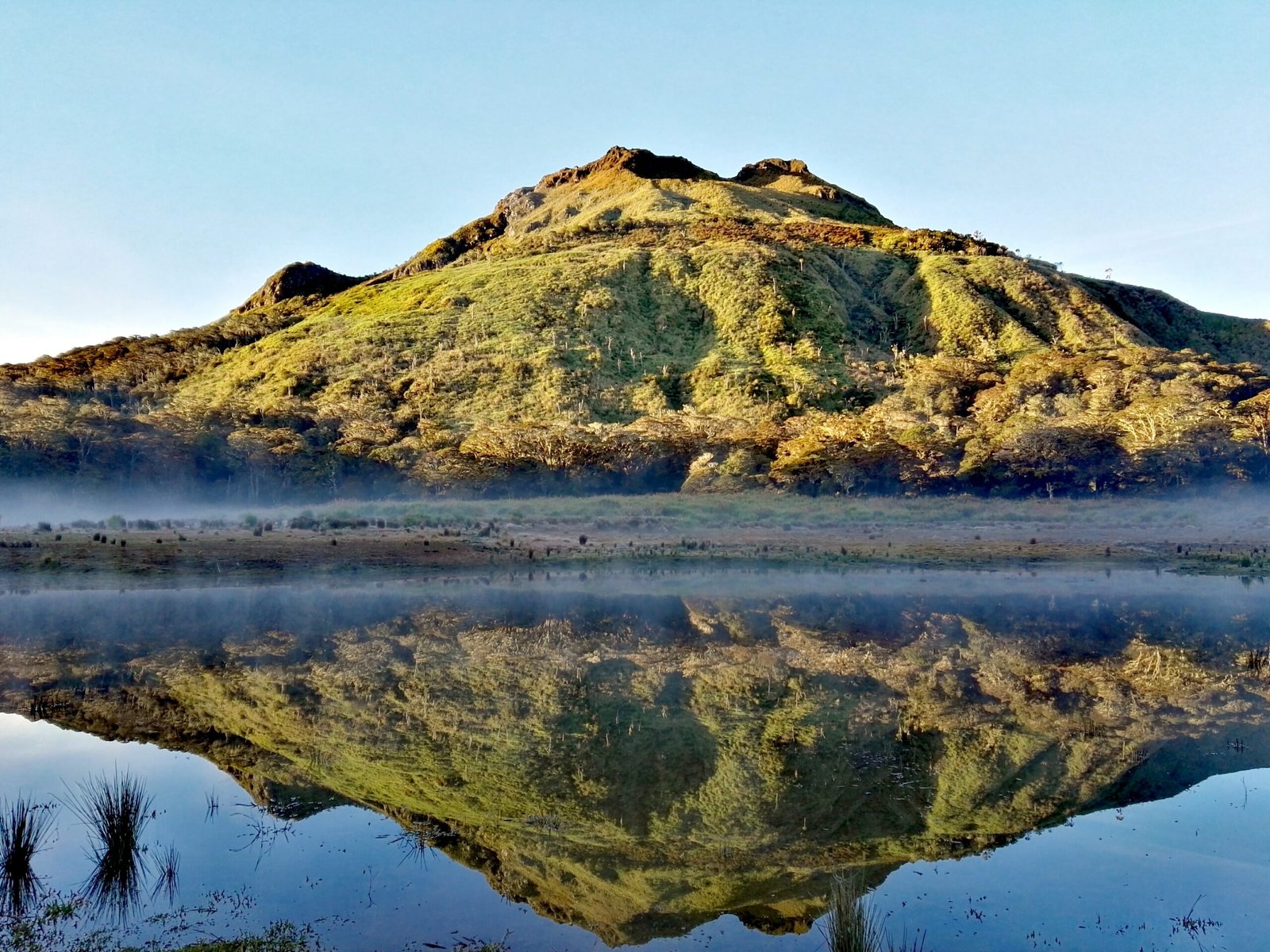
Introduction to Mount Apo Mountain
Mount Apo is one of the most famous and remarkable mountains in Southeast Asia. Located on the island of Mindanao in the southern Philippines, Mount Apo is recognized as the highest mountain in the Philippine archipelago. Rising approximately 2,954 meters (9,692 feet) above sea level, this impressive natural landmark attracts nature lovers, researchers, photographers, and mountain enthusiasts from different parts of the world.
Known for its extraordinary landscapes, rich biodiversity, volcanic features, and cultural importance, Mount Apo represents an important part of the Philippines’ natural heritage. Its slopes contain tropical forests, moss-covered trees, grasslands, volcanic rocks, lakes, rivers, and geothermal features. These different environments create habitats for numerous plants and animals, including rare and endemic species.
Mount Apo is more than a geographical landmark. It is also a culturally significant mountain that has deep connections with Indigenous communities living in the surrounding region. For generations, local communities have considered the mountain a sacred place and an important source of natural resources.
The mountain is protected as part of Mount Apo Natural Park, which was established to preserve its remarkable ecosystems and natural landscapes. Its importance extends beyond tourism because its forests contribute to water conservation, climate regulation, soil protection, and wildlife preservation.
This comprehensive guide explores Mount Apo Mountain, including its location, geographical features, geological history, biodiversity, climate, cultural heritage, tourism opportunities, environmental importance, and conservation challenges.
1. Where Is Mount Apo Located?
Mount Apo is located on Mindanao, the second-largest island in the Philippines. It lies in the southern part of the country, near the administrative areas associated with Davao City, Davao del Sur, and Cotabato.
Its geographical position makes it an important natural landmark in the southern Philippines. The mountain dominates the surrounding landscape and can be seen from several communities and locations in the region under suitable weather conditions.
Mindanao is known for its diverse geography, which includes tropical forests, agricultural plains, coastal areas, rivers, lakes, and mountain ranges. Mount Apo stands out among these geographical features because of its considerable elevation and volcanic origins.
The surrounding region contains numerous communities whose lives are connected with the mountain’s natural environment. Forests, rivers, and agricultural lands provide important resources for local populations.
Mount Apo is also geographically important because its elevated slopes influence local weather patterns and contribute to the formation and distribution of water resources.
Its location makes it an important destination for environmental research, biodiversity studies, and nature-based tourism.
2. Height and Physical Characteristics of Mount Apo
Mount Apo reaches an elevation of approximately 2,954 meters above sea level, making it the highest mountain in the Philippines.
Its impressive height gives it a distinctive appearance compared with many other mountains in the country. The mountain has a broad volcanic structure, several prominent peaks, and extensive slopes that contain different geological and ecological environments.
Unlike mountains with sharp, narrow summit ridges, Mount Apo has a relatively broad upper region with volcanic formations and rocky landscapes.
Some of its most recognizable physical features include:
- Extensive mountain slopes.
- Volcanic rock formations.
- Geothermal vents.
- Forest-covered valleys.
- High-altitude grasslands.
- Mountain lakes.
- Steep ridges and rocky areas.
- Natural streams and waterfalls.
The summit region offers a different environment from the tropical lowlands below. Temperatures become cooler with increasing elevation, while vegetation changes according to altitude, rainfall, and local environmental conditions.
These differences create several ecological zones within one mountain system.
3. Geological Formation of Mount Apo
Mount Apo has volcanic origins and is generally classified as a stratovolcano. Stratovolcanoes are large volcanic structures formed through repeated geological processes involving volcanic materials, including lava, ash, and other deposits.
Over long periods, these materials contribute to the development of a mountain’s overall shape and structure.
Mount Apo is associated with the volcanic geology of Mindanao. Its formation reflects the complex geological history of the Philippine archipelago, which lies in a tectonically active region.
The Philippines is located near several major tectonic boundaries. Movement within these geological systems has contributed to the formation of mountains, volcanic structures, earthquakes, and other geological features.
Mount Apo contains evidence of its volcanic history through its rocks, summit structures, and geothermal activity.
Although there are no confirmed historical eruptions recorded for Mount Apo, geothermal vents and sulfurous emissions demonstrate that volcanic processes remain relevant to the mountain’s geological environment.
Scientists study such features to understand volcanic activity, geological development, and the long-term evolution of the surrounding landscape.
4. Mount Apo as the Highest Mountain in the Philippines
Mount Apo holds a special position in Philippine geography because it is the country’s highest peak.
Its elevation of approximately 2,954 meters makes it an important national landmark and a significant symbol of the natural beauty of Mindanao.
The mountain is often called the Grandfather of Philippine Mountains, reflecting its impressive height and cultural significance.
Its geographical importance attracts attention from students, researchers, geographers, environmental organizations, and visitors interested in the natural environment of the Philippines.
Mount Apo also demonstrates the remarkable geographical diversity of the country. Although the Philippines is widely known for its beaches and islands, it also contains extensive mountain systems, volcanic landscapes, tropical forests, and highland ecosystems.
The mountain reminds people that the country’s natural heritage extends far beyond its coastal attractions.
5. Mount Apo Natural Park
Mount Apo Natural Park is one of the most important protected natural areas in the Philippines.
The mountain was declared a national park in 1936. Later legislation strengthened its protected status and established additional arrangements for the conservation and management of the area.
Republic Act No. 9237, known as the Mount Apo Protected Area Act of 2003, provides an important legal framework for protecting the natural park.
The protected landscape includes mountain forests, rivers, wetlands, volcanic features, wildlife habitats, and other environmentally important areas.
The park supports biodiversity and provides valuable ecosystem services to surrounding communities.
Its forests help regulate water flows, protect watersheds, reduce soil erosion, and maintain habitats for native wildlife.
Mount Apo Natural Park is also important for scientific research and environmental education.
Its protection demonstrates the importance of preserving natural areas that contain unique ecosystems and significant cultural heritage.
6. Climate and Weather of Mount Apo
Mount Apo experiences a tropical climate influenced by its geographical location, elevation, and surrounding environmental conditions.
The lower slopes generally experience warmer temperatures and conditions associated with tropical environments. Higher elevations are cooler, and the weather can change significantly throughout the day.
Clouds, rainfall, wind, and temperature differences influence the mountain’s natural environment.
Rainfall is important for maintaining the mountain’s forests, streams, rivers, and other ecosystems.
The higher slopes often experience mist and cloud cover, particularly when moist air moves upward from surrounding lowland areas.
These conditions help create the cool, humid environment that supports mosses, lichens, ferns, and other mountain vegetation.
Weather conditions can vary between different sides of the mountain because of differences in elevation, terrain, and exposure to prevailing weather systems.
The mountain’s climate also influences its biodiversity. Plants and animals living at lower elevations experience different environmental conditions from species found near the summit.
This variety of climates contributes to Mount Apo’s ecological richness.
7. Forests and Vegetation of Mount Apo
One of the most important features of Mount Apo is its diverse vegetation.
The mountain contains several forest types that change with elevation and environmental conditions.
At lower elevations, tropical forests contain large trees, dense vegetation, climbing plants, and numerous other plant species.
As elevation increases, the forest structure gradually changes. Trees become adapted to cooler and wetter conditions, while mosses and lichens become increasingly common.
Near the highest elevations, vegetation becomes shorter and more specialized because of exposure to wind, lower temperatures, and rocky ground.
The major vegetation zones include:
Lowland Evergreen Forest
The lower slopes contain tropical forest ecosystems with large trees and dense vegetation.
These forests provide food, shelter, and breeding habitats for many animals.
They also contribute to watershed protection and help maintain the natural water cycle.
Lower Montane Forest
At higher elevations, tropical vegetation gradually changes into montane forest.
This zone contains different tree species, ferns, mosses, and other plants adapted to cooler environmental conditions.
The lower montane forest is an important ecological transition between lowland tropical ecosystems and higher mountain forests.
Upper Montane and Mossy Forest
The upper mountain contains cool and humid forest environments.
Trees are frequently covered with mosses, lichens, and other moisture-loving plants.
These forests create distinctive landscapes and provide habitats for specialized wildlife.
Subalpine Vegetation
Near the summit, vegetation becomes shorter and more adapted to exposed conditions.
Grasslands, shrubs, and other high-altitude plants occur in areas where tall forests cannot easily survive.
Each vegetation zone contributes to the ecological importance of Mount Apo.
8. Biodiversity of Mount Apo
Mount Apo is internationally recognized for its rich biodiversity.
Its different elevations, forest types, climate conditions, and geographical features create habitats for a wide variety of plants and animals.
The mountain supports many species that are endemic to the Philippines or have restricted geographical distributions.
Its biodiversity includes mammals, birds, reptiles, amphibians, insects, and numerous plant species.
The natural environment is particularly important because it provides habitats for species that depend on relatively undisturbed forests.
Conservation organizations and researchers continue to study the area’s biodiversity to understand species distributions, ecological relationships, and environmental threats.
Mount Apo demonstrates how a single mountain can support many different ecosystems.
9. Philippine Eagle: An Important Wildlife Species
The Philippine eagle is one of the most recognizable animals associated with Mount Apo.
It is among the largest and most impressive forest eagles in the world and is the national bird of the Philippines.
The species is scientifically known as Pithecophaga jefferyi.
The Philippine eagle depends on large forest habitats, where it finds suitable nesting areas and food sources.
Its presence highlights the ecological importance of Mount Apo’s remaining forests.
However, habitat destruction and other human-related pressures have placed the species under serious conservation concern.
Protecting the forests of Mount Apo is therefore important for maintaining suitable habitats for this remarkable bird.
The Philippine eagle also represents the wider importance of forest conservation in the Philippines.
Its survival depends on long-term environmental protection, scientific research, and cooperation between communities and conservation organizations.
10. Other Animals Found on Mount Apo
The biodiversity of Mount Apo extends far beyond the Philippine eagle.
Its forests and surrounding habitats support different types of mammals, birds, reptiles, amphibians, and insects.
Some animals associated with the wider mountain ecosystem include:
- Philippine deer.
- Philippine long-tailed macaques.
- Philippine warty pigs.
- Various civet species.
- Forest birds.
- Native amphibians.
- Reptiles.
- Butterflies.
- Numerous insects.
Different species occupy different ecological zones.
Some animals live mainly in lowland forests, while others are adapted to cooler montane environments.
Birds are particularly important because they help maintain forest ecosystems through seed dispersal, pollination, and interactions with other organisms.
Mammals contribute to ecological processes such as vegetation regulation and nutrient cycling.
Amphibians are also valuable indicators of environmental conditions because many species are sensitive to changes in moisture, temperature, and habitat quality.
The presence of different animal groups demonstrates the importance of maintaining connected natural habitats across the mountain.
11. Plant Diversity and Endemic Species
Mount Apo is also famous for its remarkable plant diversity.
Its forests contain many types of trees, flowering plants, ferns, mosses, orchids, shrubs, and other vegetation.
Some plant species are endemic to Mindanao or have highly restricted geographical distributions.
Endemic species are plants or animals naturally found in a particular geographical area and nowhere else in the world.
This makes Mount Apo especially important for botanical research and conservation.
Researchers have documented many interesting plant species in the mountain ecosystem, including plants associated with the mountain’s name.
Examples include Medinilla apoensis and other specialized highland plants.
The different vegetation zones provide opportunities for plants with different environmental requirements to grow within the same mountain landscape.
Some species prefer humid forests, while others are adapted to exposed high-altitude environments.
Protecting these plants requires maintaining suitable habitats and preventing unnecessary destruction of natural vegetation.
12. Lake Venado: A Beautiful Mountain Lake
Lake Venado is one of the best-known natural attractions associated with Mount Apo.
Located in the mountain’s highland environment, the lake is famous for its scenic surroundings and peaceful atmosphere.
Its landscape includes mountain vegetation, open areas, and views of the surrounding volcanic terrain.
The lake is an important feature of the mountain’s natural environment and is often associated with the region’s outdoor tourism.
Lake Venado is also valued for its ecological importance.
Mountain lakes and wetlands provide habitats for specialized organisms and contribute to local water systems.
The lake’s surroundings demonstrate the relationship between mountain forests, water resources, and high-altitude ecosystems.
Its natural beauty makes it one of the memorable geographical features of Mount Apo.
13. Volcanic Features and Geothermal Activity
Mount Apo contains several volcanic and geothermal features that reveal its geological history.
One of its most interesting characteristics is the presence of vents that release steam and sulfurous gases.
These features are associated with geothermal processes occurring beneath the mountain.
Geothermal activity develops when heat from the Earth’s interior influences underground water and gases.
In volcanic regions, heated groundwater may produce steam and other emissions through natural openings in the ground.
Mount Apo’s geothermal features are important for geological research because they provide information about the mountain’s internal processes.
The mountain is generally described as dormant or potentially active, but it should not be considered an ordinary inactive mountain.
Its volcanic environment requires continued scientific observation and appropriate environmental management.
The combination of forests, volcanic rocks, and geothermal features gives Mount Apo a distinctive natural character.
14. Rivers and Water Resources of Mount Apo
Mount Apo plays an important role in the water systems of southern Mindanao.
Its forests and elevated slopes receive rainfall that contributes to streams, rivers, and surrounding watersheds.
A watershed is an area of land where rainfall and other water sources drain toward a common river, lake, or water system.
Healthy mountain forests are essential for maintaining these natural drainage systems.
Trees and vegetation help slow the movement of rainwater across the ground.
Their roots stabilize soil and reduce erosion.
Forest ecosystems also help regulate the release of water into rivers and streams.
The water resources connected with Mount Apo support natural habitats and contribute to the needs of surrounding communities.
Protecting the mountain’s watersheds is therefore an important part of environmental conservation.
15. Waterfalls and Natural Attractions
The Mount Apo region contains various waterfalls, streams, rivers, and other natural attractions.
These features contribute to the area’s scenic beauty and ecological importance.
Waterfalls develop where rivers flow over changes in elevation, rocky formations, or steep sections of terrain.
In mountainous environments, waterfalls are often connected with forest ecosystems and natural drainage systems.
The surrounding vegetation provides habitats for insects, birds, amphibians, and other wildlife.
Some waterfalls in the wider Mount Apo region are also valued as recreational and tourism destinations.
However, their environmental importance should not be overlooked.
Keeping rivers and waterfalls clean helps protect aquatic ecosystems and maintain the quality of natural water resources.
16. Indigenous Communities and Cultural Heritage
Mount Apo has deep cultural importance for Indigenous communities in Mindanao.
Several Indigenous groups have historical and cultural connections with the mountain and its surrounding landscapes.
These include communities associated with the Bagobo, Manobo, Ubo, Ata, and other Indigenous peoples.
For many of these communities, Mount Apo is not simply a geographical feature.
It is a sacred landscape connected with traditional beliefs, ancestral history, cultural identity, and spiritual practices.
The mountain has long provided resources such as water, plants, food, and materials used in traditional life.
Indigenous knowledge also contributes to understanding local ecosystems and environmental changes.
Traditional practices may contain valuable information about forest management, biodiversity, and the sustainable use of natural resources.
Respecting Indigenous communities and their cultural rights is an essential part of protecting Mount Apo.
Conservation efforts should recognize that natural heritage and cultural heritage are closely connected.
17. The Meaning and Origin of the Name Mount Apo
The name Mount Apo has cultural and historical associations.
One commonly repeated explanation connects the name with the Filipino word Apo, which can refer to an elder, respected person, master, or grandfather.
Another traditional account connects the name with a nobleman named Apong.
According to the story, Apong died while attempting to resolve a conflict involving two men seeking to marry his daughter.
These stories are part of the mountain’s cultural history and demonstrate how geographical landmarks often become connected with local traditions and oral histories.
The mountain is also known by the name Apo Sandawa in Indigenous cultural contexts.
This name reflects its spiritual significance among communities connected with the mountain.
Understanding these traditions helps visitors appreciate Mount Apo as more than a natural tourist attraction.
18. Historical Exploration of Mount Apo
Mount Apo has attracted explorers and researchers for generations.
Early attempts to reach its summit were unsuccessful.
Historical accounts describe unsuccessful expeditions during the nineteenth century, followed by a successful expedition led by Don Joaquin Rajal in October 1880.
This achievement became an important moment in the history of mountain exploration in the Philippines.
The mountain later attracted botanists, geographers, naturalists, and other researchers interested in its natural features.
Scientific studies helped improve understanding of its vegetation, wildlife, geology, and geographical importance.
Mount Apo gradually became recognized as one of the most important natural landmarks in the country.
Its historical importance is connected with exploration, scientific discovery, environmental protection, and cultural heritage.
19. Mount Apo National Park: Historical Protection
The Philippine government recognized the environmental importance of Mount Apo during the twentieth century.
On May 9, 1936, the mountain was declared a national park through a presidential proclamation.
This decision represented an important step toward preserving its forests, wildlife, and natural landscapes.
Further government measures strengthened the area’s protected status over time.
Republic Act No. 9237, passed in 2003, established the Mount Apo Protected Area framework.
The park is now managed through protected-area institutions and conservation policies.
These arrangements aim to balance environmental protection, local community interests, scientific research, and appropriate tourism.
The history of Mount Apo’s protected status demonstrates the growing recognition of biodiversity conservation in the Philippines.
20. Tourism and the Importance of Mount Apo
Mount Apo is one of the Philippines’ most recognized mountain tourism destinations.
Its natural scenery, ecological diversity, cultural importance, and impressive elevation attract visitors with different interests.
Some people are interested in mountain landscapes, while others study its plants, animals, geological features, and Indigenous heritage.
Tourism can create economic opportunities for surrounding communities through accommodation, transportation, guiding services, and other local businesses.
However, tourism also creates responsibilities.
Visitors must respect environmental regulations and avoid activities that damage natural habitats.
Responsible tourism supports both local communities and long-term conservation.
The future of tourism at Mount Apo depends on maintaining a balance between visitor experiences and environmental protection.
21. Hiking and Mountaineering Significance
Mount Apo is an important destination in Philippine mountaineering.
Its height and geographical significance make it a recognized mountain among outdoor enthusiasts.
The mountain contains several established access routes, although route availability and regulations can change.
Its terrain includes forest paths, steep slopes, rocky areas, and high-altitude environments.
Mountain conditions can be challenging because of changing weather, rainfall, low temperatures, and uneven ground.
Climbing activities should follow current protected-area regulations and the guidance of authorized local authorities.
Visitors should understand that Mount Apo is a protected natural environment rather than an unrestricted recreational area.
Respecting local rules helps reduce environmental impacts and supports the safety of everyone involved.
22. Photography and Natural Scenery
Mount Apo offers remarkable scenery for nature photography.
Its landscapes include tropical forests, mist-covered slopes, volcanic rock formations, mountain lakes, and highland grasslands.
These different environments provide a wide variety of natural subjects.
Photographers interested in landscapes can appreciate the contrast between green forests and exposed volcanic terrain.
Wildlife photographers may also find the mountain interesting because of its diverse bird and animal populations.
Clouds and changing weather conditions frequently create different visual appearances across the mountain.
Photography can also help raise awareness about environmental conservation.
Images of native wildlife, forest ecosystems, and natural landscapes can communicate the importance of protecting the mountain.
Responsible photography should always respect wildlife and avoid disturbing sensitive habitats.
23. Best Time to Visit Mount Apo
The best time to visit Mount Apo depends on weather conditions, official access arrangements, and the type of experience a visitor wants.
The Philippines generally has a tropical climate with seasonal differences in rainfall.
Weather conditions on the mountain can differ considerably from those in nearby cities.
Periods with comparatively lower rainfall may offer more favorable conditions for outdoor activities.
However, even during relatively dry periods, mountain weather can change unexpectedly.
Rainfall can make trails slippery and increase environmental risks.
Before planning a visit, people should check current information from authorized park management offices and local government authorities.
Visitors should never assume that the mountain is open simply because a particular month is commonly associated with tourism.
Official access requirements and environmental restrictions should always take priority.
24. Environmental Importance of Mount Apo
Mount Apo is one of the most environmentally important mountain ecosystems in the Philippines.
Its forests perform several functions that benefit both nature and human communities.
Watershed Protection
Mountain forests help protect watersheds and maintain natural water systems.
Vegetation slows surface runoff and helps stabilize the soil.
Biodiversity Conservation
The mountain provides habitats for native, endemic, and threatened species.
Its different ecological zones allow many organisms to survive within a relatively compact geographical region.
Climate Regulation
Forests absorb carbon dioxide and store carbon in vegetation and soil.
They also influence local temperature, humidity, and rainfall patterns.
Soil Conservation
Tree roots and ground vegetation help hold soil together.
Healthy forests reduce erosion and protect the stability of mountain landscapes.
Ecological Research
Mount Apo provides valuable opportunities for scientists studying tropical mountain ecosystems, volcanic landscapes, biodiversity, and environmental change.
These functions demonstrate why protecting Mount Apo is important for both present and future generations.
25. Threats Facing Mount Apo
Despite its protected status, Mount Apo faces several environmental challenges.
Human activities and environmental changes can affect the mountain’s forests, wildlife, and natural resources.
Some important challenges include:
Deforestation
The removal of natural vegetation can reduce wildlife habitats and weaken the mountain’s ecological systems.
Deforestation may also increase soil erosion and affect water quality.
Agricultural Expansion
Changes in land use can place pressure on natural forest areas.
Agricultural activities that are not properly managed may contribute to habitat fragmentation.
Forest Fires
Fires can damage vegetation, destroy animal habitats, and change soil conditions.
Mountain ecosystems may take a long time to recover after serious fire damage.
Illegal Wildlife Activities
Hunting and other unauthorized activities can threaten native wildlife populations.
Protecting rare animals requires effective monitoring and enforcement.
Pollution
Waste left by visitors or nearby human activities can affect soil, water, and wildlife.
Proper waste management is essential for maintaining environmental quality.
Climate Change
Changes in temperature and rainfall may affect the distribution of plants and animals.
Species adapted to cooler high-altitude environments may be particularly sensitive to changing climate conditions.
Addressing these challenges requires cooperation between government institutions, Indigenous communities, researchers, local residents, and visitors.
26. Conservation Efforts at Mount Apo
Conservation is essential for protecting Mount Apo’s ecological and cultural heritage.
Government agencies, protected-area management institutions, local communities, and environmental organizations contribute to the protection of the mountain.
Important conservation priorities include:
- Protecting remaining natural forests.
- Restoring damaged habitats.
- Preventing illegal hunting.
- Monitoring threatened wildlife.
- Supporting scientific research.
- Maintaining healthy watersheds.
- Promoting environmental education.
- Improving waste management.
- Respecting Indigenous rights.
- Regulating tourism activities.
The Mount Apo Protected Area Management Board plays an important role in coordinating protected-area management.
Philippine environmental laws also provide a legal framework for conserving biodiversity and natural habitats.
Long-term conservation requires more than government policies.
Local communities must have meaningful opportunities to participate in environmental decision-making.
When communities benefit from sustainable natural-resource management, conservation efforts can become stronger and more effective.
27. Mount Apo and Sustainable Tourism
Sustainable tourism is an important concept for the future of Mount Apo.
It means organizing tourism activities in ways that protect natural environments while creating positive opportunities for local people.
Uncontrolled tourism can create environmental pressure through waste, habitat disturbance, and excessive visitor activity.
Sustainable tourism attempts to reduce these negative effects.
Important principles include respecting local culture, following park regulations, avoiding pollution, and supporting responsible local businesses.
Tourism operators and visitors should recognize that Mount Apo is a protected natural ecosystem.
The mountain’s value does not depend only on the number of visitors it receives.
Its long-term importance comes from its biodiversity, geological features, cultural heritage, and ecological functions.
28. Educational and Scientific Importance
Mount Apo is a valuable natural laboratory for scientific research.
Its different elevations and ecosystems provide opportunities to study biodiversity, ecology, geology, and climate.
Researchers can investigate how vegetation changes with altitude and how different animal species adapt to environmental conditions.
The mountain also offers opportunities for studying volcanic structures and geothermal processes.
Environmental scientists can examine how forests influence watersheds and how land-use changes affect ecosystems.
Students can learn about tropical biodiversity, protected areas, Indigenous knowledge, and environmental sustainability through the example of Mount Apo.
The mountain demonstrates the close relationship between geological processes, biological diversity, and human communities.
29. Mount Apo Compared with Other Famous Mountains
Mount Apo is different from many internationally recognized mountains because of its tropical location and distinctive ecological characteristics.
Mount Everest, located in the Himalayas, is the world’s highest mountain above sea level.
Mount Kilimanjaro in Tanzania is famous for its isolated volcanic massif and high-altitude ecological zones.
Mount Fuji in Japan is recognized for its symmetrical volcanic shape and cultural importance.
Mount Apo is considerably lower than these mountains, but it holds a unique position as the highest peak in the Philippines.
Its importance comes from its combination of tropical biodiversity, volcanic geology, Indigenous heritage, and protected natural landscapes.
Comparing these mountains demonstrates that geographical importance is not determined by elevation alone.
Each mountain has its own geological, environmental, and cultural characteristics.
30. Interesting Facts About Mount Apo
Mount Apo has many fascinating characteristics that make it one of the most interesting mountains in Southeast Asia.
Here are some important facts:
- Mount Apo is located on Mindanao in the southern Philippines.
- It is the highest mountain in the Philippine archipelago.
- Its elevation is approximately 2,954 meters above sea level.
- Mount Apo is a volcanic mountain.
- It is generally classified as a stratovolcano.
- It contains geothermal vents that release steam and sulfurous gases.
- It has no confirmed historical eruption record.
- The mountain was declared a national park in 1936.
- It is part of Mount Apo Natural Park.
- Republic Act No. 9237 strengthened its protected-area status.
- The mountain contains several different forest ecosystems.
- Its upper elevations contain mossy forests and high-altitude vegetation.
- The Philippine eagle is among its best-known wildlife species.
- Lake Venado is one of its famous natural attractions.
- Mount Apo has deep cultural importance for Indigenous communities.
- Its forests contribute to important watershed systems.
- The mountain attracts researchers and nature enthusiasts.
- Its biodiversity includes many native and endemic species.
- The mountain has a long history of exploration.
- It is one of the most important natural landmarks in the Philippines.
31. Economic Importance of Mount Apo
Mount Apo contributes to the economy of surrounding areas through its natural resources and tourism potential.
Local communities benefit from different economic activities connected with the mountain and its surrounding landscape.
Agriculture is important in many areas around the mountain, while tourism creates opportunities for local services and businesses.
Nature-based tourism can support transportation providers, accommodation businesses, local guides, food businesses, and other community enterprises.
The mountain’s watersheds also provide important environmental benefits that support agriculture and other activities.
However, economic development should not come at the expense of environmental protection.
Unsustainable land use can damage the natural systems that support local livelihoods.
A balanced approach can help communities benefit from the mountain while maintaining its ecological health.
32. Mount Apo and Local Communities
The communities surrounding Mount Apo have important relationships with the mountain.
For some residents, it is connected with traditional livelihoods, agricultural activities, cultural practices, and community identity.
Local knowledge can help explain seasonal changes, plant characteristics, wildlife behavior, and environmental conditions.
Community involvement is especially important in protected-area management.
People who live near natural areas often have valuable knowledge about local environmental challenges.
Conservation programs that recognize local experience and respect Indigenous rights can create stronger relationships between communities and environmental institutions.
The future of Mount Apo depends partly on ensuring that local people are included in decisions affecting their traditional landscapes.
33. The Role of Mount Apo in Philippine National Identity
Mount Apo holds an important position in the natural identity of the Philippines.
Its impressive height, remarkable landscapes, and ecological importance make it a recognized symbol of the country’s geographical diversity.
For many Filipinos, the mountain represents the natural beauty of Mindanao.
Its cultural connections also make it meaningful beyond its physical appearance.
The mountain demonstrates the importance of protecting national natural heritage.
It reminds people that forests, wildlife, mountains, and Indigenous traditions are valuable parts of a country’s identity.
Mount Apo is therefore important not only as a tourist destination but also as a symbol of environmental responsibility.
34. Future of Mount Apo
The future of Mount Apo depends on effective environmental management, scientific research, community participation, and responsible tourism.
Several priorities will influence the mountain’s long-term condition.
First, protecting natural forests will remain essential for maintaining biodiversity and healthy watersheds.
Second, endangered and endemic wildlife species require continued monitoring and suitable habitats.
Third, climate change research can help scientists understand how changing environmental conditions may influence mountain ecosystems.
Fourth, sustainable tourism policies can help reduce pressure on sensitive areas.
Finally, Indigenous communities must remain important partners in protecting the mountain’s cultural and natural heritage.
The long-term success of conservation efforts will depend on cooperation among government institutions, local communities, researchers, and visitors.
Mount Apo should be protected not only for its present natural beauty but also for the generations that will experience it in the future.
35. Why Mount Apo Is Worth Knowing About
Mount Apo is worth knowing about because it represents several important aspects of the natural world.
It is the highest mountain in the Philippines, a volcanic geological structure, a biodiversity hotspot, a protected natural area, and a culturally significant landscape.
Its forests support wildlife and provide important ecosystem services.
Its volcanic features help scientists understand the geological development of the region.
Its Indigenous heritage demonstrates the deep relationship between people and their natural surroundings.
The mountain also provides an important example of why environmental conservation matters.
Learning about Mount Apo helps people understand the value of protecting natural landscapes and respecting cultural traditions.
Conclusion
Mount Apo is one of the most extraordinary natural landmarks in the Philippines. Rising approximately 2,954 meters above sea level, it is the highest mountain in the Philippine archipelago and an important symbol of Mindanao’s geographical and ecological richness.
Its volcanic origins, diverse forest ecosystems, geothermal features, mountain lakes, and remarkable wildlife make it an important destination for scientific research and environmental education.
The mountain is also deeply connected with Indigenous communities whose traditions, history, and cultural identity are closely associated with its landscape.
Mount Apo Natural Park plays a vital role in protecting this natural and cultural heritage. Its forests support biodiversity, maintain watersheds, regulate local environmental conditions, and provide important resources for surrounding communities.
However, challenges such as deforestation, habitat destruction, pollution, forest fires, and climate change demonstrate why continued conservation efforts are necessary.
Protecting Mount Apo requires cooperation between government institutions, local communities, Indigenous peoples, scientists, environmental organizations, and responsible visitors.
Ultimately, Mount Apo is much more than the highest mountain in the Philippines. It is a valuable natural treasure that represents the relationship between geology, biodiversity, culture, and environmental sustainability.
Preserving this remarkable mountain will help ensure that its forests, wildlife, natural landscapes, and cultural heritage remain valuable parts of the Philippines for generations to come.
Frequently Asked Questions About Mount Apo
1. Where is Mount Apo located?
Mount Apo is located on Mindanao Island in the southern Philippines, near Davao City, Davao del Sur, and Cotabato.
2. How high is Mount Apo?
Mount Apo is approximately 2,954 meters (9,692 feet) above sea level.
3. Is Mount Apo the highest mountain in the Philippines?
Yes. Mount Apo is the highest mountain in the Philippine archipelago.
4. Is Mount Apo a volcano?
Yes. Mount Apo is a volcanic mountain generally classified as a stratovolcano.
5. Is Mount Apo an active volcano?
Mount Apo has no confirmed historical eruption record, but geothermal activity and sulfurous emissions are present. It is therefore important to recognize its volcanic nature.
6. When was Mount Apo declared a national park?
Mount Apo was declared a national park on May 9, 1936.
7. What is Mount Apo Natural Park famous for?
It is famous for its biodiversity, tropical forests, volcanic landscapes, mountain lakes, geothermal features, and cultural heritage.
8. What animals live on Mount Apo?
The mountain supports many animals, including native birds, mammals, reptiles, amphibians, and insects. The Philippine eagle is among its most famous wildlife species.
9. Is the Philippine eagle found on Mount Apo?
Yes. The forests of the Mount Apo region are important habitat for the Philippine eagle.
10. What is Lake Venado?
Lake Venado is a well-known mountain lake associated with Mount Apo and is recognized for its scenic highland surroundings.
11. Why is Mount Apo important to Indigenous communities?
Mount Apo has spiritual, cultural, historical, and ancestral importance for several Indigenous communities in Mindanao.
12. What type of forests are found on Mount Apo?
The mountain contains lowland evergreen forests, lower montane forests, upper montane or mossy forests, and high-altitude vegetation.
13. Why is Mount Apo important for biodiversity?
Its different elevations and habitats support numerous native, endemic, and threatened plant and animal species.
14. What are the major environmental threats to Mount Apo?
Important environmental challenges include deforestation, habitat loss, forest fires, pollution, illegal wildlife activities, and climate change.
15. Why should Mount Apo be protected?
Mount Apo should be protected because it contains valuable biodiversity, important watersheds, unique volcanic features, and significant Indigenous cultural heritage.
SEO Information
SEO Title: Mount Apo Mountain: Complete Guide to the Highest Peak in the Philippines
Meta Description: Discover Mount Apo Mountain in the Philippines, including its height, location, volcanic history, biodiversity, wildlife, Indigenous heritage, natural park, and conservation importance.
Focus Keyword: Mount Apo Mountain
Secondary Keywords:
- Mount Apo Philippines
- Highest Mountain in the Philippines
- Mount Apo Natural Park
- Mount Apo Height
- Mount Apo Location
- Mount Apo Volcano
- Mount Apo Biodiversity
- Mount Apo Wildlife
- Mount Apo National Park
- Lake Venado
- Mindanao Mountains
- Philippine Eagle Habitat
- Mountains in the Philippines
- Mount Apo Geography
- Mount Apo Conservation
Suggested URL Slug: mount-apo-mountain
Article Category: Mountains and Geography
Suggested Tags: Mount Apo, Philippines, Mindanao, Mountains, Natural Parks, Volcanoes, Biodiversity, Wildlife, Geography, Nature Conservation