
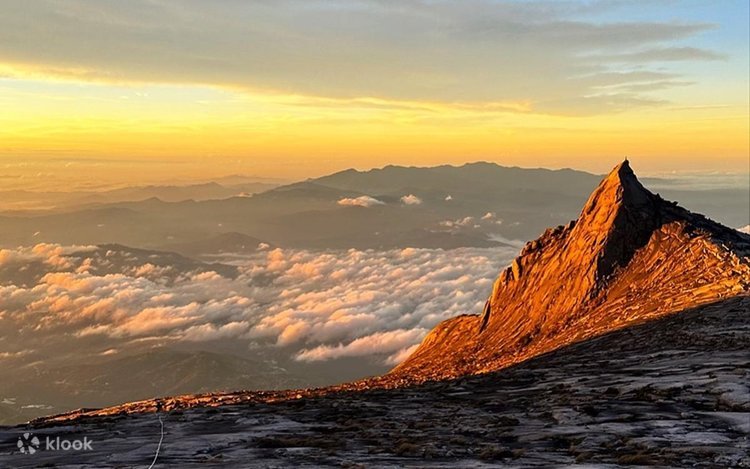
Introduction to Mount Kinabalu
Mount Kinabalu is one of the most famous natural landmarks in Southeast Asia and the highest mountain in Malaysia. Located in the state of Sabah on the island of Borneo, this magnificent mountain attracts thousands of visitors, nature lovers, researchers, photographers, and adventure enthusiasts every year. Rising approximately 4,095 meters (13,435 feet) above sea level, Mount Kinabalu is recognized for its impressive height, unique geological structure, extraordinary biodiversity, and beautiful mountain landscapes.
The mountain is situated within Kinabalu Park, a protected natural area that has gained international recognition for its ecological importance. The park is a UNESCO World Heritage Site and contains an exceptional variety of plants, animals, and natural habitats. Its landscapes range from tropical forests at lower elevations to alpine vegetation and rocky mountain terrain near the summit.
Mount Kinabalu is more than just a destination for mountain climbing. It is an important symbol of Sabah’s natural heritage, cultural identity, and environmental conservation. Its distinctive granite peaks, changing weather conditions, and rich ecosystems make it one of the most interesting mountains in the world.
For travelers searching for information about Mount Kinabalu, this complete guide explores its geographical location, history, geology, climate, biodiversity, climbing experience, tourism, cultural significance, and conservation efforts.
Where Is Mount Kinabalu Located?
Mount Kinabalu is located in the Malaysian state of Sabah, on the island of Borneo. Borneo is the third-largest island in the world and is shared by Malaysia, Indonesia, and Brunei.
The mountain stands within Kinabalu Park, approximately 90 kilometers from Kota Kinabalu, the capital city of Sabah. Its location makes it accessible to visitors traveling from different parts of Malaysia and international destinations.
The surrounding region is known for its tropical forests, traditional communities, agricultural landscapes, and diverse wildlife. The mountain dominates the surrounding landscape and can be seen from considerable distances when weather conditions are clear.
Kinabalu Park covers approximately 754 square kilometers and protects a wide range of natural environments. The park provides an important habitat for thousands of plant and animal species.
The nearest major town for visitors is Kundasang, a beautiful highland settlement known for its cool weather, agricultural farms, and views of Mount Kinabalu.
Height and Physical Features of Mount Kinabalu
Mount Kinabalu reaches approximately 4,095 meters above sea level, making it the highest mountain in Malaysia and one of the tallest peaks in Southeast Asia.
Its height creates several different ecological zones. The lower slopes are covered with tropical forests, while higher elevations contain montane forests, moss-covered vegetation, and alpine environments.
The upper mountain is characterized by enormous granite formations that create an impressive and unusual landscape. These rocky structures were shaped over geological time through natural processes.
The summit area includes several distinctive peaks. Low’s Peak is the highest point and the main destination for climbers attempting to reach the top.
Other notable summit formations include:
- South Peak
- St. John’s Peak
- Donkey’s Ears Peak
- Ugly Sister Peak
- Alexandra Peak
These formations give Mount Kinabalu its recognizable skyline and make it one of the most visually distinctive mountains in the region.
Geological Formation of Mount Kinabalu
Mount Kinabalu has a fascinating geological history. Its formation is connected to the movement of tectonic plates and the development of the island of Borneo.
The mountain is primarily composed of granite and other igneous rocks. Millions of years ago, molten rock moved upward into the Earth’s crust and gradually cooled beneath the surface.
Over geological time, tectonic activity and the movement of the Earth’s crust contributed to the mountain’s uplift. Erosion gradually removed softer surrounding materials, exposing the massive granite formations that are visible today.
The summit region contains large, smooth granite surfaces, steep cliffs, and unusual rock structures. These features reflect the combined effects of geological uplift, weathering, and erosion.
Mount Kinabalu is also geologically significant because it provides scientists with valuable information about the geological development of Borneo and the surrounding region.
History of Mount Kinabalu
Mount Kinabalu has a long history connected to the Indigenous communities of Sabah.
For generations, local communities have considered the mountain a place of great spiritual and cultural importance. Traditional beliefs connect the mountain with ancestral spirits and the natural world.
The name Kinabalu is commonly associated with local traditions and interpretations connected to the spirits of the ancestors.
European exploration of the mountain became more widely documented during the nineteenth century. British colonial administrator and naturalist Hugh Low became one of the best-known early explorers associated with Mount Kinabalu.
In 1851, Hugh Low reached the mountain’s summit area, and Low’s Peak was later named in his honor.
Since then, Mount Kinabalu has become an important destination for scientific research, nature exploration, and mountain tourism.
Its historical significance is not limited to exploration. The mountain also represents the relationship between local communities and the natural environment.
Kinabalu Park: A UNESCO World Heritage Site
Kinabalu Park is one of Malaysia’s most important protected natural areas.
Established in 1964, the park protects the mountain and its surrounding ecosystems. In 2000, UNESCO recognized Kinabalu Park as a World Heritage Site because of its exceptional biodiversity and ecological importance.
The park contains numerous ecological zones and supports an extraordinary range of plant species.
Its natural environments include:
- Tropical lowland forests
- Montane forests
- Mossy forests
- Subalpine vegetation
- Rocky alpine environments
- Mountain streams and waterfalls
The differences in altitude create different temperatures, rainfall patterns, and growing conditions. These environmental variations allow many different species to survive within a relatively small geographical region.
Kinabalu Park is also an important location for botanical research because many plant species found in the region are rare or have restricted geographical distributions.
Climate of Mount Kinabalu
The climate of Mount Kinabalu changes significantly with elevation.
At lower elevations, the weather is generally tropical, with warm temperatures and high humidity. Rainfall occurs throughout the year, although some periods are wetter than others.
As visitors travel higher, temperatures gradually decrease. The mountain’s upper regions can become cold, windy, and wet.
The summit area often experiences rapidly changing weather. Clouds, rain, strong winds, and reduced visibility are common possibilities.
Typical environmental conditions include:
- Warm and humid weather at lower elevations.
- Cooler temperatures in montane forests.
- Cold conditions near the summit.
- Frequent cloud formation.
- Rainfall throughout the year.
- Strong winds at higher elevations.
Because weather conditions can change quickly, visitors should always prepare for different temperatures and possible rainfall.
Best Time to Visit Mount Kinabalu
Mount Kinabalu can be visited throughout the year, but weather conditions influence the overall experience.
Some periods have more favorable weather for mountain climbing, while other periods experience heavier rainfall.
Generally, relatively drier periods can provide better opportunities for outdoor activities. However, weather patterns in tropical mountain environments are unpredictable.
Visitors should check official weather forecasts and climbing conditions before planning their journey.
The best time to visit depends on personal interests.
For mountain climbers, weather stability is particularly important. For nature enthusiasts, different seasons may provide opportunities to observe flowering plants, insects, birds, and changing forest conditions.
Visitors should also remember that climbing permits and accommodation availability can influence travel dates.
Biodiversity of Mount Kinabalu
One of the most remarkable characteristics of Mount Kinabalu is its extraordinary biodiversity.
Despite occupying a relatively limited geographical area, the mountain supports an enormous variety of plant and animal species.
Its biodiversity is largely explained by its elevation, geology, climate, and geographical location.
The mountain’s different ecological zones create habitats for organisms with different environmental requirements.
Scientists have documented thousands of plant species within the Kinabalu region.
The mountain is especially famous for its orchids, pitcher plants, rhododendrons, ferns, and other specialized vegetation.
Many species are endemic, meaning they are naturally found only in a particular geographical area.
This biodiversity makes Mount Kinabalu an important destination for scientists and conservation organizations.
Plant Life on Mount Kinabalu
Mount Kinabalu is internationally recognized for its rich plant diversity.
Its vegetation changes according to elevation, temperature, moisture, and soil conditions.
Orchids
Orchids are among the most celebrated plants in the Kinabalu region.
The mountain supports numerous orchid species, including rare and locally distributed varieties.
These plants grow in different environments, including forest floors, tree branches, and exposed mountain habitats.
Pitcher Plants
Pitcher plants are fascinating carnivorous plants found in parts of the mountain environment.
They have modified leaves that form pitcher-shaped structures. These structures help the plants obtain nutrients from insects and other small organisms.
Some species are particularly well adapted to the nutrient-poor soils of high-altitude environments.
Rhododendrons
Rhododendrons are another important group of plants found on Mount Kinabalu.
They are known for their attractive flowers and their ability to survive in different mountain habitats.
Several species in the region have limited geographical distributions.
Ferns and Mosses
Ferns and mosses are common in the mountain’s moist forest environments.
They grow on the ground, rocks, and tree trunks, contributing to the complex structure of the forest ecosystem.
Moss-covered forests are particularly beautiful because they create a cool and humid environment.
Wildlife of Mount Kinabalu
Mount Kinabalu supports a variety of animal species, including mammals, birds, reptiles, amphibians, and insects.
The different habitats found throughout the mountain provide food and shelter for wildlife.
Some animals are adapted to tropical forests, while others survive in cooler mountain environments.
Mammals
Small mammals are particularly important components of the mountain ecosystem.
The region supports squirrels, shrews, rodents, and other forest-dwelling animals.
These mammals play important roles in seed dispersal, food webs, and ecosystem processes.
Birds
Mount Kinabalu is an excellent destination for birdwatching.
The mountain supports many bird species, including several birds associated with Borneo’s mountain forests.
Birds contribute to the ecosystem through pollination, seed dispersal, and insect population control.
Insects
Insects are among the most diverse animal groups in the Kinabalu region.
Butterflies, beetles, ants, moths, and other insects occupy different ecological niches.
They contribute to pollination, decomposition, and the maintenance of natural food chains.
Amphibians and Reptiles
The mountain’s streams, forests, and humid environments provide habitats for amphibians and reptiles.
Some species have specialized adaptations that allow them to survive in particular elevation zones.
The diversity of these organisms demonstrates the ecological importance of the mountain.
Mount Kinabalu Climbing Experience
Climbing Mount Kinabalu is one of the most popular adventure activities in Malaysia.
The mountain attracts climbers from different countries because it offers an opportunity to reach the highest point in Malaysia without requiring advanced technical mountaineering skills under normal authorized climbing conditions.
However, the climb is physically demanding and requires proper preparation.
The standard climbing experience generally involves two days.
On the first day, climbers travel from the park entrance to mountain accommodation located at a higher elevation.
On the second day, they begin the summit ascent during the early hours of the morning.
The final section takes climbers across exposed rocky terrain toward Low’s Peak.
Reaching the summit can be a memorable experience because visitors may enjoy panoramic views of Borneo’s mountain landscapes when visibility is good.
Climbing arrangements, route access, accommodation, and permits are controlled by the park authorities and authorized operators.
Main Climbing Routes
The standard climbing route to Low’s Peak begins at Timpohon Gate.
This route is widely used by climbers and includes a series of forest trails, steps, rocky sections, and mountain paths.
Another historic route is the Mesilau Trail, although its availability has changed over time because of environmental conditions and trail management decisions.
Visitors should check current official information before assuming that a particular route is open.
Timpohon Gate Route
The Timpohon Gate route is the standard route used by most climbers.
It passes through different forest environments and gradually gains elevation.
Along the way, climbers encounter rest shelters, viewpoints, streams, and changing vegetation.
The route provides opportunities to observe the mountain’s ecological diversity.
Summit Trail
The summit trail leads from the mountain accommodation area toward Low’s Peak.
It includes steep and exposed sections where weather conditions can influence the experience.
The final summit area contains large granite formations and offers impressive views when conditions are favorable.
Climbers should follow authorized guides and official safety instructions throughout the journey.
Physical Preparation for Climbing Mount Kinabalu
Climbing Mount Kinabalu requires physical preparation because the route involves considerable elevation gain.
Although technical climbing equipment is generally not required for the standard authorized route under normal conditions, physical fitness is important.
Preparation should focus on general endurance, balance, and the ability to walk uphill for extended periods.
Helpful preparation activities include:
- Regular walking.
- Comfortable hiking on uneven surfaces.
- General cardiovascular exercise.
- Appropriate rest and recovery.
- Practicing with moderate uphill walks.
- Becoming familiar with basic hiking equipment.
People with medical concerns should consult a qualified healthcare professional before attempting a demanding mountain climb.
Visitors should also understand that altitude can affect people differently.
Moving at a comfortable pace, following guide instructions, and recognizing signs of altitude-related illness are important parts of responsible climbing.
What to Pack for Mount Kinabalu
Packing suitable equipment can improve comfort and safety during a mountain visit.
Weather conditions can vary considerably between the lower forests and the summit.
Important items may include:
- Comfortable hiking boots.
- Warm clothing.
- Waterproof jacket.
- Extra socks.
- Gloves.
- Headlamp.
- Water bottle.
- Energy-rich snacks.
- Personal identification.
- Basic personal first-aid supplies.
- Sun protection.
- Appropriate backpack.
Visitors should follow the current equipment list provided by their authorized climbing operator.
Carrying unnecessary items should be avoided because extra weight can make the climb more difficult.
Accommodation Near Mount Kinabalu
The Mount Kinabalu region offers several accommodation options for different budgets and travel preferences.
Visitors can stay inside or near Kinabalu Park, in Kundasang, or in nearby highland communities.
Accommodation Inside Kinabalu Park
Accommodation inside the park is convenient for visitors planning to explore its natural attractions.
Some facilities provide access to restaurants, gardens, trails, and educational displays.
Kundasang Accommodation
Kundasang is a popular destination for visitors who want to enjoy beautiful mountain views and cooler temperatures.
The town offers hotels, guesthouses, lodges, and holiday accommodation.
Mountain Accommodation
Climbers normally stay at designated mountain accommodation before attempting the summit.
These facilities provide basic services and a place to rest before the early-morning summit journey.
Accommodation arrangements are generally connected to climbing permits and authorized packages.
Popular Attractions Around Mount Kinabalu
The region surrounding Mount Kinabalu contains several attractions that complement a mountain visit.
Kinabalu Park Headquarters
Kinabalu Park Headquarters is the main visitor area for the protected park.
Visitors can learn about the mountain’s biodiversity, geological history, and conservation importance.
The botanical gardens and educational facilities provide opportunities to understand the natural environment.
Kundasang
Kundasang is a beautiful highland town located near Mount Kinabalu.
It is famous for agricultural landscapes, vegetable farms, cool weather, and mountain scenery.
Visitors often use Kundasang as a base for exploring the surrounding region.
Desa Dairy Farm
Desa Dairy Farm is one of the popular tourist attractions near Kundasang.
The farm is known for its dairy products, green fields, and mountain views.
It provides an opportunity to learn about dairy farming in Sabah’s highland environment.
Poring Hot Springs
Poring Hot Springs is another well-known attraction within the broader Kinabalu Park area.
The location is famous for its natural hot spring facilities and surrounding tropical forest.
Visitors can also explore nature trails and other attractions in the area.
Canopy Walkway
The canopy walkway near Poring offers visitors an opportunity to experience the forest from an elevated perspective.
It allows people to observe the surrounding vegetation and appreciate the complexity of tropical forest ecosystems.
Cultural Importance of Mount Kinabalu
Mount Kinabalu has deep cultural importance for the Indigenous communities of Sabah, particularly the Kadazan-Dusun people.
Traditional beliefs connect the mountain with ancestral spirits and the spiritual world.
For many generations, the mountain has been respected as a sacred natural landmark.
Local stories and traditions explain the mountain’s importance through cultural relationships between people, nature, and ancestors.
The mountain also contributes to regional identity and community heritage.
Visitors should respect local traditions and cultural practices when exploring the region.
Understanding these traditions adds another dimension to the experience of visiting Mount Kinabalu.
The Role of Mount Kinabalu in Sabah Tourism
Mount Kinabalu is one of Sabah’s most important tourism attractions.
Its natural beauty, biodiversity, and climbing opportunities attract visitors from around the world.
Tourism supports local businesses and creates employment opportunities in transportation, accommodation, food services, guiding, and hospitality.
Kundasang and nearby communities benefit from visitors who come to explore the mountain and surrounding attractions.
Tourism also creates opportunities to promote environmental education and conservation awareness.
However, responsible tourism is essential to ensure that visitor activities do not damage the mountain’s fragile ecosystems.
Environmental Importance of Mount Kinabalu
Mount Kinabalu is important not only because of its height but also because of its ecological value.
Its forests help maintain regional biodiversity and contribute to important environmental processes.
Mountain forests influence water cycles, protect soils, and provide habitats for numerous species.
The mountain’s streams and surrounding watersheds support ecosystems and human communities.
Its vegetation also contributes to carbon storage and local climate regulation.
Protecting Mount Kinabalu is therefore important for both nature conservation and regional environmental stability.
Environmental Challenges Facing Mount Kinabalu
Despite its protected status, Mount Kinabalu faces several environmental challenges.
Climate change is one of the most important long-term concerns.
Changes in temperature and rainfall may influence the distribution of plant and animal species.
Species adapted to cool mountain conditions may face difficulties if their suitable habitats become smaller.
Other environmental challenges include:
- Tourism-related waste.
- Habitat disturbance.
- Invasive species.
- Forest degradation outside protected areas.
- Changing rainfall patterns.
- Pressure on natural resources.
Conservation authorities and local communities play important roles in addressing these challenges.
The 2015 Sabah Earthquake
Mount Kinabalu experienced a major natural disaster on June 5, 2015, when a powerful earthquake struck Sabah.
The earthquake caused significant damage in the mountain region and triggered rockfalls and landslides.
The event affected climbing routes and park facilities.
It also resulted in the tragic loss of lives, including climbers and mountain guides.
Following the earthquake, authorities carried out inspections, repairs, and safety improvements.
The event highlighted the geological activity of the region and the importance of emergency planning in mountainous environments.
Today, visitors should follow official instructions and respect any temporary restrictions associated with weather, geological conditions, or trail safety.
Scientific Research on Mount Kinabalu
Mount Kinabalu is an important location for scientific research.
Researchers from different countries study its plants, animals, geology, climate, and ecological processes.
Its wide range of elevations provides opportunities to examine how organisms respond to environmental changes.
Botanical research is particularly important because the mountain supports numerous rare and endemic plant species.
Scientists also investigate the effects of climate change on mountain biodiversity.
Research conducted in the Kinabalu region contributes to a broader understanding of tropical mountain ecosystems.
Photography and Scenic Views
Mount Kinabalu is one of the most attractive natural photography destinations in Malaysia.
Its distinctive granite peaks, forests, valleys, and changing weather create beautiful landscapes.
Photography opportunities can be found at different locations throughout the region.
Kundasang provides several scenic viewpoints where visitors can photograph the mountain from a distance.
Inside Kinabalu Park, forest trails and botanical gardens offer opportunities to capture plants and natural landscapes.
The summit area provides dramatic rocky scenery when weather conditions allow clear visibility.
Visitors should respect park regulations and avoid disturbing plants or wildlife while taking photographs.
Mount Kinabalu for Nature Lovers
Mount Kinabalu is an excellent destination for people interested in nature.
Unlike destinations that focus mainly on adventure activities, the mountain provides opportunities to experience a wide variety of ecosystems.
Visitors can explore botanical gardens, observe birds, learn about native plants, and walk through beautiful forests.
Nature lovers can also learn about the relationships between elevation, climate, soil, and biodiversity.
The mountain demonstrates how environmental conditions influence the development of different ecosystems.
Mount Kinabalu for Families
Families can enjoy the Mount Kinabalu region without necessarily attempting the summit climb.
Kinabalu Park offers educational and recreational opportunities suitable for different age groups.
Families can explore selected nature trails, enjoy mountain views, visit gardens, and learn about local wildlife.
Kundasang also offers family-friendly attractions, farms, and accommodation.
Parents should select activities according to children’s ages, physical abilities, and weather conditions.
The summit climb is demanding and should not be treated as a casual family activity.
Local Food and Traditional Cuisine
The Mount Kinabalu region provides opportunities to experience the food culture of Sabah.
Visitors can find local restaurants and food stalls offering traditional Malaysian and Sabahan dishes.
Popular food experiences may include:
- Nasi lemak.
- Mee goreng.
- Fresh vegetables from Kundasang.
- Traditional rice dishes.
- Local seafood.
- Sabah-style noodles.
- Fresh dairy products.
Kundasang is particularly famous for its agricultural products.
Visitors can enjoy locally grown vegetables and other highland produce.
Trying regional food is a valuable way to understand the culture and lifestyle of the surrounding communities.
Transportation to Mount Kinabalu
Most international visitors reach Mount Kinabalu through Kota Kinabalu International Airport.
From Kota Kinabalu, travelers can continue toward Kinabalu Park by road.
Transportation options may include:
- Rental cars.
- Private transfers.
- Organized tour vehicles.
- Authorized transport services.
The road journey generally takes around two hours, depending on traffic and weather conditions.
Visitors should plan transportation carefully, especially when they have climbing permits or scheduled accommodation arrangements.
Travel Tips for Visiting Mount Kinabalu
Planning ahead can make a visit to Mount Kinabalu more comfortable.
Consider the following travel tips:
- Check official park information before traveling.
- Reserve climbing permits well in advance.
- Prepare appropriate clothing for cold weather.
- Carry sufficient drinking water.
- Follow instructions from authorized mountain guides.
- Respect local communities and cultural traditions.
- Avoid leaving rubbish on trails.
- Check weather forecasts before outdoor activities.
- Arrange transportation before arriving.
- Allow sufficient time for rest and recovery.
These simple steps can help visitors enjoy the mountain responsibly.
Responsible Tourism at Mount Kinabalu
Responsible tourism is essential for protecting Mount Kinabalu’s natural environment.
Visitors should understand that mountain ecosystems can be sensitive to human activities.
Small actions can make a meaningful difference.
Travelers should avoid littering, disturbing wildlife, damaging plants, or leaving designated paths.
They should also support local businesses and respect community traditions.
Following park regulations helps protect natural habitats for future generations.
Responsible tourism allows visitors to enjoy the mountain while contributing to its long-term conservation.
Why Is Mount Kinabalu Famous?
Mount Kinabalu is famous for several important reasons.
First, it is the highest mountain in Malaysia, reaching approximately 4,095 meters above sea level.
Second, it is located within Kinabalu Park, a UNESCO World Heritage Site recognized for its outstanding biodiversity.
Third, the mountain contains unusual granite formations and distinctive summit peaks.
Fourth, it is culturally significant to local Indigenous communities.
Finally, it is one of the most popular mountain climbing destinations in Southeast Asia.
These features make Mount Kinabalu an internationally recognized natural landmark.
Interesting Facts About Mount Kinabalu
Here are some interesting facts about Mount Kinabalu:
- Mount Kinabalu is the highest mountain in Malaysia.
- Its highest point is Low’s Peak.
- It reaches approximately 4,095 meters above sea level.
- It is located in Sabah on the island of Borneo.
- The mountain is protected within Kinabalu Park.
- Kinabalu Park became a UNESCO World Heritage Site in 2000.
- The mountain contains extraordinary plant diversity.
- It is famous for its orchids and pitcher plants.
- Its summit contains large granite formations.
- Hugh Low is associated with an early documented summit expedition in 1851.
- The surrounding region contains several different ecological zones.
- Kundasang is a popular destination for visitors exploring the mountain.
- Mount Kinabalu experienced a major earthquake in June 2015.
- It is an important location for biodiversity research.
- The mountain has deep cultural importance for Indigenous communities in Sabah.
Economic Importance of Mount Kinabalu
Mount Kinabalu contributes to the economy of Sabah through tourism and related industries.
Thousands of visitors travel to the region to explore its natural attractions.
Tourism creates opportunities for local communities through accommodation, transportation, guiding, restaurants, and agricultural businesses.
Hotels, guesthouses, tour operators, and local markets benefit from visitor spending.
The mountain also promotes Sabah internationally as a destination for nature tourism.
However, economic development must be balanced with environmental protection.
Sustainable tourism can help local communities benefit from natural resources without destroying the ecosystems that attract visitors.
Mount Kinabalu and Climate Change
Climate change is an important issue for mountain environments worldwide.
Mount Kinabalu is particularly interesting because its ecosystems change significantly with elevation.
Temperature increases may affect the habitats of species that depend on cooler conditions.
Some plants and animals may need to move toward higher elevations to remain within suitable environmental conditions.
However, species living near the summit may have limited opportunities to find new habitats.
Changes in rainfall patterns may also influence forest conditions, water availability, and ecological relationships.
Continued scientific monitoring is important for understanding these changes.
Conservation planning can help protect vulnerable habitats and maintain biodiversity.
The Future of Mount Kinabalu Conservation
The future of Mount Kinabalu depends on effective conservation policies, scientific research, responsible tourism, and community participation.
Kinabalu Park provides an important framework for protecting the mountain’s ecosystems.
Conservation programs can focus on habitat protection, wildlife research, visitor management, and environmental education.
Local communities also play a vital role because they have long-standing connections with the mountain.
Tourists can contribute by following regulations and supporting responsible travel services.
International scientific cooperation can further improve understanding of the mountain’s unique biodiversity.
Protecting Mount Kinabalu is important not only for Malaysia but also for global natural heritage.
Conclusion
Mount Kinabalu is one of the most remarkable natural landmarks in Southeast Asia. Located in Sabah, Malaysia, it rises approximately 4,095 meters above sea level and stands as the highest mountain in the country.
Its impressive granite peaks, extraordinary biodiversity, changing climate, and rich cultural history make it a unique destination for visitors from around the world.
The mountain is protected within Kinabalu Park, a UNESCO World Heritage Site recognized for its exceptional ecological importance.
From tropical forests and rare orchids to rocky summit landscapes, Mount Kinabalu offers an extraordinary variety of natural environments.
It also provides valuable opportunities for scientific research, environmental education, and sustainable tourism.
Whether someone is interested in mountain climbing, wildlife, photography, geology, or cultural heritage, Mount Kinabalu offers something meaningful to discover.
However, its natural beauty and ecological importance also create a responsibility to protect it. Through conservation, responsible tourism, and community involvement, this magnificent mountain can remain an important natural treasure for future generations.
Frequently Asked Questions About Mount Kinabalu
1. Where is Mount Kinabalu located?
Mount Kinabalu is located in Sabah, Malaysia, on the island of Borneo. It is protected within Kinabalu Park.
2. How high is Mount Kinabalu?
Mount Kinabalu reaches approximately 4,095 meters (13,435 feet) above sea level.
3. What is the highest point of Mount Kinabalu?
Low’s Peak is the highest point of Mount Kinabalu.
4. Why is Mount Kinabalu famous?
It is famous for being Malaysia’s highest mountain, its extraordinary biodiversity, distinctive granite peaks, and UNESCO World Heritage recognition.
5. Is Mount Kinabalu difficult to climb?
The standard climbing route is physically demanding because of its steep terrain and considerable elevation gain. Proper preparation is important.
6. How many days are required to climb Mount Kinabalu?
The standard climbing experience generally takes two days, including an overnight stay at designated mountain accommodation.
7. What is the best time to visit Mount Kinabalu?
Visitors can travel throughout the year, but relatively drier weather periods may provide more favorable conditions. Weather should always be checked before traveling.
8. Is Mount Kinabalu a UNESCO World Heritage Site?
Kinabalu Park was recognized as a UNESCO World Heritage Site in 2000.
9. What animals live on Mount Kinabalu?
The region supports mammals, birds, insects, amphibians, reptiles, and many other wildlife species.
10. What plants are found on Mount Kinabalu?
The mountain is famous for orchids, pitcher plants, rhododendrons, ferns, mosses, and numerous other plant species.
11. Can beginners climb Mount Kinabalu?
People without previous technical mountaineering experience may be able to attempt the standard route if they meet current requirements, are physically prepared, and follow authorized guidance.
12. What is the nearest major city to Mount Kinabalu?
Kota Kinabalu is the nearest major city and the capital of Sabah.
13. What is the nearest town to Mount Kinabalu?
Kundasang is a popular nearby highland town.
14. Is Mount Kinabalu an active volcano?
No. Mount Kinabalu is not classified as an active volcano. It is primarily a granite mountain formed through geological uplift and related processes.
15. Why is Mount Kinabalu important?
Mount Kinabalu is important because of its biodiversity, geological history, cultural heritage, tourism value, and environmental significance.
SEO Keywords
Primary Keyword: Mount Kinabalu
Secondary Keywords:
- Mount Kinabalu Malaysia
- Mount Kinabalu mountain
- Highest mountain in Malaysia
- Mount Kinabalu height
- Mount Kinabalu climbing
- Kinabalu Park
- Mount Kinabalu location
- Mount Kinabalu tourism
- Mount Kinabalu biodiversity
- Mount Kinabalu facts
- Mount Kinabalu history
- Mount Kinabalu wildlife
- Mount Kinabalu travel guide
- Sabah mountain tourism
- UNESCO Kinabalu Park
Suggested SEO Title: Mount Kinabalu: Complete Guide to Malaysia’s Highest Mountain
Suggested Meta Description: Discover Mount Kinabalu in Malaysia, including its height, location, history, biodiversity, climbing experience, weather, tourism, and fascinating facts.
Suggested URL Slug: mount-kinabalu-malaysia-guide
Suggested Article Category: Mountains and Natural Wonders