
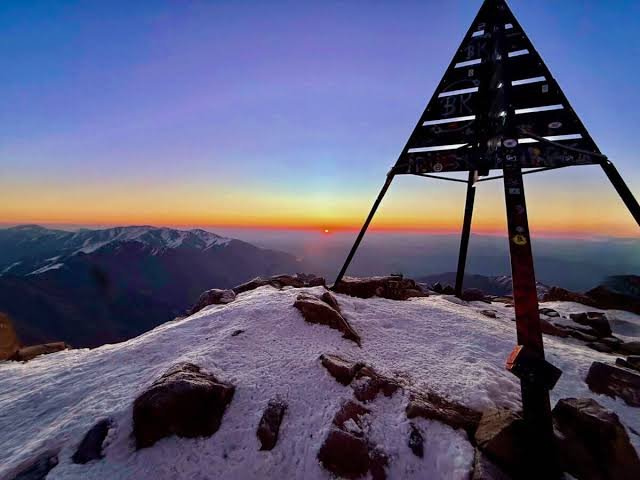
Introduction
Mount Toubkal is one of the most famous mountains in Africa and the highest peak in Morocco. Located in the spectacular High Atlas Mountains, Mount Toubkal attracts hikers, climbers, adventure travelers, nature lovers, and photographers from around the world. Rising approximately 4,167 meters (13,671 feet) above sea level, this impressive mountain offers breathtaking landscapes, challenging hiking routes, traditional Berber villages, and unforgettable outdoor experiences.
Known locally as Jebel Toubkal, the mountain is situated in southwestern Morocco, approximately 63 kilometers south of Marrakech. Its remarkable height makes it the highest mountain in North Africa and an important destination for people interested in mountain exploration.
Unlike some of the world’s highest mountains, Mount Toubkal does not require technical mountaineering skills during normal summer trekking conditions. However, its altitude, changing weather, steep trails, and rocky terrain make preparation essential.
This comprehensive guide explores Mount Toubkal’s geographical location, geological history, climate, wildlife, vegetation, hiking routes, cultural importance, tourism, environmental challenges, and travel information.
Whether you are researching African mountains, planning an adventure, or learning about Morocco’s natural landmarks, Mount Toubkal is a fascinating subject.
1. Where Is Mount Toubkal Located?
Mount Toubkal is located in the High Atlas mountain range of Morocco, in northwestern Africa. The mountain belongs to the Toubkal National Park, a protected natural area known for its dramatic mountain scenery, traditional settlements, and diverse ecosystems.
The High Atlas Mountains stretch across central Morocco and form one of the most impressive geographical features in the country. Their rugged peaks, deep valleys, rocky slopes, and high-altitude plateaus create a landscape that is very different from Morocco’s coastal plains and desert regions.
Mount Toubkal is situated near the village of Imlil, which serves as the main starting point for most trekking journeys.
Imlil is a small mountain settlement surrounded by terraced fields, fruit trees, traditional houses, and steep mountain slopes. Travelers commonly reach the village from Marrakech before beginning their mountain adventure.
The mountain’s location makes it accessible to visitors who want to experience the Atlas Mountains without traveling across the entire country.
2. How High Is Mount Toubkal?
Mount Toubkal reaches an elevation of approximately 4,167 meters (13,671 feet) above sea level.
This height makes it:
- The highest mountain in Morocco.
- The highest peak in the High Atlas Mountains.
- The highest mountain in North Africa.
- One of the most recognized trekking destinations on the African continent.
Its considerable elevation creates noticeable environmental differences between the surrounding valleys and the summit.
At lower elevations, visitors encounter relatively warm conditions, agricultural terraces, and green vegetation. As they climb higher, the landscape becomes increasingly rocky, colder, and more exposed.
The summit provides impressive views across the surrounding Atlas Mountains. On exceptionally clear days, the distant landscape can appear endless.
Although Mount Toubkal is not as high as Mount Kilimanjaro or the Himalayan giants, reaching its summit remains a significant physical achievement.
3. The Geological Formation of Mount Toubkal
Mount Toubkal is part of a mountain system created through complex geological processes over millions of years.
The High Atlas Mountains developed through tectonic movements associated with the interaction of the African and Eurasian plates. Compression and uplift gradually shaped the region, producing mountain ridges, valleys, and elevated landscapes.
The geological structure of the area includes different types of sedimentary, metamorphic, and igneous rocks.
These rocks provide evidence of the region’s complicated geological history.
Over long periods, erosion caused by water, wind, temperature changes, and seasonal weather gradually modified the mountain’s surface.
Glacial activity during colder periods of Earth’s history also influenced parts of the High Atlas landscape. Evidence of past glaciation can be observed in certain high mountain valleys and landforms.
Today, Mount Toubkal displays a dramatic combination of exposed rock, steep ridges, loose stones, and high-altitude terrain.
Its geological features make the mountain interesting not only for climbers but also for geographers, environmental scientists, and geology enthusiasts.
4. History of Mount Toubkal
Mount Toubkal has a long history connected with the communities that have lived in the surrounding High Atlas region.
For generations, Berber communities, particularly Amazigh people, have occupied the valleys and mountain settlements surrounding the peak.
These communities developed agricultural systems, traditional architecture, livestock practices, and mountain transportation methods suited to the challenging environment.
Before modern tourism became popular, the mountain region was primarily associated with local agriculture, livestock raising, and traditional trade.
Mountaineering interest increased during the twentieth century as European explorers and climbers began exploring the High Atlas Mountains.
The first recorded successful ascent of Mount Toubkal took place in 1923. The climbing party included Marquis de Segonzac, Vincent Berger, and Hubert Dolbeau.
Their achievement helped introduce the mountain to the international mountaineering community.
Over subsequent decades, improved transportation, trekking facilities, mountain guides, and accommodation made the region increasingly accessible.
Today, Mount Toubkal is internationally recognized as a major trekking destination.
5. Toubkal National Park
Mount Toubkal lies within Toubkal National Park, one of Morocco’s important protected natural areas.
Established in 1942, the park protects a remarkable mountain environment containing high peaks, valleys, rivers, forests, and wildlife habitats.
Its landscape includes several ecological zones that change according to elevation.
Lower slopes contain agricultural areas, traditional settlements, and woodland vegetation. Higher elevations feature alpine environments, rocky slopes, and seasonal snow.
The national park is important for several reasons:
- Protecting mountain ecosystems.
- Conserving native wildlife.
- Supporting biodiversity.
- Preserving traditional landscapes.
- Encouraging responsible tourism.
- Supporting environmental research.
The park also provides opportunities for hiking, nature observation, and cultural tourism.
Visitors should respect park regulations, remain on established trails where appropriate, and avoid disturbing wildlife.
6. Climate of Mount Toubkal
The climate of Mount Toubkal changes significantly with elevation.
The surrounding High Atlas region experiences Mediterranean and mountain climatic influences, with considerable differences between summer and winter.
At lower elevations, summers can be hot and dry, while winters are generally cooler.
At higher elevations, temperatures are much lower, and weather conditions can change rapidly.
Summer Weather
Summer is generally the most popular season for trekking Mount Toubkal.
During this period, lower mountain valleys are relatively warm, while higher elevations remain cooler.
Snow usually disappears from much of the standard trekking route during the warmer months, although conditions can vary.
Summer trekking offers longer daylight hours and generally more favorable access to the summit.
However, strong sunlight, dry air, and afternoon weather changes can still create difficulties.
Winter Weather
Winter transforms Mount Toubkal into a snowy mountain environment.
Snow and ice cover many higher sections of the mountain, and temperatures can fall considerably below freezing.
Winter conditions require additional preparation, suitable equipment, and experience with snowy mountain terrain.
The normal summer hiking route can become significantly more demanding.
Spring and Autumn
Spring and autumn can offer excellent mountain scenery.
Spring brings seasonal vegetation growth and flowing water in some valleys.
Autumn often provides cooler temperatures and clearer mountain landscapes.
However, weather conditions remain unpredictable, so travelers should check forecasts before beginning their journey.
7. Landscape and Natural Beauty
One of the most attractive features of Mount Toubkal is its remarkable natural landscape.
The mountain environment includes rugged peaks, deep valleys, rocky slopes, mountain streams, and traditional agricultural terraces.
The scenery changes dramatically as visitors move from the lower valleys toward the summit.
Near Imlil, green fields and fruit trees create a pleasant contrast with the surrounding mountains.
Higher along the trekking route, vegetation becomes less common, and rocky landscapes dominate.
The mountain’s summit area provides a wide panoramic view of the High Atlas range.
During clear weather, distant ridges and neighboring peaks create an impressive natural panorama.
The combination of geological formations, changing vegetation, and mountain light makes Mount Toubkal one of Morocco’s most visually striking natural landmarks.
8. Wildlife Around Mount Toubkal
The High Atlas Mountains provide habitats for a variety of animal species.
Wildlife distribution depends on elevation, vegetation, water availability, and human activity.
Some animals inhabit forested slopes, while others occupy rocky mountain environments.
Barbary Macaque
The Barbary macaque is one of the best-known primates of North Africa.
It inhabits parts of the Atlas Mountains and nearby forest environments.
These social animals are important members of regional ecosystems.
Birds
The mountain region supports different bird species, including birds adapted to rocky slopes and high-altitude environments.
Birdwatchers may encounter various raptors, smaller mountain birds, and species associated with woodland habitats.
Reptiles
Several reptile species inhabit warmer areas of the surrounding mountains.
Their activity is strongly influenced by temperature and seasonal conditions.
Mammals
The broader High Atlas region supports mammals adapted to mountain and semi-arid environments.
However, visitors should understand that wildlife sightings are never guaranteed.
Responsible visitors should observe animals from a respectful distance and avoid feeding them.
9. Plant Life and Vegetation
Vegetation around Mount Toubkal changes with altitude.
Lower elevations contain agricultural land, shrubs, fruit trees, and woodland vegetation.
Traditional villages often feature cultivated terraces where local communities grow crops suited to mountain conditions.
At higher elevations, plants become increasingly adapted to cold temperatures, strong winds, and limited water availability.
Alpine vegetation is generally shorter and more specialized than plants found in lower valleys.
Some plants grow in small protected areas between rocks, where soil and moisture conditions are more favorable.
The mountain environment is particularly sensitive to climate change, grazing pressure, and human activity.
Protecting native vegetation is essential for maintaining soil stability and supporting local biodiversity.
10. The Village of Imlil
Imlil is one of the most important settlements associated with Mount Toubkal tourism.
Located in the High Atlas Mountains, this village serves as a gateway to the mountain.
Its traditional architecture, mountain scenery, and welcoming hospitality make it an interesting destination in its own right.
Imlil contains guesthouses, small hotels, restaurants, shops, and trekking services.
Many visitors stay overnight before beginning their journey toward the summit.
The village also provides opportunities to experience Amazigh culture and traditional mountain life.
Visitors can explore nearby paths, observe agricultural terraces, and enjoy views of the surrounding valleys.
Imlil demonstrates how traditional communities and modern tourism can exist together.
11. Hiking Mount Toubkal
Hiking is the main reason many visitors travel to Mount Toubkal.
The standard trekking journey usually begins in Imlil and continues toward the mountain refuges before reaching the summit.
Although the normal summer route is often considered non-technical, it is physically demanding.
The high elevation, steep terrain, and long walking distances require reasonable fitness and preparation.
Most hikers complete the standard journey over two days.
Some travelers choose longer itineraries to explore additional valleys and nearby mountain landscapes.
A typical journey includes:
- Arrival in Imlil.
- Trekking through the mountain valley.
- Reaching the mountain refuge.
- Resting before the summit attempt.
- Climbing toward the summit.
- Returning to the refuge or descending farther.
- Returning to Imlil.
The exact schedule depends on weather, fitness, route conditions, and individual circumstances.
12. The Standard Mount Toubkal Trekking Route
The standard route is the most popular way to reach the summit.
It begins in Imlil and follows established mountain paths toward the Toubkal refuges.
The trail passes through beautiful valleys, rocky slopes, and areas with changing vegetation.
Starting in Imlil
Most journeys begin in Imlil, where hikers organize transportation, accommodation, guides, and other arrangements.
The village is an important center for mountain tourism.
Walking Through the Valley
From Imlil, the route gradually enters the mountain landscape.
Hikers pass traditional settlements, cultivated land, and streams.
The trail gradually gains elevation as it moves toward higher mountain terrain.
Reaching the Refuge
Mountain refuges provide an important resting point for trekkers.
They offer basic accommodation and a place to prepare for the summit journey.
Spending time at elevation can help hikers become more familiar with the mountain environment.
Reaching the Summit
The final ascent is challenging because of the altitude and steep terrain.
The summit rewards successful hikers with impressive views of the High Atlas Mountains.
After reaching the top, trekkers normally return along the established route.
13. How Difficult Is Mount Toubkal?
Mount Toubkal is often described as a challenging trekking mountain rather than a highly technical climbing objective during normal summer conditions.
However, its difficulty should not be underestimated.
Several factors contribute to the challenge.
High Altitude
At 4,167 meters, Mount Toubkal is high enough for altitude-related illness to become a serious concern.
Some hikers may experience headaches, tiredness, dizziness, or nausea.
Proper acclimatization and a gradual ascent are important.
Steep Terrain
The route includes long uphill sections, loose stones, and uneven surfaces.
Walking on this terrain requires concentration and physical endurance.
Weather Conditions
Mountain weather can change quickly.
Cold temperatures, wind, rain, snow, and poor visibility can affect the journey.
Physical Endurance
The trek requires several hours of walking across demanding terrain.
Preparation through regular outdoor activity and general fitness can make the experience more manageable.
14. Best Time to Visit Mount Toubkal
The best time to visit Mount Toubkal depends on the kind of experience a traveler wants.
April to May
Spring can provide beautiful scenery and relatively moderate temperatures.
However, snow may remain on higher sections of the mountain.
June to September
These months generally provide the most popular conditions for standard summer trekking.
Longer daylight hours and reduced snow coverage often make access easier.
July and August can be particularly warm in lower valleys.
October
October is often an attractive month for trekking because temperatures are generally cooler than during midsummer.
However, weather conditions can become more unpredictable as winter approaches.
November to March
Winter trekking is more demanding because of snow, ice, cold temperatures, and shorter daylight hours.
Visitors should only consider winter journeys with suitable experience, preparation, equipment, and professional guidance.
15. Accommodation Near Mount Toubkal
Visitors can find several accommodation options around Mount Toubkal.
Guesthouses in Imlil
Traditional guesthouses are popular among hikers.
They provide an opportunity to experience local hospitality and mountain culture.
Small Hotels
Some visitors prefer hotels that offer additional comfort and services.
These accommodations can be useful for travelers who want to rest before or after their trek.
Mountain Refuges
Mountain refuges provide basic facilities at higher elevations.
They are important resting locations for hikers attempting the summit.
Camping
Camping opportunities may be available in permitted areas, subject to local regulations and environmental conditions.
Visitors should always confirm current rules before camping.
16. Culture and Traditions of the High Atlas
The High Atlas Mountains are home to Amazigh communities with distinctive languages, traditions, and cultural practices.
Amazigh culture has influenced the history and identity of Morocco for centuries.
Traditional mountain villages often feature stone buildings, agricultural terraces, and community-centered lifestyles.
Local people have developed practical knowledge of mountain agriculture, livestock management, weather patterns, and seasonal activities.
Visitors may experience traditional food, music, crafts, and hospitality.
Traditional Architecture
Many villages feature buildings constructed using locally available materials.
Their design reflects the mountain environment and traditional construction knowledge.
Local Food
Mountain communities prepare dishes using grains, vegetables, meat, olive oil, and locally available ingredients.
Traditional Moroccan meals are an important part of the visitor experience.
Hospitality
Hospitality is an important cultural value throughout the region.
Visitors should show respect for local customs, ask permission before photographing people, and support local businesses.
17. Food and Dining Around Mount Toubkal
Food is an important part of a trekking experience.
Visitors can enjoy traditional Moroccan meals in Imlil and surrounding settlements.
Popular dishes include:
- Moroccan tagine.
- Couscous.
- Harira soup.
- Fresh bread.
- Lentil dishes.
- Vegetable stews.
- Mint tea.
- Seasonal fruit.
Tagine is one of Morocco’s most recognizable traditional meals.
It is prepared slowly using vegetables, spices, and sometimes meat.
Couscous is another important dish, traditionally served with vegetables and other ingredients.
During mountain journeys, hikers should arrange suitable meals and carry adequate drinking water.
Food availability at higher elevations may be more limited than in the villages.
18. Transportation to Mount Toubkal
The most common starting point for a Mount Toubkal journey is Marrakech.
Marrakech is a major Moroccan city with international transportation connections.
From Marrakech, visitors travel toward Imlil by road.
Transportation options may include:
- Private vehicles.
- Organized transfers.
- Shared taxis.
- Local transportation services.
- Guided trekking packages.
The journey generally takes around 1.5 to 2 hours, depending on traffic and road conditions.
Travelers should arrange reliable transportation, especially when carrying trekking equipment.
19. What to Pack for Mount Toubkal
Proper preparation is essential for a successful mountain journey.
The equipment required depends on the season and expected weather.
Useful items include:
- Comfortable hiking boots.
- Warm clothing.
- Waterproof outer layers.
- A suitable backpack.
- Sun protection.
- Sunglasses.
- A hat.
- Reusable water bottles.
- Personal medication.
- Basic first-aid supplies.
- Headlamp.
- Food and snacks.
- Trekking poles.
During winter, additional equipment may be necessary, including appropriate snow and ice protection.
Travelers should obtain professional advice about seasonal equipment and current trail conditions.
20. Altitude and Safety Considerations
Altitude is one of the most important challenges associated with Mount Toubkal.
As elevation increases, atmospheric pressure decreases, reducing the amount of oxygen available with each breath.
Some people experience altitude-related symptoms when climbing rapidly.
Common symptoms may include headache, nausea, unusual tiredness, dizziness, and difficulty sleeping.
Severe altitude illness can become dangerous.
Hikers should understand the importance of gradual ascent and should never ignore worsening symptoms.
If altitude illness is suspected, stopping the ascent and descending may be necessary.
Professional medical guidance should be obtained when symptoms are serious.
Visitors with health concerns should consult an appropriate healthcare professional before undertaking a high-altitude trek.
21. Environmental Challenges Facing Mount Toubkal
Mount Toubkal is a valuable natural environment, but it faces several environmental pressures.
Increasing tourism can place additional demands on mountain trails, water resources, accommodation facilities, and waste management systems.
Plastic Pollution
Plastic bottles, food packaging, and other waste can damage the appearance and ecological health of mountain environments.
Visitors should carry their rubbish back to appropriate disposal points.
Trail Erosion
Heavy foot traffic can contribute to soil erosion and damage sensitive vegetation.
Staying on established paths helps reduce unnecessary environmental disturbance.
Water Resources
Mountain communities and ecosystems depend on limited water resources.
Responsible water use is important, particularly during dry periods.
Climate Change
Changing temperatures and precipitation patterns can affect snow cover, water availability, and mountain ecosystems.
These changes may influence both local communities and tourism activities.
Environmental conservation is essential for protecting Mount Toubkal for future generations.
22. Responsible Tourism at Mount Toubkal
Responsible tourism helps protect the mountain while supporting local communities.
Travelers can make positive contributions through simple choices.
They should:
- Avoid leaving rubbish.
- Respect local traditions.
- Support local guides.
- Use established trekking routes.
- Avoid disturbing wildlife.
- Respect private property.
- Use water responsibly.
- Follow national park regulations.
- Avoid damaging vegetation.
- Choose environmentally responsible services.
Supporting local businesses also helps distribute tourism income throughout mountain communities.
Responsible travel ensures that visitors can enjoy the mountain without unnecessarily damaging its natural and cultural heritage.
23. Photography Opportunities at Mount Toubkal
Mount Toubkal provides many opportunities for landscape photography.
The changing mountain scenery creates different photographic subjects throughout the day.
Mountain Landscapes
The surrounding High Atlas peaks provide impressive views.
Photographers can capture rocky ridges, deep valleys, and distant mountain horizons.
Traditional Villages
Imlil and nearby settlements offer opportunities to photograph traditional architecture and agricultural landscapes.
Photographers should always respect residents and ask permission before taking close-up photographs.
Sunrise and Sunset
Changing light conditions can create beautiful contrasts across the mountain slopes.
Early morning and late afternoon are often attractive periods for landscape photography.
Snowy Mountain Scenery
During winter, snow transforms the mountain into a striking high-altitude landscape.
Photography conditions can be challenging because of cold temperatures and bright reflections from snow.
24. Mount Toubkal Compared With Other African Mountains
Africa contains several famous mountains, each with distinctive geographical characteristics.
Mount Kilimanjaro
Mount Kilimanjaro is located in Tanzania and reaches approximately 5,895 meters.
It is Africa’s highest mountain.
Unlike Mount Toubkal, Kilimanjaro is a much higher volcanic mountain.
Mount Kenya
Mount Kenya is located in Kenya and reaches approximately 5,199 meters at Batian Peak.
It is famous for its dramatic volcanic landscape and distinctive high-altitude environment.
Mount Stanley
Mount Stanley is located in the Rwenzori Mountains along the Uganda-Democratic Republic of the Congo border.
Its highest point, Margherita Peak, reaches approximately 5,109 meters.
Mount Toubkal
Mount Toubkal reaches approximately 4,167 meters.
Although lower than these mountains, it is the highest peak in North Africa and one of the continent’s best-known trekking destinations.
Each mountain offers a different geographical and outdoor experience.
25. Mount Toubkal for Adventure Tourism
Mount Toubkal plays an important role in Morocco’s adventure tourism industry.
Its accessibility from Marrakech makes it attractive to international visitors who want to combine cultural sightseeing with mountain exploration.
Adventure tourism activities in the region include:
- Mountain trekking.
- Guided hiking.
- Nature photography.
- Cultural village visits.
- Landscape exploration.
- Winter mountain activities.
- Multi-day mountain journeys.
The mountain attracts people with different levels of outdoor experience.
However, visitors should choose activities that match their preparation, physical ability, and experience.
26. Economic Importance of Mount Toubkal
Tourism associated with Mount Toubkal contributes to the regional economy.
Many local residents earn income through tourism-related services.
These may include:
- Mountain guiding.
- Accommodation.
- Restaurants.
- Transportation.
- Equipment services.
- Local food production.
- Handicrafts.
- Porter services.
Tourism creates opportunities for communities that may otherwise have limited economic options.
However, sustainable development is important.
Local communities should benefit from tourism while protecting their natural resources and cultural traditions.
27. Mount Toubkal and Scientific Research
Mount Toubkal is also valuable for scientific research.
Its high elevation, varied climate, and distinctive ecosystems make it useful for studying mountain environments.
Researchers may investigate:
- Mountain geology.
- Climate change.
- Snow and water systems.
- Plant biodiversity.
- Wildlife habitats.
- Soil erosion.
- Traditional land use.
- Mountain ecology.
The High Atlas Mountains also provide valuable information about environmental changes in North Africa.
Scientific research can help improve conservation planning and support sustainable regional development.
28. Interesting Facts About Mount Toubkal
Mount Toubkal has many interesting characteristics.
- Mount Toubkal is the highest mountain in Morocco.
- Its elevation is approximately 4,167 meters.
- It is the highest peak in North Africa.
- It belongs to the High Atlas Mountains.
- It is located within Toubkal National Park.
- The national park was established in 1942.
- The nearby village of Imlil is a major trekking starting point.
- The first recorded successful ascent took place in 1923.
- The mountain attracts trekkers from many countries.
- Its landscape includes rocky slopes, valleys, and seasonal snow.
- Amazigh communities have a long cultural connection with the surrounding region.
- Summer is generally the most popular season for standard trekking.
- Winter conditions can make the mountain significantly more difficult.
- The mountain supports several types of high-altitude habitats.
- Mount Toubkal is an important destination for Moroccan adventure tourism.
These facts demonstrate why Mount Toubkal is one of Africa’s most remarkable mountains.
29. Tips for First-Time Visitors
First-time visitors should plan carefully before traveling to Mount Toubkal.
A successful experience depends on preparation, appropriate equipment, and awareness of mountain conditions.
Useful recommendations include:
- Research the mountain before departure.
- Choose a suitable trekking season.
- Check the weather forecast.
- Arrange reliable transportation.
- Book accommodation in advance when necessary.
- Use qualified local mountain guides where required or appropriate.
- Prepare for high-altitude conditions.
- Carry sufficient water and food.
- Wear suitable hiking footwear.
- Respect local customs.
- Follow national park regulations.
- Avoid rushing the ascent.
- Keep emergency arrangements in mind.
- Protect the natural environment.
A well-planned visit can make the mountain experience safer and more enjoyable.
30. Why Is Mount Toubkal Famous?
Mount Toubkal is famous for its impressive elevation, geographical importance, natural beauty, and accessibility.
Its status as the highest mountain in North Africa gives it international recognition.
The mountain also offers an opportunity to explore the High Atlas Mountains and experience traditional Amazigh communities.
Unlike some remote mountain destinations, Mount Toubkal can be reached relatively easily from Marrakech.
This combination of natural scenery, cultural experiences, and trekking opportunities makes it especially attractive to international travelers.
Its popularity also reflects the growing interest in outdoor tourism and mountain exploration.
31. Mount Toubkal for Nature Lovers
Nature lovers can discover a remarkable mountain environment around Mount Toubkal.
The region offers a variety of landscapes and ecological conditions.
Lower valleys contain agricultural terraces, streams, and vegetation.
Higher elevations feature rocky terrain and specialized alpine plants.
Visitors interested in biodiversity can learn about the relationship between elevation, climate, and species distribution.
The mountain also provides opportunities to observe how local communities interact with their environment.
Responsible exploration allows visitors to appreciate the natural beauty of the region while minimizing environmental impact.
32. The Cultural Importance of the High Atlas Mountains
The High Atlas Mountains are not simply a geographical feature.
They are also an important cultural landscape.
For centuries, Amazigh communities have developed distinctive traditions and lifestyles in the mountain valleys.
Their languages, music, food, architecture, and agricultural practices form an important part of Morocco’s cultural heritage.
Mount Toubkal is closely associated with this regional identity.
Visitors who explore the surrounding villages can gain a better understanding of how geography influences everyday life.
The relationship between mountain communities and their environment demonstrates the importance of preserving both natural and cultural heritage.
33. Photography and Travel Experiences
Traveling to Mount Toubkal provides more than a mountain summit experience.
Visitors can enjoy the journey through the valleys, interact with local communities, observe traditional architecture, and experience the changing landscapes of the High Atlas.
Photography enthusiasts can capture mountain scenery, village life, seasonal vegetation, and dramatic weather conditions.
Travelers should remember that the best experiences do not always come from reaching the highest point.
Taking time to appreciate the surrounding environment can make a visit more meaningful.
34. Sustainable Development in the Mount Toubkal Region
Sustainable development is important for the long-term future of the Mount Toubkal region.
Tourism provides economic opportunities, but unmanaged growth can create environmental and social challenges.
Local authorities, businesses, communities, and visitors all have a role in responsible development.
Important priorities include:
- Better waste management.
- Protection of water resources.
- Conservation of native vegetation.
- Maintenance of trekking routes.
- Support for local businesses.
- Environmental education.
- Preservation of cultural heritage.
- Responsible tourism planning.
A balanced approach can help ensure that tourism remains beneficial for both people and nature.
35. Frequently Asked Questions About Mount Toubkal
What Is the Height of Mount Toubkal?
Mount Toubkal reaches approximately 4,167 meters (13,671 feet) above sea level. It is the highest mountain in Morocco and North Africa.
Where Is Mount Toubkal Located?
Mount Toubkal is located in the High Atlas Mountains of southwestern Morocco, within Toubkal National Park.
Is Mount Toubkal the Highest Mountain in Africa?
No. Mount Kilimanjaro in Tanzania is Africa’s highest mountain. Mount Toubkal is the highest mountain in North Africa.
How Long Does It Take to Climb Mount Toubkal?
Many hikers complete the standard trek over approximately two days. Longer itineraries are also possible depending on the route and personal preferences.
Is Mount Toubkal Difficult to Climb?
The standard summer route is generally considered a challenging high-altitude trek rather than a technical climbing route. Its elevation, steep terrain, and weather conditions require preparation.
What Is the Best Month to Visit Mount Toubkal?
June through September is generally popular for standard summer trekking. Spring and autumn can also be attractive, although weather and snow conditions must be checked.
Can Beginners Visit Mount Toubkal?
Beginners may be able to complete the standard summer trek if they prepare appropriately, understand altitude risks, and use suitable support. Good preparation is essential.
Is There Snow on Mount Toubkal?
Snow is common during winter and may remain at higher elevations during parts of spring. Conditions vary from year to year.
What Is the Nearest Major City to Mount Toubkal?
Marrakech is the main major city used by visitors traveling to Mount Toubkal.
What Is the Starting Village for Mount Toubkal?
Imlil is the most common starting point for the standard trekking route.
Is Mount Toubkal a Volcano?
Mount Toubkal is not generally classified as an active volcano. It is part of the complex geological mountain system of the High Atlas.
Why Is Mount Toubkal Important?
Mount Toubkal is important because of its geographical height, biodiversity, cultural surroundings, scientific value, and contribution to Moroccan tourism.
36. Conclusion
Mount Toubkal is one of the most remarkable natural landmarks in Morocco and North Africa. Rising approximately 4,167 meters above sea level, it represents the impressive geographical character of the High Atlas Mountains.
The mountain offers a combination of natural beauty, geological interest, biodiversity, traditional culture, and outdoor adventure.
Its famous trekking routes attract visitors who want to experience high-altitude mountain landscapes without traveling to some of the world’s most remote mountain regions.
The nearby village of Imlil provides an important connection between visitors and the traditional communities of the High Atlas.
Toubkal National Park also plays a valuable role in protecting the region’s natural environment and supporting sustainable tourism.
However, the mountain should always be approached with respect. Altitude, changing weather, rocky terrain, and environmental sensitivity make preparation and responsible behavior essential.
For nature lovers, hikers, researchers, and travelers, Mount Toubkal offers an unforgettable opportunity to explore one of Africa’s most impressive mountain landscapes.
Its combination of geographical importance, cultural heritage, and natural beauty ensures that Mount Toubkal remains one of Morocco’s most treasured destinations.
SEO Information
SEO Title: Mount Toubkal: Complete Guide to Morocco’s Highest Mountain
Meta Description: Discover Mount Toubkal, Morocco’s highest mountain and North Africa’s tallest peak. Explore its height, location, hiking routes, climate, wildlife, history, and travel tips.
Focus Keyword: Mount Toubkal
Secondary Keywords:
- Mount Toubkal Morocco
- Mount Toubkal height
- Highest mountain in Morocco
- Highest mountain in North Africa
- Mount Toubkal hiking
- Mount Toubkal trekking guide
- Toubkal National Park
- High Atlas Mountains
- Mount Toubkal climbing
- Best time to visit Mount Toubkal
Suggested URL Slug: mount-toubkal-morocco-guide
Article Category: Mountains and Travel
Tags: Mount Toubkal, Morocco Mountains, High Atlas Mountains, African Mountains, Mountain Trekking, Toubkal National Park, Adventure Travel, Nature and Geography