
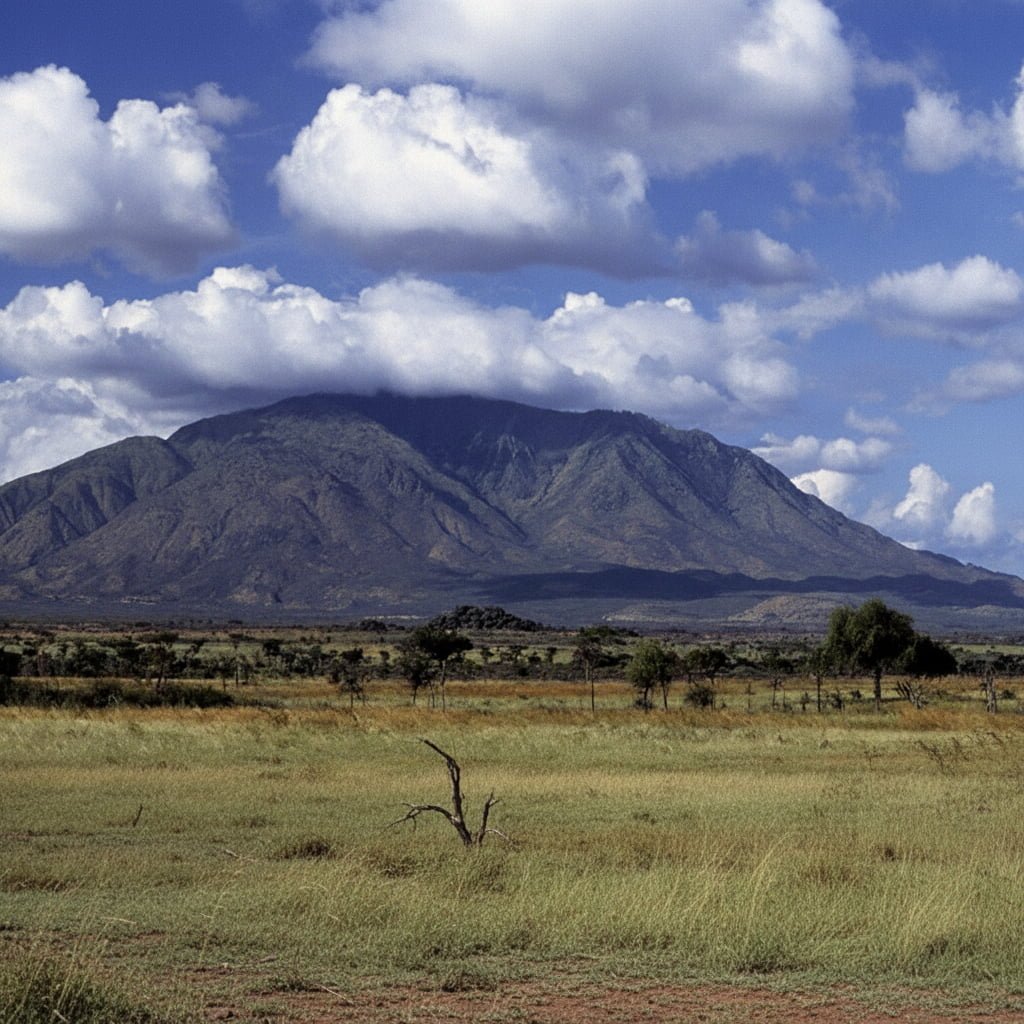
Introduction to Mount Elgon Mountain
Mount Elgon is one of the most remarkable mountains in East Africa. Located along the border between Uganda and Kenya, this ancient volcanic mountain is famous for its enormous size, beautiful landscapes, unique wildlife, dense forests, waterfalls, caves, and spectacular natural scenery. Unlike many famous African mountains that are known mainly for their extremely high peaks, Mount Elgon is especially recognized for its enormous volcanic base and expansive mountain landscape.
Mount Elgon is an extinct shield volcano that has existed for millions of years. Its highest point, Wagagai Peak, reaches approximately 4,321 meters above sea level. The mountain is shared by Uganda and Kenya, making it an important geographical and ecological feature of both countries.
One of the most interesting characteristics of Mount Elgon is its massive caldera. A caldera is a large volcanic depression formed when the central part of a volcano collapses after volcanic activity. Mount Elgon’s caldera is among the largest in the world, creating an extraordinary landscape that attracts geographers, researchers, nature enthusiasts, and adventurous travelers.
The mountain is also home to Mount Elgon National Park, which protects a wide variety of plants, animals, forests, and mountain ecosystems. Visitors can explore beautiful hiking trails, discover ancient caves, observe wildlife, and experience the natural beauty of East Africa.
This comprehensive guide explores Mount Elgon’s location, geological history, physical features, climate, biodiversity, tourism opportunities, cultural importance, environmental challenges, and conservation efforts.
1. Where Is Mount Elgon Located?
Mount Elgon is situated in East Africa, directly along the international border between eastern Uganda and western Kenya. It is located approximately 140 kilometers northeast of Lake Victoria and forms an important part of the highland landscape of the region.
The mountain is surrounded by several communities, agricultural areas, forests, and protected natural environments. On the Ugandan side, it is particularly associated with the districts of Mbale, Kapchorwa, and surrounding areas. On the Kenyan side, it lies within the Mount Elgon region near the town of Kitale.
Mount Elgon is an important geographical landmark because it influences the climate, water systems, agriculture, and biodiversity of the surrounding region.
The mountain’s location also makes it an important source of water for nearby communities. Rainfall collected across its slopes feeds streams and rivers that support agriculture, wildlife, and human settlements.
Its position near the equator creates interesting climatic conditions. Although the surrounding lowlands can experience warm temperatures, the higher elevations of Mount Elgon are considerably cooler.
2. Height and Physical Characteristics of Mount Elgon
Mount Elgon reaches approximately 4,321 meters above sea level at Wagagai Peak, making it one of the highest mountains in East Africa.
However, its height is not its only remarkable characteristic. Mount Elgon has an exceptionally wide volcanic structure and covers an enormous geographical area.
The mountain rises gradually from the surrounding plains, creating different ecological zones as elevation increases. Lower slopes contain agricultural land and forests, while higher elevations feature bamboo vegetation, montane forests, moorlands, and open alpine landscapes.
Its broad shape distinguishes it from steep, sharply pointed mountains.
Mount Elgon’s enormous caldera is another important physical feature. It measures approximately eight kilometers across and forms a dramatic volcanic depression near the mountain’s summit.
The mountain also contains several peaks, ridges, valleys, caves, cliffs, and waterfalls.
These different geographical features make Mount Elgon an important destination for geological research and nature exploration.
3. Geological Formation of Mount Elgon
Mount Elgon is an ancient extinct shield volcano that developed through repeated volcanic eruptions over millions of years.
Shield volcanoes generally form when relatively fluid lava spreads across the surrounding landscape. Over time, multiple layers of cooled lava create a broad mountain with gently sloping sides.
Mount Elgon developed through a long geological process involving volcanic activity, lava flows, erosion, and changes in the Earth’s crust.
Its volcanic history is connected to the geological development of the East African Rift System. This major geological region contains numerous valleys, volcanic mountains, lakes, and areas of tectonic activity.
Mount Elgon is considered one of the oldest major volcanic mountains in East Africa. Its original volcanic structure has been significantly modified by millions of years of erosion.
The mountain’s enormous caldera is particularly interesting to scientists. It provides evidence of ancient volcanic processes and structural changes that occurred during the mountain’s development.
Although Mount Elgon is an extinct volcano, its geological features continue to attract researchers interested in African volcanic landscapes.
4. Wagagai Peak: The Highest Point of Mount Elgon
Wagagai Peak is the highest summit of Mount Elgon, reaching approximately 4,321 meters above sea level.
It is located within the mountain’s enormous caldera on the Ugandan side.
Unlike some famous mountain summits that require technical climbing skills, Wagagai can be reached through established trekking routes. However, reaching the summit still requires preparation, physical fitness, appropriate equipment, and awareness of changing mountain weather.
The journey toward Wagagai offers spectacular views of the surrounding volcanic landscape.
Trekkers pass through different vegetation zones, including montane forests, bamboo areas, open moorlands, and high-altitude environments.
The summit area provides an opportunity to appreciate the mountain’s unusual volcanic structure.
On clear days, visitors can enjoy impressive views across the surrounding highlands.
Wagagai Peak is an important geographical landmark and one of the main attractions for visitors exploring Mount Elgon National Park.
5. The Enormous Caldera of Mount Elgon
One of Mount Elgon’s most extraordinary features is its enormous caldera.
A caldera is a large depression created when the central part of a volcano collapses following the withdrawal of magma from beneath the surface.
Mount Elgon’s caldera is approximately eight kilometers wide, making it one of the most impressive volcanic depressions in the world.
The caldera contains several interesting geographical formations, including rocky landscapes, volcanic remnants, ridges, and areas of high-altitude vegetation.
Its size demonstrates the enormous scale of the volcanic processes that shaped Mount Elgon millions of years ago.
The caldera is also important for scientific research because it provides opportunities to study volcanic evolution, erosion, and landscape development.
For visitors, exploring the caldera offers a unique opportunity to experience one of Africa’s most fascinating geological environments.
6. Mount Elgon National Park
Mount Elgon National Park protects important natural environments on both sides of the Uganda-Kenya border.
Uganda’s Mount Elgon National Park covers approximately 1,110 square kilometers, while Kenya’s Mount Elgon National Park covers approximately 169 square kilometers.
Together, these protected areas help conserve the mountain’s forests, wildlife, vegetation, water resources, and geological features.
The parks contain different ecological zones, ranging from tropical forests to high-altitude moorlands.
They also protect numerous animal and plant species that depend on the mountain’s unique environmental conditions.
Mount Elgon National Park is particularly important for biodiversity conservation because it provides habitats for forest animals, birds, insects, and rare plants.
Visitors can explore the parks through guided walks, hiking routes, nature observation, and educational activities.
The protected areas also support scientific research and environmental education.
7. Climate of Mount Elgon
Mount Elgon experiences different climatic conditions depending on elevation.
The lower slopes generally have warmer temperatures, while higher elevations are considerably cooler.
Rainfall is an important part of the mountain’s climate. Moist air moving from surrounding regions contributes to frequent rainfall, particularly during the wetter seasons.
The mountain’s weather can change quickly. Visitors may experience sunshine, clouds, rain, and cooler temperatures within a relatively short period.
Higher elevations can become particularly cold, especially during early mornings and nighttime.
The climate also influences the vegetation found across different parts of the mountain.
Lower areas support agricultural activities and forest ecosystems, while higher elevations contain specialized mountain plants adapted to colder conditions.
Understanding the mountain’s climate is important for anyone planning a visit.
8. Rainfall and Water Resources
Mount Elgon is an important water catchment area in East Africa.
Its slopes receive substantial rainfall, which collects in streams, rivers, and underground water systems.
These water resources support communities, agriculture, forests, and wildlife.
Numerous rivers and streams originate in the Mount Elgon region.
The mountain is particularly important because water flowing from its slopes contributes to larger river systems in Uganda and Kenya.
Rainwater supports vegetation and maintains the mountain’s ecological balance.
Local farmers depend on water resources from the surrounding highlands for agricultural production.
The mountain’s forests also play an important role in regulating water flow and reducing soil erosion.
Protecting these forests is therefore essential for maintaining the region’s water supply.
9. Vegetation Zones of Mount Elgon
Mount Elgon contains several vegetation zones because of its changing elevation and climatic conditions.
The lower slopes support agricultural landscapes and areas of natural forest.
As elevation increases, visitors encounter montane forests containing different species of trees, shrubs, and other vegetation.
Higher sections contain bamboo vegetation and open mountain grasslands.
At the highest elevations, specialized plants survive in cooler conditions.
Some areas contain giant groundsel and giant lobelia, which are particularly interesting plants associated with high-altitude African mountain environments.
These vegetation zones provide habitats for different wildlife species.
The changing plant communities also make Mount Elgon an important location for botanical research.
10. Wildlife of Mount Elgon
Mount Elgon supports a diverse range of wildlife.
Its forests and mountain habitats provide shelter, food, and breeding environments for many animal species.
Some of the mammals found in the region include:
- Forest elephants
- Buffaloes
- Bushbucks
- Duikers
- Hyenas
- Monkeys
- Small forest mammals
The exact wildlife visitors encounter depends on the location, season, and environmental conditions.
Forest elephants are among the most interesting animals associated with Mount Elgon.
They are known for visiting certain caves, where they search for mineral-rich soil.
Other mammals use the mountain’s forests and grasslands for feeding and shelter.
The mountain also supports a wide variety of insects, reptiles, amphibians, and smaller animals.
Its biodiversity makes it an important conservation area.
11. The Famous Kitum Cave
Kitum Cave is one of the most famous natural attractions associated with Mount Elgon.
It is located on the Kenyan side of the mountain within Mount Elgon National Park.
The cave is particularly well known because forest elephants visit it to obtain mineral-rich salt from its walls.
This unusual behavior is called geophagy, which means the consumption of soil or mineral-rich earth by animals.
Elephants use their tusks to break pieces of mineral-rich material from the cave walls.
Kitum Cave is an important example of how wildlife interacts with geological features.
It has attracted considerable scientific interest because researchers can study animal behavior, mineral requirements, and ecological relationships in this environment.
Visitors interested in geology and wildlife often consider Kitum Cave one of the most fascinating places in the Mount Elgon region.
12. Birds of Mount Elgon
Mount Elgon is an excellent destination for birdwatching.
Its different habitats support numerous bird species, including forest birds, mountain birds, and species associated with open grasslands.
The mountain’s forests provide nesting and feeding areas for many birds.
Some species are associated with high-altitude environments, making the region particularly interesting for birdwatchers.
Bird enthusiasts may encounter different turacos, sunbirds, eagles, hornbills, and other African bird species.
The African blue flycatcher and Jackson’s francolin are among the birds associated with the wider Mount Elgon region.
Bird diversity changes according to habitat and elevation.
The mountain’s protected forests are especially important because they provide suitable conditions for forest-dependent birds.
Birdwatching also supports environmental education and nature tourism.
13. Waterfalls of Mount Elgon
Mount Elgon contains beautiful waterfalls that add to its natural attraction.
The mountain receives rainfall that feeds numerous streams and rivers.
As water flows down steep slopes and rocky valleys, it creates waterfalls and cascades.
Some waterfalls are located within forested areas, providing visitors with opportunities to enjoy peaceful natural surroundings.
Sipi Falls is one of the best-known waterfall attractions in the wider Mount Elgon region.
It consists of a series of three waterfalls located on the northeastern slopes of Mount Elgon in Uganda.
The waterfalls are surrounded by green landscapes, agricultural communities, and scenic viewpoints.
Their beauty attracts photographers, hikers, and visitors interested in exploring the region.
14. Sipi Falls and Its Natural Beauty
Sipi Falls is one of Uganda’s most popular natural attractions.
It is located near the town of Kapchorwa, on the northeastern side of Mount Elgon.
The waterfall system consists of three main waterfalls, each offering different views and experiences.
The surrounding landscape contains green hills, valleys, coffee farms, and beautiful natural scenery.
Visitors can explore the area through guided walks and hiking routes.
Sipi Falls is also an excellent location for photography.
The combination of flowing water, rocky cliffs, green vegetation, and mountain scenery creates an impressive landscape.
The area is particularly beautiful during the rainy season when water levels are higher.
15. Forests of Mount Elgon
The forests of Mount Elgon are among the most important ecological features of the mountain.
They contain numerous tree species, shrubs, climbers, and other plants.
These forests provide habitats for birds, mammals, insects, and smaller wildlife.
They also protect the mountain’s soil and help regulate water systems.
Forest vegetation reduces the impact of heavy rainfall and helps prevent excessive soil erosion.
The forests are also important for local communities because they contribute to environmental stability and support natural resources.
However, agricultural expansion, illegal tree cutting, and human pressure can threaten these ecosystems.
Conservation programs are therefore necessary to protect the mountain’s forests.
16. The Cultural Importance of Mount Elgon
Mount Elgon is important not only because of its natural beauty but also because of its cultural significance.
Communities living around the mountain have developed strong connections with its forests, rivers, agricultural lands, and natural resources.
The Bagisu people of Uganda are among the communities traditionally associated with the Mount Elgon region.
The Bagisu have important cultural traditions, including Imbalu, a traditional circumcision ceremony for boys.
The mountain region is also home to communities on the Kenyan side, including the Sabaot people.
These communities maintain cultural practices, traditional knowledge, agricultural systems, and relationships with the surrounding environment.
Mount Elgon is therefore an important part of the region’s cultural identity.
17. Agriculture Around Mount Elgon
Agriculture is one of the most important economic activities around Mount Elgon.
The mountain’s fertile volcanic soils and favorable rainfall conditions support the cultivation of various crops.
Coffee is one of the most important agricultural products in the region.
Uganda’s Mount Elgon area is particularly known for producing Arabica coffee.
Other crops grown around the mountain include bananas, maize, beans, vegetables, and potatoes.
Agriculture provides employment and income for many families.
The cooler climate at higher elevations is especially suitable for certain crops.
However, agricultural expansion can create environmental pressure when forests are cleared or slopes are cultivated without proper soil conservation.
Sustainable farming methods are important for protecting the mountain’s natural environment.
18. Tourism and Travel Opportunities
Mount Elgon offers numerous opportunities for nature tourism.
Visitors can enjoy hiking, wildlife observation, birdwatching, photography, cave exploration, and cultural experiences.
The mountain is particularly attractive to travelers who prefer quieter natural destinations compared with some of Africa’s more heavily visited mountains.
Popular tourism activities include:
- Mountain hiking
- Nature walks
- Birdwatching
- Waterfall visits
- Forest exploration
- Cultural tourism
- Photography
- Geological observation
- Wildlife viewing
Tourism also supports local communities by creating employment opportunities for guides, accommodation providers, transport operators, and other businesses.
Responsible tourism can contribute to conservation and sustainable economic development.
19. Hiking and Trekking on Mount Elgon
Hiking is one of the main activities available on Mount Elgon.
The mountain contains established routes that allow visitors to explore its different landscapes.
Some routes pass through forests and bamboo vegetation before reaching higher mountain environments.
Other sections provide views of valleys, ridges, and volcanic features.
The Sasa Trail is one of the best-known hiking routes on the Ugandan side.
The Sipi Trail is another recognized route.
The Piswa Trail is also used by trekkers exploring the mountain.
Different routes offer different scenery, distances, and levels of difficulty.
A successful trek requires suitable footwear, warm clothing, sufficient water, and proper planning.
Visitors should use authorized guides and follow national park regulations.
Weather conditions can change quickly, so preparation is particularly important.
20. Best Time to Visit Mount Elgon
The best time to visit Mount Elgon generally depends on the activities visitors want to enjoy.
Drier periods are often more suitable for hiking because trails may be less muddy and visibility can be better.
In Uganda, the drier periods commonly occur around June to August and December to February, although weather conditions vary from year to year.
The rainy seasons can make trekking more difficult because trails become slippery and rivers may carry more water.
However, rainy periods also create beautiful green landscapes and impressive waterfalls.
Visitors should check current weather forecasts and park information before traveling.
Choosing the right season can make a significant difference to the overall experience.
21. How to Reach Mount Elgon
Mount Elgon can be accessed from both Uganda and Kenya.
On the Ugandan side, Mbale is one of the main towns used as a starting point for exploring the mountain.
Visitors can travel from Kampala toward Mbale by road.
From Mbale, travelers can continue toward different mountain attractions and national park entrances.
Kapchorwa is another important destination, particularly for people visiting Sipi Falls.
On the Kenyan side, visitors can approach the mountain through towns such as Kitale and nearby communities.
Road conditions may vary depending on the season and location.
Travelers should arrange suitable transport and check access requirements before starting their journey.
22. Accommodation Near Mount Elgon
Visitors can find different accommodation options around Mount Elgon.
These include guesthouses, lodges, campsites, hotels, and community-based accommodation facilities.
The towns of Mbale and Kapchorwa offer useful accommodation options for visitors exploring the Ugandan side.
Near Sipi Falls, travelers can find accommodation with views of waterfalls and surrounding hills.
On the Kenyan side, accommodation is available in nearby towns and communities.
Visitors planning longer treks should confirm their accommodation arrangements in advance.
Some hiking routes also involve camping or staying at designated mountain facilities.
Choosing accommodation close to the intended activities can make travel more convenient.
23. Photography Opportunities on Mount Elgon
Mount Elgon is an excellent destination for nature photography.
Its landscapes include mountain peaks, forests, waterfalls, caves, rivers, valleys, and unusual volcanic formations.
Photographers can capture different types of scenery throughout the mountain.
Early morning often provides attractive lighting and clearer views.
The waterfalls around Sipi are especially popular photography locations.
Wildlife photography is also possible, although animals should always be observed from a safe and respectful distance.
The changing weather creates different photographic opportunities.
Clouds, mist, sunlight, and green vegetation give the mountain a distinctive appearance.
Photography visitors should follow park regulations and avoid disturbing wildlife.
24. Why Mount Elgon Is Important for Biodiversity
Mount Elgon is an important center of biodiversity in East Africa.
Its different elevations create several ecological environments within a relatively small geographical region.
Each environment supports different plants and animals.
Lower forests provide habitats for forest-dependent wildlife, while higher elevations support species adapted to cooler conditions.
The mountain also contains important habitats for birds and other animals.
Its forests help maintain ecological balance by supporting water systems, protecting soil, and storing carbon.
Biodiversity is important because healthy ecosystems provide essential services to people and wildlife.
Conserving Mount Elgon helps protect these natural systems for future generations.
25. Environmental Challenges Facing Mount Elgon
Despite its ecological importance, Mount Elgon faces several environmental challenges.
Human activities have placed pressure on parts of the mountain’s natural environment.
Some of the major challenges include:
Deforestation: Forest clearing for agriculture, settlement, and fuel can reduce natural habitats.
Soil erosion: Heavy rainfall and cultivation on steep slopes can remove fertile topsoil.
Agricultural expansion: Increasing demand for farmland can place pressure on protected forest areas.
Climate change: Changing rainfall patterns and temperatures may affect mountain ecosystems.
Human-wildlife conflict: Animals moving outside protected areas can sometimes damage crops and create difficulties for nearby communities.
Habitat fragmentation: Changes in land use can divide natural habitats into smaller sections.
Addressing these problems requires cooperation between governments, conservation organizations, researchers, and local communities.
26. Conservation Efforts on Mount Elgon
Conservation is essential for protecting Mount Elgon’s natural environment.
Uganda and Kenya have established national parks to protect important sections of the mountain.
These protected areas help preserve forests, wildlife, vegetation, and water resources.
Conservation activities include forest protection, wildlife monitoring, environmental education, habitat restoration, and tourism management.
Local communities are also important partners in conservation.
Their involvement helps ensure that environmental protection is compatible with local economic needs.
Community-based conservation programs can encourage sustainable agriculture and responsible natural resource management.
Protecting Mount Elgon requires long-term cooperation and effective environmental policies.
27. Mount Elgon and Climate Change
Climate change is an important environmental issue for mountain ecosystems.
Changes in temperature and rainfall can affect vegetation, water resources, wildlife habitats, and agricultural production.
Mount Elgon’s high-altitude environments are particularly sensitive to changes in climatic conditions.
Some plants are adapted to specific temperature ranges and may be affected if conditions become warmer.
Changes in rainfall can also influence river flow and soil stability.
Local farmers may experience changing growing seasons and agricultural conditions.
Monitoring environmental changes is important for understanding how climate change affects the mountain.
Conservation, forest restoration, and sustainable land management can help improve ecosystem resilience.
28. Mount Elgon Compared with Other African Mountains
Mount Elgon is often compared with other famous African mountains, including Mount Kilimanjaro, Mount Kenya, and the Rwenzori Mountains.
However, each mountain has distinctive geographical characteristics.
Mount Kilimanjaro is the highest mountain in Africa, reaching 5,895 meters.
Mount Kenya reaches 5,199 meters at Batian Peak.
The Rwenzori Mountains contain several high peaks, including Mount Stanley’s Margherita Peak.
Mount Elgon is lower than these famous mountains, but its enormous volcanic structure and caldera make it particularly interesting.
It is also known for its broad slopes and extensive natural habitats.
These differences make Mount Elgon an important destination for people interested in African geography and mountain environments.
29. Interesting Facts About Mount Elgon
Mount Elgon has many fascinating features that make it different from other mountains.
Here are some interesting facts:
- Mount Elgon is an extinct shield volcano.
- It is located along the Uganda-Kenya border.
- Its highest point is Wagagai Peak.
- Wagagai reaches approximately 4,321 meters above sea level.
- The mountain contains one of the world’s largest volcanic calderas.
- Its caldera is approximately eight kilometers wide.
- Mount Elgon is considered one of the oldest major volcanic mountains in East Africa.
- The mountain supports several vegetation zones.
- Forest elephants are known to visit caves in search of mineral-rich soil.
- Kitum Cave is one of its most famous natural features.
- Sipi Falls is a popular attraction in the wider Mount Elgon region.
- The mountain is an important water catchment area.
- Its forests support many bird species.
- The region is famous for Arabica coffee production.
- Mount Elgon is an important destination for hiking and nature tourism.
30. The Importance of Mount Elgon for Local Communities
Mount Elgon plays an important role in the lives of people living around it.
Its natural resources support agriculture, water supplies, tourism, and other economic activities.
The mountain’s forests help maintain water quality and reduce environmental problems.
Agricultural communities depend on the fertile soils and favorable climate found around its slopes.
Coffee farming is particularly important for local livelihoods.
Tourism also creates opportunities for local guides, accommodation providers, drivers, and small businesses.
Cultural traditions connect local communities with the mountain’s landscape and history.
Protecting Mount Elgon is therefore important not only for wildlife but also for the well-being of surrounding communities.
31. Mount Elgon as a Scientific Research Destination
Mount Elgon offers valuable opportunities for scientific research.
Geologists study its volcanic structure and caldera to understand ancient volcanic processes.
Ecologists investigate the relationships between plants, animals, climate, and elevation.
Botanists study the mountain’s vegetation and specialized high-altitude plant species.
Researchers also examine wildlife behavior, forest conservation, soil erosion, and water systems.
The mountain provides an excellent natural environment for studying how ecosystems change with altitude.
Its caves are especially interesting for research into animal behavior and mineral consumption.
Scientific research helps improve conservation strategies and increases understanding of East Africa’s natural history.
32. Educational Value of Mount Elgon
Mount Elgon is an important educational destination for students and researchers.
It provides practical examples of volcanic geology, mountain climates, biodiversity, conservation, and environmental change.
Students can learn how volcanic mountains develop and how erosion modifies their landscapes.
The mountain also demonstrates the relationship between altitude and vegetation.
Different ecological zones provide opportunities to study biodiversity and environmental adaptation.
Its national parks support environmental education and scientific observation.
Educational visits can help students understand why natural environments must be protected.
33. Responsible Tourism on Mount Elgon
Responsible tourism is essential for protecting Mount Elgon.
Visitors should respect wildlife, follow park rules, and avoid damaging natural habitats.
They should not leave rubbish along hiking trails or inside caves.
Using authorized guides helps support local communities and improves visitor safety.
Travelers should avoid disturbing animals or removing plants, rocks, and other natural materials.
Supporting locally owned accommodation and tourism businesses can contribute to the regional economy.
Responsible visitors also respect local cultural traditions and communities.
Small actions can make a meaningful difference in protecting the mountain’s environment.
34. Safety Considerations for Visitors
Mount Elgon is a beautiful natural destination, but mountain environments require preparation.
Visitors should understand that weather conditions can change quickly.
Rain, mud, cold temperatures, and reduced visibility can make hiking more challenging.
Suitable walking shoes, warm clothing, rain protection, food, and drinking water are important.
Trekkers should follow designated routes and travel with authorized guides where required.
Visitors should also consider altitude when planning longer hikes.
Anyone experiencing unusual discomfort during a mountain journey should stop and seek appropriate assistance.
Following national park instructions helps reduce unnecessary risks.
35. Mount Elgon and the East African Rift System
Mount Elgon is part of the wider geological landscape associated with the East African Rift System.
The East African Rift is a major region of tectonic activity where the Earth’s crust is gradually stretching and changing.
This geological system contains volcanic mountains, deep valleys, lakes, and other remarkable landforms.
Mount Elgon’s volcanic history is connected to the geological processes that shaped East Africa.
The region provides scientists with opportunities to study tectonic movement, volcanic development, and landscape evolution.
Its geological importance extends beyond its role as a tourist destination.
36. The Natural Beauty of Mount Elgon
Mount Elgon is famous for its peaceful and impressive natural scenery.
Its landscape combines green forests, open grasslands, rocky ridges, waterfalls, valleys, and mountain peaks.
The changing elevation creates different views throughout the journey.
Lower slopes are often surrounded by farms and settlements, while higher sections offer more remote natural environments.
The mountain’s forests provide a quiet atmosphere for nature enthusiasts.
Waterfalls add movement and sound to the landscape, while the caldera creates a dramatic geological setting.
These natural features make Mount Elgon one of East Africa’s most interesting mountain destinations.
37. The Future of Mount Elgon Conservation
The future of Mount Elgon depends on effective conservation and sustainable development.
As surrounding populations grow, demand for agricultural land and natural resources may increase.
This can create pressure on forests, water systems, and wildlife habitats.
Governments and conservation organizations must continue protecting important ecosystems.
Forest restoration, responsible tourism, environmental education, and sustainable farming are essential parts of long-term conservation.
Local communities should be involved in decision-making because they are directly connected to the mountain’s resources.
International cooperation between Uganda and Kenya is also important because the mountain’s ecosystems extend across the national border.
A coordinated conservation approach can help protect Mount Elgon for future generations.
38. Why Mount Elgon Deserves More Attention
Mount Elgon deserves greater recognition because of its exceptional geological, ecological, and cultural importance.
Many travelers know about Mount Kilimanjaro and Mount Kenya, but Mount Elgon offers a different experience.
Its enormous volcanic caldera, ancient geological history, diverse forests, wildlife, caves, and waterfalls make it a remarkable natural destination.
The mountain is also important for local agriculture and water resources.
Its cultural traditions provide additional historical and social value.
For nature enthusiasts, researchers, students, and adventure travelers, Mount Elgon offers many opportunities to discover East Africa’s natural heritage.
Conclusion
Mount Elgon is one of East Africa’s most fascinating mountains. Located along the border between Uganda and Kenya, it is famous for its ancient volcanic origins, enormous caldera, Wagagai Peak, rich biodiversity, beautiful waterfalls, and important forest ecosystems.
Although it is not as high as some of Africa’s most famous mountains, its enormous volcanic structure and natural diversity make it geographically and environmentally significant.
The mountain supports numerous wildlife species, provides important water resources, and contributes to the livelihoods of surrounding communities.
Its national parks protect valuable forests and habitats, while attractions such as Kitum Cave and Sipi Falls make the region especially interesting for visitors.
Mount Elgon also demonstrates the importance of balancing tourism, agriculture, local development, and environmental protection.
Protecting its forests, wildlife, water systems, and cultural heritage is essential for ensuring that future generations can continue to benefit from this extraordinary natural landscape.
Whether studied as a geological formation, explored as a hiking destination, or appreciated as an important ecological environment, Mount Elgon remains one of Africa’s most remarkable natural landmarks.
Frequently Asked Questions (FAQs)
1. Where is Mount Elgon located?
Mount Elgon is located in East Africa along the international border between Uganda and Kenya.
2. How high is Mount Elgon?
Mount Elgon reaches approximately 4,321 meters above sea level at Wagagai Peak.
3. What is the highest peak of Mount Elgon?
Wagagai Peak is the highest point of Mount Elgon.
4. Is Mount Elgon an active volcano?
No. Mount Elgon is considered an extinct volcano.
5. What is Mount Elgon famous for?
Mount Elgon is famous for its enormous volcanic caldera, ancient geological history, forests, wildlife, caves, and waterfalls.
6. What is the Mount Elgon caldera?
It is a large volcanic depression formed through the collapse of the volcano’s central structure. It is approximately eight kilometers wide.
7. Which countries share Mount Elgon?
Uganda and Kenya share Mount Elgon.
8. What animals live on Mount Elgon?
The mountain supports forest elephants, buffaloes, bushbucks, duikers, monkeys, and numerous bird species.
9. What is Kitum Cave famous for?
Kitum Cave is famous because forest elephants visit it to obtain mineral-rich salt from its walls.
10. What is the best time to visit Mount Elgon?
The relatively dry periods, commonly June to August and December to February in Uganda, are generally suitable for hiking.
11. Can tourists hike Mount Elgon?
Yes. Visitors can explore established hiking routes with appropriate preparation and authorized guides.
12. What is Sipi Falls?
Sipi Falls is a famous series of three waterfalls located on the northeastern slopes of Mount Elgon in Uganda.
13. Why is Mount Elgon important?
It is important for biodiversity, water resources, agriculture, tourism, geological research, and local communities.
14. Is Mount Elgon suitable for beginners?
Some lower-elevation walks may be suitable for beginners, but longer mountain treks require preparation and suitable physical fitness.
15. What type of volcano is Mount Elgon?
Mount Elgon is an ancient shield volcano.
16. What vegetation is found on Mount Elgon?
Its vegetation includes montane forests, bamboo, grasslands, and specialized high-altitude plants.
17. Why do elephants visit Kitum Cave?
They visit the cave to obtain mineral-rich soil containing salts and other minerals.
18. Is Mount Elgon a national park?
Yes. Protected areas called Mount Elgon National Park exist in both Uganda and Kenya.
19. What crops are grown around Mount Elgon?
Coffee, bananas, maize, beans, vegetables, and potatoes are among the crops cultivated in the region.
20. Why should people learn about Mount Elgon?
Learning about Mount Elgon helps people understand African geography, volcanic landscapes, biodiversity, cultural heritage, and the importance of environmental conservation.
SEO Keywords
Mount Elgon Mountain, Mount Elgon Uganda, Mount Elgon Kenya, Mount Elgon National Park, Wagagai Peak, Mount Elgon Height, Mount Elgon Caldera, Kitum Cave, Sipi Falls, Mount Elgon Wildlife, Mount Elgon Hiking, Mount Elgon Geography, Mount Elgon Facts, African Mountains, East African Mountains, Mount Elgon Tourism, Mount Elgon Climate, Mount Elgon Volcano, Mount Elgon Biodiversity, Mount Elgon Travel Guide.
Suggested SEO Meta Title
Mount Elgon Mountain: Complete Guide, Facts, Wildlife and Hiking
Suggested SEO Meta Description
Discover Mount Elgon Mountain in Uganda and Kenya. Explore its height, volcanic caldera, Wagagai Peak, wildlife, forests, waterfalls, hiking trails, and fascinating natural history.