

Introduction
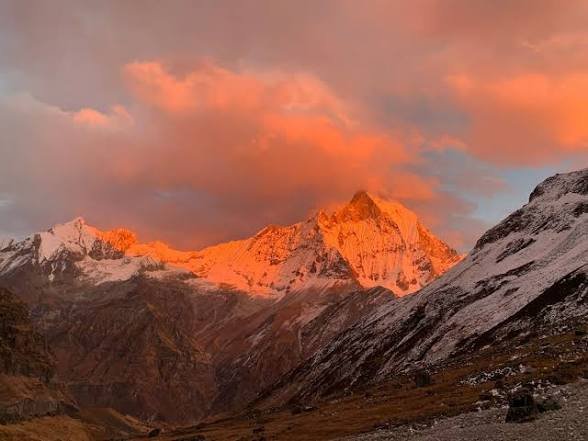
Annapurna I is one of the most famous and challenging mountains in the world. Rising to an elevation of approximately 8,091 meters (26,545 feet) above sea level, it is the tenth-highest mountain on Earth and the highest peak in the Annapurna massif of north-central Nepal. Located in the Himalayas, Annapurna I is celebrated for its enormous snow-covered slopes, dramatic ridges, extensive glaciers, and extraordinary natural beauty.
Despite its impressive appearance, Annapurna I is widely regarded as one of the most dangerous eight-thousand-meter mountains to climb. Its steep terrain, avalanche-prone slopes, unpredictable weather, and extreme altitude have made it a serious challenge for even the most experienced mountaineers. The mountain also holds a special place in climbing history because it became the first mountain higher than 8,000 meters to be successfully climbed, in 1950.
NASA Science
+1
Annapurna I is part of a larger mountain region that attracts trekkers, photographers, researchers, and nature enthusiasts from around the world. The surrounding landscape includes deep valleys, traditional Nepalese villages, forests, rivers, terraced farmland, and high alpine terrain. The famous Annapurna trekking region offers opportunities to experience the Himalayas without attempting a dangerous summit expedition.
The mountain’s significance extends beyond its elevation. Its name is associated with nourishment and abundance in Hindu tradition, its glaciers influence the surrounding environment, and its climbing history has helped shape modern mountaineering.
This comprehensive guide explores Annapurna I’s location, height, geography, geology, history, climbing routes, weather, wildlife, cultural significance, trekking opportunities, safety requirements, and environmental importance. Whether you are researching the world’s highest mountains or learning about Nepal’s natural landmarks, Annapurna I offers a fascinating look into one of the most extraordinary landscapes on Earth.
1. Where Is Annapurna I Located?
Annapurna I is located in north-central Nepal, within the Himalayan mountain range. It belongs to the Annapurna massif, a large collection of mountains situated in Gandaki Province.
The Annapurna massif lies north of the Pokhara region and forms part of the spectacular mountain landscape that has made Nepal internationally famous for trekking and mountaineering. Annapurna I is the highest summit in this massif, rising above a region of glaciers, valleys, ridges, and rugged alpine terrain.
Unlike a mountain located close to a major urban center, Annapurna I is surrounded by a complex natural environment. Its upper slopes are remote and difficult to access, while lower valleys contain settlements, agricultural land, forested areas, and established trekking routes.
The surrounding region
The wider Annapurna region includes several well-known locations:
- Pokhara: A major tourism center in Nepal and a common starting point for journeys into the Annapurna region.
- Annapurna Base Camp: A popular trekking destination situated within a dramatic mountain amphitheater.
- Ghandruk: A well-known village associated with mountain views and local Gurung culture.
- Chhomrong: A settlement frequently used by trekkers traveling toward Annapurna Sanctuary.
- Manang: An important mountain settlement on routes associated with the Annapurna Circuit.
- Jomsom: A town in the Kali Gandaki region that serves as a transport and trekking center.
- Machapuchare: A distinctive Himalayan mountain known for its pointed summit and striking appearance.
These places are associated with the broader Annapurna landscape, but they are not all located on the same route. Travelers should select their itinerary according to the destination, season, and available transportation.
Why the location is important
Annapurna I occupies a position within one of the most geologically active and visually dramatic mountain systems on Earth.
The Himalayas formed through the collision of the Indian and Eurasian tectonic plates. This process raised enormous areas of land, creating high peaks, deep valleys, and steep mountain slopes.
The geography surrounding Annapurna I also produces sharp changes in climate and vegetation. Lower elevations may support forests and agricultural communities, while higher elevations are characterized by alpine vegetation, glaciers, snowfields, and exposed rock.
The mountain’s location makes it important not only for mountaineering but also for geological research, ecological studies, and tourism.
2. How High Is Annapurna I?
Annapurna I stands approximately 8,091 meters (26,545 feet) above sea level. It is the highest mountain in the Annapurna massif and the tenth-highest mountain in the world by elevation.
Its height places it among the fourteen traditionally recognized eight-thousanders, a group of mountains that rise above 8,000 meters.
At this elevation, the mountain presents the extreme environmental conditions associated with the highest parts of the Himalayas. Atmospheric pressure is low, temperatures can fall well below freezing, and strong winds or storms may create dangerous climbing conditions.
Annapurna I: Mountain Facts
Elevation
8,091 m
26,545 feet
World ranking
10th
By elevation
Mountain range
Himalayas
Country
Nepal
First successful ascent
1950
Famous feature
Annapurna massif
Comparing Annapurna I with other famous mountains
Annapurna I is shorter than Everest and K2, but it belongs to the same exceptional group of mountains exceeding 8,000 meters.
| Mountain | Approximate elevation | Country or region |
|---|---|---|
| Mount Everest | 8,849 m | Nepal–China border |
| K2 | 8,611 m | Pakistan–China border region |
| Kangchenjunga | 8,586 m | Nepal–India border |
| Lhotse | 8,516 m | Nepal–China border |
| Makalu | 8,485 m | Nepal–China border |
| Cho Oyu | 8,188 m | Nepal–China border |
| Dhaulagiri I | 8,167 m | Nepal |
| Manaslu | 8,163 m | Nepal |
| Nanga Parbat | 8,126 m | Pakistan |
| Annapurna I | 8,091 m | Nepal |
The exact height of a mountain can depend on the measurement method and reference system, but the commonly accepted elevation for Annapurna I is 8,091 meters.
Why height matters
The height of Annapurna I creates several major challenges.
First, oxygen availability decreases as elevation increases. Climbers may experience extreme fatigue, reduced coordination, and difficulty making decisions.
Second, the upper mountain experiences severe cold and powerful winds. Exposure can increase the risk of frostbite and hypothermia.
Third, the summit is far above the elevations where humans can function normally without acclimatization. Even a physically fit person cannot safely approach extreme altitude without specialized preparation.
For these reasons, Annapurna I should be understood as an expedition-level mountain, not an ordinary trekking destination.
3. What Does the Name Annapurna Mean?
The name Annapurna comes from Sanskrit and is commonly interpreted as “full of food” or “giver of nourishment.” It is associated with the Hindu goddess Annapurna, who represents food, nourishment, and abundance.
The name is particularly meaningful in the context of a mountain region where water, fertile valleys, forests, and seasonal agriculture support human communities.
Annapurna’s name contrasts with the mountain’s demanding physical environment. Although its upper slopes are cold, steep, and difficult to access, the wider region includes landscapes that sustain villages, farms, and local traditions.
Annapurna in Hindu tradition
In Hindu tradition, Annapurna is associated with nourishment and the provision of food. The goddess is connected with the idea that food is essential to life and that abundance should be treated with gratitude and respect.
This cultural association contributes to the significance of the name beyond its geographical use.
It is important to recognize that the wider Annapurna region contains diverse communities and religious traditions. Visitors should approach local cultural practices respectfully and avoid assuming that all residents share identical beliefs.
The meaning of the mountain’s name
The name Annapurna can be understood through several connected ideas:
- Nourishment: The traditional meaning emphasizes food and sustenance.
- Abundance: The name evokes the provision of resources necessary for life.
- Nature: The mountain landscape includes rivers, forests, agricultural valleys, and alpine ecosystems.
- Cultural heritage: The name links the geographical landmark with longstanding religious and cultural traditions.
These associations help explain why Annapurna is a familiar name in both Nepalese geography and wider South Asian culture.
4. Understanding the Annapurna Massif
Annapurna I is part of a much larger mountain group known as the Annapurna massif. A massif is a compact group of mountains that forms a distinct geographical unit.
The Annapurna massif contains multiple major summits, ridges, glaciers, and connecting valleys. Its landscape is complex, and the individual peaks differ in elevation, shape, and climbing difficulty.
Annapurna I is the highest peak in the group, but it is not the only mountain of interest in the region.
Annapurna I
Annapurna I rises to approximately 8,091 meters and is the massif’s highest summit. It is internationally known for its climbing history and severe mountaineering hazards.
Its steep slopes and extensive snow-covered terrain make it a difficult objective even for experienced climbers.
Annapurna II
Annapurna II is another major peak in the massif, rising to approximately 7,937 meters. It is a prominent mountain with a substantial climbing history and a distinct geographical position within the larger group.
Although it shares the Annapurna name, it is a separate summit with its own routes and challenges.
Annapurna III
Annapurna III rises to approximately 7,555 meters. It is known for its dramatic mountain structure and difficult climbing terrain.
Annapurna IV
Annapurna IV reaches approximately 7,525 meters. It is another important summit within the massif, contributing to the region’s complex mountain skyline.
Gangapurna
Gangapurna rises to approximately 7,455 meters and forms part of the impressive mountain scenery visible from portions of the Annapurna trekking region.
Why the massif matters
The Annapurna massif offers a range of geographical features within a relatively concentrated area.
Its peaks, ridges, and valleys provide opportunities for scientific study, trekking, photography, and technical mountaineering. The region also supports diverse ecosystems and traditional communities whose lives are connected to the surrounding environment.
The massif should not be confused with Annapurna I alone. The mountain is the highest summit in the group, while the name Annapurna is also widely used for the wider region and its trekking destinations.
5. Why Is Annapurna I Considered One of the Most Dangerous Mountains?
Annapurna I is widely recognized as a particularly dangerous eight-thousander because of its avalanche-prone slopes, steep terrain, severe weather, and extreme altitude. Its history includes numerous fatal accidents, especially during the early decades of Himalayan mountaineering.
However, danger on a mountain is not determined by a single factor. Risk changes according to the route, weather, snow stability, climbing conditions, expedition experience, and decisions made during an ascent.
5.1 Avalanche danger
Avalanches are among the most serious hazards on Annapurna I. They occur when unstable snow moves downhill, sometimes with enormous force and speed.
The mountain’s steep slopes and heavy snow accumulation can create conditions in which snow layers fail. Climbers may be exposed to avalanche paths while traveling between camps or crossing snow-covered sections.
An avalanche can bury people, damage equipment, destroy tents, and make retreat extremely difficult. Even a relatively experienced team may have limited opportunities to escape when a large avalanche begins.
The danger also changes over time. Recent snowfall, temperature changes, wind, and the structure of older snow layers all affect stability.
5.2 Extreme altitude
At 8,091 meters, Annapurna I reaches an elevation where the human body faces severe oxygen deprivation.
At extreme altitude, climbers may experience:
- Persistent exhaustion and reduced physical performance.
- Headaches, nausea, and dizziness associated with altitude illness.
- Poor sleep and difficulty recovering from exertion.
- Reduced coordination and slower decision-making.
- Increased risk of life-threatening altitude-related conditions.
Acclimatization allows the body to make some adjustments to reduced oxygen availability, but it cannot eliminate the dangers of extreme altitude.
Climbers must monitor their health carefully and respond promptly to symptoms that indicate serious illness.
5.3 Unpredictable weather
Weather conditions can deteriorate rapidly in the Himalayas. Strong winds, snowfall, freezing temperatures, and poor visibility may appear with limited warning.
Wind can make movement difficult on exposed ridges, while snow can cover route markers and increase avalanche risk.
A climber who becomes trapped above a safe retreat point during a storm may face a serious emergency.
Careful weather forecasting is essential, but forecasts cannot guarantee safe conditions at every point on a complex mountain.
5.4 Steep and exposed terrain
Annapurna I contains steep snow slopes, icy sections, glaciers, and exposed ridges. Climbers may need to cross terrain where a fall could have severe consequences.
Moving safely requires technical ability, appropriate equipment, and experience judging the condition of snow and ice.
Equipment such as ropes, crampons, helmets, and ice axes can assist experienced climbers, but these tools do not remove the underlying risks.
5.5 Difficult rescues
Rescue operations on high mountains are complicated by altitude, weather, terrain, and distance from medical facilities.
A helicopter may be unable to reach an accident site because of strong winds, poor visibility, or elevation. Ground-based rescue teams may have to cross the same dangerous terrain that caused the accident.
For this reason, expedition teams need emergency plans, suitable communication equipment, medical supplies, and realistic expectations about rescue possibilities.
5.6 The danger of descending
Reaching the summit is only half of a successful expedition. Climbers must still return to lower elevations.
After a long ascent, fatigue may reduce concentration and coordination. Low oxygen availability makes physical work increasingly demanding, and deteriorating weather can make the descent more dangerous than the climb upward.
A responsible summit strategy therefore includes enough time and energy for the return journey.
Is Annapurna I more dangerous than Everest?
Annapurna I has historically been associated with a particularly high fatality rate relative to the number of successful ascents. However, comparing mountain danger requires care.
Different mountains have different numbers of climbers, route conditions, historical periods, and reporting methods. Improvements in equipment and expedition support also change the risks over time.
It is therefore more useful to recognize Annapurna I as a very dangerous high-altitude objective than to treat any single historical statistic as a guarantee of present-day risk.
6. The First Successful Ascent of Annapurna I

Annapurna I holds a special place in mountaineering history because it became the first mountain above 8,000 meters to be successfully climbed.
On 3 June 1950, French mountaineers Maurice Herzog and Louis Lachenal reached the summit during a French expedition led by Herzog. Their achievement took place three years before the first successful ascent of Mount Everest in 1953.
NASA Science
+1
The expedition marked a major moment in the development of high-altitude mountaineering. At the time, climbers had relatively limited experience operating above 8,000 meters, and the equipment available was less advanced than that used by modern expedition teams.
The French expedition
The 1950 expedition aimed to reach the summit of one of the world’s highest mountains. Its members explored routes, established camps, and worked through the logistical difficulties associated with climbing in remote Himalayan terrain.
The team had to contend with steep slopes, cold temperatures, glacier travel, and the challenge of moving supplies to higher elevations.
Reaching the summit required careful coordination and exceptional physical effort. The expedition’s success demonstrated that an eight-thousander could be climbed, opening a new chapter in the history of Himalayan exploration.
Herzog and Lachenal reach the summit
Maurice Herzog and Louis Lachenal reached the summit together on 3 June 1950.
Their ascent was a landmark achievement, but the return journey was extremely difficult. Both climbers suffered severe cold injuries, including frostbite, during the expedition.
The descent exposed the climbers to the dangers that continue to make high-altitude mountaineering difficult. Reaching a summit does not end the risks, particularly when climbers are exhausted and weather conditions remain severe.
The cost of the achievement
The 1950 ascent became famous partly because of the hardship experienced by the climbers afterward.
Herzog and Lachenal suffered major frostbite injuries, and their recovery involved serious medical consequences. The expedition demonstrated the extraordinary physical cost that early high-altitude mountaineering could impose.
Their story also contributed to broader discussions about preparation, risk, decision-making, and the responsibilities of expedition leaders.
Why the first ascent matters
The first ascent of Annapurna I is significant for several reasons.
First, it was the first successful climb of a mountain exceeding 8,000 meters. Second, it helped expand the technical and logistical knowledge available to later Himalayan expeditions. Third, it became a defining example of both human achievement and the dangers associated with extreme altitude.
The ascent is still remembered as a major milestone in mountain exploration.
7. Important Milestones in Annapurna I’s Climbing History
Annapurna I’s mountaineering history includes early exploration, the first ascent, difficult route developments, and expeditions that have expanded understanding of the mountain.
Before 1950: Exploration of the Himalayas
During the early twentieth century, mountaineers increasingly investigated the highest peaks of the Himalayas.
Geographical surveys and climbing expeditions gradually improved knowledge of mountain terrain, access routes, glaciers, and high-altitude conditions.
Annapurna I remained an exceptionally challenging objective because of its remoteness and the difficulty of reaching its upper slopes.
1950: The first ascent
Maurice Herzog and Louis Lachenal’s summit achievement made Annapurna I the first eight-thousander to be climbed successfully.
The ascent became an important event in international mountaineering and demonstrated the capabilities of a well-organized expedition operating in extreme terrain.
The decades following the first ascent
Later expeditions continued to investigate the mountain’s routes and climbing challenges.
Improved equipment, stronger communication systems, and greater experience with high altitude gradually changed expedition planning. However, avalanche danger and severe weather continued to make Annapurna I difficult.
1970: A major milestone in the history of the south face
The south face of Annapurna I became the setting for a landmark British expedition in 1970. Don Whillans and Dougal Haston reached the summit via the difficult south face, a significant achievement in Himalayan mountaineering.
The ascent demonstrated the technical demands of the mountain’s southern side and became an important episode in the history of difficult Himalayan face climbs.
Modern expeditions
Modern climbers benefit from improved weather forecasts, more advanced clothing, technical equipment, satellite communication, and accumulated experience from earlier expeditions.
These developments have improved preparation and decision-making, but they cannot eliminate avalanches, sudden storms, falls, or altitude-related illness.
The mountain continues to demand careful route selection and a willingness to turn back when conditions become unsafe.
What the history teaches us
The history of Annapurna I is a reminder that successful climbing depends on more than physical strength.
Route knowledge, weather assessment, teamwork, preparation, judgment, and the ability to recognize dangerous conditions are equally important.
The mountain’s past achievements should inspire interest and respect rather than encourage inexperienced people to underestimate its hazards.
8. The Geography of Annapurna I
The geography of Annapurna I is defined by its high summit, surrounding peaks, steep ridges, glaciers, and deep valleys.
The mountain rises within a complex Himalayan landscape where elevation changes dramatically over relatively short distances.
Mountain ridges and valleys
Annapurna I is surrounded by ridges that connect different sections of the massif. These ridges separate valleys and glaciers, creating a complex arrangement of mountain terrain.
The valleys carry meltwater and seasonal runoff toward lower elevations. Over long periods, rivers and glaciers have carved and reshaped the landscape.
The steep relief makes the region visually dramatic but also creates challenges for transport and access.
Glaciers and ice-covered slopes
Glaciers occupy many high-elevation areas around Annapurna I. Their slow movement shapes the terrain and transports rock and sediment downhill.
The mountain’s glaciers are important for scientific research because they reveal how ice responds to temperature, snowfall, and changes in the surrounding landscape.
The distribution of snow and ice varies with elevation, slope orientation, weather, and seasonal conditions.
The Annapurna Sanctuary
The Annapurna Sanctuary is a well-known mountain basin surrounded by towering Himalayan peaks. It is an important trekking destination associated with the wider Annapurna region.
Although it offers remarkable mountain scenery, the sanctuary is not the same thing as Annapurna I’s summit. Visitors generally experience the area through trekking routes that reach viewpoints and high mountain settings without undertaking technical climbing.
The sanctuary’s geography provides a clear example of how mountains can form a dramatic enclosure around a high valley.
Rivers and drainage
Water from rainfall, snowmelt, and glaciers contributes to rivers and streams throughout the region.
These water systems influence vegetation, agriculture, settlements, and the natural environment at lower elevations.
Seasonal changes in precipitation and melting can affect water availability and the condition of trails, bridges, and river crossings.
9. Geology: How Annapurna I Was Formed
Annapurna I formed within the Himalayan mountain system, which developed through the collision of the Indian and Eurasian tectonic plates.
The collision began tens of millions of years ago and continues to influence the region today. As the plates converged, the Earth’s crust was compressed, deformed, and uplifted, creating the enormous mountain chain that includes Annapurna I.
9.1 The formation of the Himalayas
The Indian plate moved northward toward Eurasia and eventually collided with the Eurasian plate.
The collision caused rock layers to fold, fracture, and become compressed. The crust thickened in many areas, producing high mountain ranges and elevated plateaus.
The Himalayas are a direct result of this ongoing geological process.
9.2 Tectonic uplift
Tectonic uplift occurs when geological forces raise sections of the Earth’s crust.
At Annapurna I, uplift has helped produce the extreme elevation and rugged relief characteristic of the massif.
Uplift is not the only process shaping the mountain, however. Erosion, glaciers, rivers, landslides, and weather also affect the landscape.
9.3 Erosion and mountain formation
Erosion removes rock and soil through the action of water, ice, wind, and gravity.
In the Annapurna region, glaciers and rivers are particularly important. Glaciers can carve valleys and transport large amounts of debris, while rivers carry sediment toward lower elevations.
These processes can deepen valleys and expose steep mountain slopes.
The resulting landscape reflects the interaction between tectonic uplift and erosion over geological time.
9.4 Rock structure
The Himalayas contain a variety of rock types, including sedimentary, igneous, and metamorphic rocks.
Metamorphic rocks develop when existing rocks are altered by pressure, heat, and chemical processes. Their mineral composition and structure can provide clues about the geological conditions experienced deep within the Earth’s crust.
The geology of the Annapurna region contributes to scientific understanding of continental collision and the development of high mountain ranges.
9.5 Why scientists study Annapurna
The mountain region provides opportunities to investigate:
- Tectonic plate movement and continental collision.
- Mountain uplift and erosion.
- Glacier movement and the development of valleys.
- Landslides and other geological hazards.
- The relationship between climate and landscape change.
- The long-term evolution of Himalayan terrain.
Annapurna I is therefore important not only because of its elevation but also because it forms part of a natural environment shaped by powerful geological forces.
10. Glaciers and Snowfields of Annapurna I
Glaciers are among the most important geographical features of Annapurna I. These large bodies of ice form when snow accumulates over many years and gradually compresses into dense ice.
The mountain’s high elevation and cold upper environment support extensive snow and ice. Glaciers descend through valleys and around ridges, shaping the terrain and contributing to the water systems of the surrounding region.
How glaciers form
Glaciers develop when snowfall accumulates faster than it melts over an extended period.
As additional snow falls, older layers become compressed. Eventually, the snow transforms into glacier ice. When the ice becomes thick enough, gravity causes it to deform and move downhill.
This movement can be slow, but its effects are substantial. Glaciers can carve valleys, transport rocks, and leave behind deposits of sediment.
The importance of snowfields
Snowfields are areas where snow remains for long periods, often feeding nearby glaciers.
Their size and stability depend on snowfall, temperature, wind, sunlight, and the shape of the surrounding terrain.
Snow conditions are particularly important for mountaineering. A slope may appear safe from a distance but contain unstable layers that could trigger an avalanche.
Conditions can also change during the day as sunlight warms the surface and temperatures fluctuate.
Glaciers and water resources
Snow and glacial melt contribute to streams and rivers that flow through the Himalayan region.
These water systems support ecosystems, agricultural activity, settlements, and downstream water supplies.
The timing of melting is important. Changes in snowfall and temperature can affect when water becomes available and how much runoff reaches lower elevations.
Climate change and glacier monitoring
Climate change is a significant concern for glaciers around the world. Changes in temperature and precipitation can influence glacier mass, snow accumulation, meltwater timing, and the stability of frozen terrain.
Individual glaciers do not all respond in the same way. Their behavior depends on local conditions, including altitude, slope orientation, snowfall, and ice dynamics.
Scientists use satellite imagery, field measurements, and long-term observations to study these changes.
Monitoring the glaciers around Annapurna is important for understanding the region’s changing environment and the potential implications for water resources and mountain hazards.
11. Weather and Climate on Annapurna I
The weather around Annapurna I varies dramatically with elevation. Lower valleys may experience relatively mild conditions during warmer months, while the upper mountain remains extremely cold and exposed.
This variation creates diverse landscapes but also makes travel and climbing challenging.
Summer weather
Summer is an important period for trekking in the Annapurna region. Lower elevations may have comfortable daytime temperatures, and vegetation becomes more prominent in forests and meadows.
However, summer weather can also bring rainfall, cloud cover, and slippery trails. Higher elevations may experience snowfall or freezing temperatures even when conditions are warm in the valleys.
Trekkers should prepare for changing weather rather than relying on average seasonal temperatures alone.
Winter conditions
Winter brings colder temperatures and snow to many parts of the mountain region. Higher routes may become difficult or inaccessible, and some services may operate on reduced schedules.
The summit area experiences far more severe conditions than the lower trekking valleys.
Winter climbing on Annapurna I is an extremely demanding undertaking requiring specialized experience, equipment, and expedition support.
The monsoon season
The summer monsoon brings substantial moisture to many parts of Nepal. Rainfall can reduce visibility, make trails slippery, and increase the risk of landslides or flooding in some areas.
Mountain conditions vary according to elevation and location, so not every part of the Annapurna region receives identical weather.
Travelers should consult current forecasts and local advice before setting out.
Spring and autumn
Spring and autumn are popular periods for many trekking itineraries because they can offer favorable combinations of temperature, visibility, and trail access.
Nevertheless, no season guarantees clear skies or safe conditions. Snowfall, rain, cold nights, and sudden changes in weather can occur.
The best travel period depends on the intended route and the type of experience a visitor wants.
12. Best Time to Visit Annapurna I
The best time to visit the Annapurna region depends on whether your goal is sightseeing, trekking, photography, or technical mountaineering.
For many established trekking routes, spring and autumn are popular choices. Summit expeditions require a more specialized assessment of conditions and weather windows.
March to May
Spring brings increasing temperatures and changing vegetation to many lower and middle elevations.
Potential advantages include:
- Forests and flowering plants in suitable areas.
- Comfortable conditions for many daytime walks.
- Opportunities for mountain photography.
- Established trekking services along popular routes.
Higher elevations can still be cold, and snow may affect some trails.
September to November
Autumn is another popular period for trekking in the Annapurna region.
Following the main monsoon period, some routes may offer clearer views and comparatively stable conditions. However, weather varies from year to year, and storms or snowfall remain possible.
Popular trekking areas can be busy during favorable travel periods, so accommodation planning is useful.
December to February
Winter can bring beautiful mountain scenery, but cold temperatures and snowfall may affect trail conditions.
Higher routes may be unsuitable for travelers without appropriate equipment and experience. Some accommodation or transport services may also be limited.
Visitors should confirm local conditions before choosing a winter itinerary.
June to August
The monsoon season can bring heavy rainfall to parts of Nepal. Trails may become muddy or slippery, while cloud cover can reduce mountain visibility.
Some travelers still visit during this period, but route choice and flexibility become particularly important.
Choosing your travel season
Before booking, consider your fitness, preferred activities, available time, and tolerance for changing weather.
Check local trail conditions, transport availability, accommodation, and any current permit requirements. For technical climbing, obtain specialist advice from reputable expedition operators.
13. Annapurna Base Camp and the Annapurna Sanctuary

Annapurna Base Camp is one of the best-known trekking destinations in Nepal. It lies within the wider Annapurna Sanctuary, a high mountain basin surrounded by impressive Himalayan peaks.
The destination attracts trekkers because it offers spectacular mountain scenery without requiring them to climb Annapurna I itself.
What is Annapurna Base Camp?
Annapurna Base Camp is a trekking destination associated with routes that pass through villages, forests, rivers, and increasingly rugged mountain terrain.
As trekkers move higher, the landscape changes. Lower sections may include terraced fields and wooded slopes, while higher areas reveal open valleys, rocky terrain, and snow-covered peaks.
The base camp provides an impressive view of the surrounding mountain amphitheater.
What makes the sanctuary special?
The Annapurna Sanctuary is notable for its enclosed mountain setting. High ridges and summits surround the basin, creating a dramatic environment for visitors.
The combination of glacial terrain, steep peaks, and open mountain views makes it popular with landscape photographers and trekking enthusiasts.
Weather and visibility determine how much of the surrounding mountain scenery can be seen on a particular day.
Is Annapurna Base Camp the summit?
No. Annapurna Base Camp is a trekking destination, not the summit of Annapurna I.
Reaching the base camp does not mean that a person has climbed the mountain. The summit lies much higher and requires a technically demanding, professionally organized expedition.
This distinction is important because trekking and eight-thousander climbing involve very different levels of preparation and risk.
What can visitors do there?
Depending on conditions, visitors can:
- Enjoy panoramic mountain views.
- Photograph glaciers and surrounding peaks.
- Learn about the geography of the Annapurna massif.
- Observe alpine vegetation and mountain habitats.
- Experience the trekking culture of Nepal.
- Explore designated trails with a suitable guide or trekking group.
Visitors should respect local rules, avoid leaving waste, and prepare for cold conditions at higher elevations.
14. The Annapurna Circuit and Other Trekking Opportunities
The Annapurna region offers several established trekking routes, each with its own scenery, difficulty, and duration.
The Annapurna Circuit and the Annapurna Base Camp trek are among the best-known options, but they provide different experiences.
The Annapurna Circuit
The Annapurna Circuit travels through a variety of landscapes around the broader Annapurna region. Depending on the itinerary, trekkers may encounter river valleys, agricultural settlements, forests, dry mountain terrain, and high passes.
The route’s diversity is one of its major attractions.
However, some sections involve substantial elevation gain and exposure to cold weather. Trekkers should prepare for the demands of their chosen itinerary and check current trail conditions.
The Annapurna Base Camp trek
The Annapurna Base Camp trek focuses on reaching the mountain sanctuary and viewing the surrounding peaks.
The route commonly passes through villages and forested terrain before entering a higher mountain environment.
Its scenery is a major attraction, but steep steps, uneven paths, and altitude can make the trek physically demanding.
Shorter treks and village walks
Visitors with limited time may choose shorter walks near established villages and viewpoints.
These activities can offer insight into local culture and mountain scenery without requiring a long expedition.
However, even a short walk may involve steep terrain. Travelers should choose routes that match their fitness and available time.
Choosing a route
Before choosing a trek, consider:
- The total distance and expected walking time.
- The amount of elevation gain.
- The highest elevation reached.
- Weather and seasonal conditions.
- Accommodation and food availability.
- The need for a guide, permits, or other arrangements.
- Your fitness and experience with multi-day hiking.
The best route is not necessarily the longest or highest. It is the one that matches your abilities and allows you to enjoy the region responsibly.
15. Wildlife and Biodiversity Around Annapurna I
The Annapurna region supports diverse ecosystems that change with elevation, temperature, vegetation, and water availability.
Lower elevations contain forests, agricultural land, and river valleys, while higher areas include alpine meadows, rocky slopes, and glacial environments.
These habitats support a range of plant and animal life.
Mammals of the region
The wider Himalayan region is home to mammals adapted to mountain environments, including Himalayan tahr, musk deer, and snow leopards in suitable habitats.
The Himalayan tahr is well adapted to steep terrain and can move across rocky slopes with remarkable agility.
Musk deer inhabit forested and mountainous areas, although their distribution depends on local habitat conditions.
Snow leopards are elusive predators associated with high mountain ecosystems. Their camouflage and preference for remote terrain make them difficult to observe in the wild.
Their presence in the wider region does not mean visitors will necessarily see them along popular trekking routes.
Birds and forest habitats
The Annapurna region supports birdlife across a range of habitats.
Forested slopes provide shelter and food for woodland species, while open alpine areas support birds adapted to colder, more exposed conditions.
Birdwatchers can improve their chances of observing wildlife by moving quietly and avoiding disturbance near nests or feeding areas.
Plants and vegetation
Vegetation changes with altitude.
Lower slopes may support subtropical and temperate forests, while higher elevations contain conifers, shrubs, grasses, and alpine plants.
At very high elevations, cold temperatures, strong winds, and short growing seasons limit plant growth.
These changes make the Annapurna region valuable for understanding how ecosystems respond to elevation and climate.
Environmental challenges
Mountain ecosystems face pressures from climate change, habitat disturbance, waste, and changes in land use.
Tourism can provide economic opportunities, but unmanaged visitor activity may damage trails, disturb wildlife, and place pressure on water sources.
Conservation requires cooperation among local communities, tourism operators, researchers, visitors, and public authorities.
How visitors can protect biodiversity
Travelers can help protect the environment by staying on established trails, carrying rubbish out, avoiding feeding wildlife, and respecting local conservation guidance.
They should also avoid removing plants or disturbing animals for photographs.
Responsible travel supports the long-term health of the mountain landscape.
16. Local Culture and Communities of the Annapurna Region
The Annapurna region is home to communities whose cultural traditions, livelihoods, and daily routines are closely connected to the Himalayan environment.
Local residents have adapted to differences in elevation, climate, terrain, and access to resources over generations.
Gurung and other communities
Gurung communities are associated with several villages in the Annapurna region, including Ghandruk. The wider region also contains other ethnic, linguistic, and cultural communities.
Traditions vary between locations, and visitors should not assume that every village has the same customs or language.
Traditional livelihoods
Agriculture, livestock raising, trade, hospitality, and tourism contribute to local livelihoods in different parts of the region.
Terraced fields reflect the adaptation of farming to steep slopes, while traditional settlements show how communities have developed around local water supplies and transportation routes.
Seasonal weather influences planting, harvesting, grazing, and travel.
Food and hospitality
Local food traditions vary across the Annapurna region. Visitors may encounter dishes prepared with rice, lentils, vegetables, grains, and other locally available ingredients.
Tourism has also increased the availability of meals and accommodation designed for trekkers.
When visiting local homes or cultural sites, travelers should respect local expectations and ask permission where appropriate.
Tourism and local livelihoods
Trekking supports employment for guides, porters, cooks, accommodation providers, transport workers, and small businesses.
Choosing reputable local services can help keep tourism benefits within the region.
Travelers should agree on service arrangements clearly, treat workers fairly, and respect the effort involved in transporting supplies through mountainous terrain.
Responsible cultural experiences
Responsible visitors seek to understand local culture without treating residents as attractions.
Ask permission before photographing people, respect religious and cultural sites, and follow local advice regarding clothing and behavior.
A respectful approach can make travel more rewarding for visitors and local communities alike.
17. Essential Equipment for Visiting Annapurna I
The equipment required for Annapurna I depends on the activity. A short village walk, a multi-day trek, and an eight-thousander expedition require very different levels of preparation.
Clothing and layering
Mountain weather can change quickly, so layering is generally more practical than relying on one heavy garment.
For ordinary trekking, useful clothing may include:
- Moisture-managing base layers.
- Warm insulating layers.
- Waterproof and wind-resistant outer clothing.
- Comfortable trekking trousers.
- Warm socks and suitable gloves.
- A hat or other sun protection.
- Extra clothing for cold evenings.
The appropriate amount of insulation depends on the season, altitude, and expected conditions.
Footwear
Sturdy footwear with good traction is important on uneven mountain trails.
Trekking shoes or boots should fit properly and be suitable for the intended route. New footwear should ideally be broken in before a long trek to reduce the likelihood of blisters.
Technical climbing requires specialized footwear appropriate for snow, ice, and extreme altitude.
Navigation and communication
Mountain routes can become difficult to follow when cloud, snowfall, or poor visibility reduces the usefulness of landmarks.
Travelers should understand their planned route and carry appropriate navigation equipment.
Mobile phones may work in some locations, but coverage cannot be assumed throughout remote mountain terrain. More demanding trips may require additional communication arrangements.
Food and water
Carry enough food and water for the planned activity, with additional supplies when delays are possible.
Water from streams should not automatically be assumed safe to drink. Suitable filtration or treatment may be necessary.
For multi-day treks, check the availability of food, drinking water, and accommodation along the intended route.
First aid and emergency preparation
A basic first-aid kit is useful for many trekking activities. It should be appropriate to the group, route, and expected conditions.
Travelers should know how to recognize altitude-related illness and understand when it is necessary to stop ascending or seek medical assistance.
Remote treks require realistic emergency plans because access to medical facilities may be limited.
Equipment for technical climbing
A summit expedition may require ropes, harnesses, helmets, crampons, ice axes, specialized boots, high-altitude clothing, and other technical equipment.
Equipment requirements depend on the chosen route and current conditions. Climbers must have the knowledge and experience to use their equipment correctly.
Owning technical gear does not replace professional instruction or practical mountaineering experience.
18. Safety Tips for Trekking and Climbing
Safety is essential when visiting the Annapurna region. Even popular trekking routes can involve cold weather, steep paths, altitude exposure, and changing trail conditions.
Summit climbing introduces much more serious hazards.
Check current conditions
Before departing, obtain current weather forecasts and reliable local information about route access, road conditions, and seasonal hazards.
A trail that was accessible recently may become difficult following snowfall, heavy rainfall, or a landslide.
Choose a suitable route
Select an itinerary that matches your fitness, experience, and available time.
Do not assume that a short distance on a map means an easy walk. Steep elevation gain, rough surfaces, and altitude can make a route considerably more demanding.
Acclimatize gradually
Altitude-related illness can affect people of different ages and fitness levels.
Increase elevation carefully, allow time for acclimatization, and avoid continuing upward when symptoms are worsening.
Severe breathlessness at rest, confusion, or difficulty walking straight can indicate a serious emergency requiring urgent medical attention and descent.
Protect against cold and rain
Wet clothing, wind, and low temperatures increase the risk of hypothermia.
Carry suitable layers and protect essential equipment from rain and snow. Recognize the early signs of cold-related illness and respond promptly.
Protect yourself from the sun
Sunlight can be intense at altitude, particularly when reflected by snow.
Sunglasses, sunscreen, protective clothing, and adequate hydration help reduce the risk of sunburn and eye irritation.
Respect local guidance
Follow trail closures, permit requirements, and advice from reliable local guides.
Do not enter hazardous areas simply because they appear accessible or because other visitors have done so.
Plan for emergencies
Share your itinerary with a trusted person and understand the available emergency arrangements.
For technical climbing, emergency planning should include communication, medical preparedness, route decisions, and realistic expectations about rescue options.
19. Photography Tips for Annapurna I
Annapurna I is an excellent subject for landscape photography. Its enormous snow-covered slopes, changing light, glaciers, and surrounding valleys provide opportunities for dramatic images.
Photograph in soft light
Early morning and late afternoon often produce attractive light across mountain ridges.
The changing angle of sunlight can reveal textures in snow and rock that may be less visible during the middle of the day.
Clear conditions are not guaranteed, so patience and flexibility are useful.
Include foreground elements
Including trees, trails, buildings, or nearby mountain slopes can help communicate the scale of the landscape.
A photograph that combines a foreground feature with the distant mountain may feel more immersive than a picture of the summit alone.
Manage bright snow
Snow can appear gray or lose detail when a camera’s automatic exposure system misjudges a bright scene.
Review your photographs and adjust exposure when necessary. Avoid editing that makes the mountain look unnatural.
Use changing weather creatively
Clouds can create dramatic contrasts around a mountain, while sunlight passing through gaps may illuminate particular slopes.
However, never put yourself in an exposed or dangerous location simply to obtain a photograph.
Respect local communities and wildlife
Ask permission when photographing people where appropriate, and avoid disturbing wildlife or damaging vegetation to reach a viewpoint.
Responsible photography allows visitors to document the landscape while protecting the environment.
20. How to Plan a Trip to the Annapurna Region
A successful trip begins with choosing an appropriate destination and building an itinerary around the season, available time, fitness, and budget.
Step 1: Choose your experience
Decide whether you want to explore villages, complete a short trek, visit Annapurna Base Camp, walk part of the Annapurna Circuit, or participate in a technical climbing expedition.
These activities require different levels of preparation and support.
Step 2: Travel to Pokhara
Pokhara is a major tourism center and a common starting point for trekking journeys into the Annapurna region.
Travelers can arrange transportation, accommodation, guides, and other services there before continuing toward their chosen trail.
Transport schedules and journey times should be confirmed for the intended dates.
Step 3: Arrange accommodation
Accommodation varies between towns, villages, and remote trekking locations.
Larger centers offer more facilities, while mountain villages may provide simpler lodges and guesthouses.
Check availability, meal arrangements, facilities, and payment options before departure, especially during popular trekking periods.
Step 4: Prepare physically
Even a moderate trek can involve hours of walking, steep steps, and uneven ground.
Build your fitness gradually before departure. For longer routes, prepare for repeated days of walking while carrying the equipment you expect to use.
Technical climbing requires specialized experience that cannot be gained through ordinary hiking alone.
Step 5: Budget carefully
Include transportation, accommodation, food, guides, equipment, permits where applicable, and contingency funds.
Costs vary with season, group size, itinerary, and service level. Obtain current prices rather than relying on estimates from older travel articles.
Step 6: Confirm permits and local requirements
Check current trekking and mountaineering requirements with relevant Nepalese authorities and reputable local operators.
Requirements may differ according to the route and activity, so confirm the rules for your exact itinerary.
Example itinerary for a trekking visitor
The following is an illustrative plan rather than a confirmed travel schedule.
| Day | Suggested activity |
|---|---|
| Day 1 | Arrive in Pokhara and organize supplies |
| Day 2 | Travel to the starting point of the chosen trek |
| Day 3 | Walk through villages and forested terrain |
| Day 4 | Continue toward a suitable mountain viewpoint |
| Day 5 | Explore the surrounding area, depending on conditions |
| Day 6 | Begin the return journey |
| Day 7 | Return to Pokhara and continue onward |
A longer trek may require substantially more time. Always check the exact route, altitude profile, accommodation, and weather before committing to an itinerary.
21. Environmental Conservation and the Future of Annapurna I
Annapurna I and the surrounding region are important for their glaciers, mountain habitats, cultural heritage, and scenic landscapes.
Protecting these resources helps maintain the area’s ecological value and supports communities that depend on its natural environment.
Reduce waste
Visitors should carry rubbish out of remote areas and use designated waste facilities where available.
Plastic packaging, batteries, and discarded equipment can remain in mountain environments for long periods.
Waste should never be thrown into streams, valleys, or glacier crevasses.
Protect water sources
Mountain streams and rivers support communities and ecosystems.
Avoid contaminating water sources, follow local sanitation guidance, and use appropriate practices for washing and waste disposal.
Respect fragile vegetation
Alpine plants often grow slowly because of cold temperatures and short growing seasons.
Staying on established trails where possible helps reduce damage to vegetation and soil.
Support responsible tourism
Tourism provides income for local guides, accommodation providers, porters, cooks, and other workers.
Visitors can contribute positively by choosing reputable local services, treating workers fairly, and respecting community customs.
Understand environmental change
Climate change, changing precipitation, and shifts in glacier conditions are important concerns in Himalayan environments.
Scientific monitoring helps researchers understand how these changes affect water resources, mountain hazards, and ecosystems.
Responsible tourism and scientific research can work together to protect the region while improving understanding of its natural processes.
22. Interesting Facts About Annapurna I
Annapurna I has many features that distinguish it from other famous mountains.
1. It is the tenth-highest mountain in the world. Its elevation is approximately 8,091 meters.
2. It is located in Nepal. The mountain forms part of the Himalayan range in north-central Nepal.
3. It belongs to the Annapurna massif. The massif contains several major summits, ridges, and glaciers.
4. Its name is associated with nourishment. Annapurna is commonly interpreted as “full of food” or “giver of nourishment.”
5. It was the first eight-thousander to be climbed. The first successful ascent took place in 1950.
6. Maurice Herzog and Louis Lachenal reached the summit. They completed the historic ascent on 3 June 1950.
7. It is considered a dangerous mountain. Avalanches, steep terrain, severe weather, and extreme altitude create substantial risks.
8. The south face is a major climbing objective. Its steep terrain has attracted technically demanding expeditions.
9. The wider region is famous for trekking. Annapurna Base Camp and the Annapurna Circuit are internationally recognized trekking destinations.
10. The mountain has extensive snow and ice. Glaciers and snowfields shape the landscape and contribute to regional water systems.
11. It is part of an active geological region. The Himalayas continue to be affected by tectonic processes.
12. The surrounding region supports diverse ecosystems. Forests, alpine meadows, and high mountain habitats support different species.
13. Local communities have longstanding cultural traditions. Their livelihoods and customs are closely connected to the Himalayan environment.
14. The summit and trekking destinations are different. Visiting Annapurna Base Camp does not mean climbing Annapurna I.
15. Its climbing history influenced mountaineering. The 1950 ascent helped establish a new era of high-altitude exploration.
These facts demonstrate why Annapurna I is important not only as a mountain but also as a geographical, cultural, scientific, and historical landmark.
23. Frequently Asked Questions About Annapurna I
1. Where is Annapurna I located?
Annapurna I is located in north-central Nepal, within the Himalayan mountain range. It is the highest summit in the Annapurna massif.
2. How tall is Annapurna I?
Annapurna I is approximately 8,091 meters (26,545 feet) above sea level, making it the tenth-highest mountain in the world.
3. Who first climbed Annapurna I?
Maurice Herzog and Louis Lachenal reached the summit on 3 June 1950 during a French expedition. Their achievement made Annapurna I the first successfully climbed mountain above 8,000 meters.
4. Why is Annapurna I considered dangerous?
The mountain is known for its avalanche-prone slopes, steep terrain, severe weather, and extreme altitude. These hazards make climbing it particularly demanding, even for experienced mountaineers.
5. What does Annapurna mean?
The name Annapurna comes from Sanskrit and is commonly interpreted as “full of food” or “giver of nourishment.” It is associated with the Hindu goddess of nourishment.
6. Is Annapurna I higher than Mount Everest?
No. Mount Everest is approximately 8,849 meters high, while Annapurna I is approximately 8,091 meters high.
7. What is the Annapurna massif?
The Annapurna massif is a group of mountains in Nepal that includes Annapurna I, Annapurna II, Annapurna III, Annapurna IV, and other peaks.
8. Can beginners visit Annapurna I?
Beginners can explore suitable trekking routes and viewpoints in the wider Annapurna region if their fitness and the conditions permit. Climbing the summit, however, is an extreme mountaineering undertaking that is not suitable for beginners.
9. What is Annapurna Base Camp?
Annapurna Base Camp is a popular trekking destination within the Annapurna Sanctuary. It offers impressive views of the surrounding Himalayan peaks but is not the summit of Annapurna I.
10. When is the best time to visit the Annapurna region?
Spring and autumn are popular seasons for trekking. Conditions vary by elevation and route, so travelers should check current weather, trail access, and local advice before departure.
11. What wildlife lives around Annapurna I?
The wider region supports Himalayan wildlife, including Himalayan tahr, musk deer, and snow leopards in suitable habitats. Wildlife sightings are never guaranteed.
12. Does Annapurna I have glaciers?
Yes. Glaciers and snowfields are important features of the mountain and help shape its valleys, slopes, and surrounding landscape.
13. Is trekking to Annapurna Base Camp difficult?
The trek can be physically demanding because of steep paths, elevation gain, uneven terrain, and changing weather. Its difficulty depends on the itinerary, the trekker’s fitness, and current conditions.
14. What equipment is needed for Annapurna trekking?
Useful equipment includes suitable trekking footwear, layered clothing, rain protection, navigation tools, drinking water, food, sun protection, and a first-aid kit. Requirements vary by route and season.
15. Why is Annapurna I important to science?
The mountain region provides opportunities to study tectonic activity, erosion, glaciers, mountain formation, and environmental change in the Himalayas.
16. How long does it take to visit Annapurna I?
The duration depends on the chosen activity. A short visit to the region may take a few days, while a multi-day trek requires a longer itinerary. A summit expedition requires substantially more time for acclimatization, climbing, and weather delays.
17. Can visitors see Annapurna I without climbing it?
Yes. The wider Annapurna region includes trekking routes and viewpoints from which visitors can appreciate the surrounding mountain scenery without attempting a summit climb.
18. What makes Annapurna I different from other eight-thousanders?
Annapurna I is especially notable for being the first eight-thousander successfully climbed in 1950 and for its challenging climbing conditions. Its combination of altitude, avalanche danger, and steep terrain has given it a distinctive place in mountaineering history.
24. Final Thoughts
Annapurna I is one of the most remarkable mountains in the Himalayas. Rising to approximately 8,091 meters, it combines extraordinary natural beauty with a climbing history that changed the course of high-altitude mountaineering.
Its successful ascent in 1950 marked a historic achievement, while its steep slopes, avalanche danger, and unpredictable weather continue to demand exceptional preparation and judgment from climbers.
Beyond mountaineering, the wider Annapurna region offers spectacular trekking landscapes, glaciers, forests, alpine habitats, and culturally rich mountain communities. Destinations such as Annapurna Base Camp and the Annapurna Circuit allow visitors to experience the beauty of the Himalayas without attempting the summit.
Understanding Annapurna I means appreciating both its natural grandeur and its dangers. Through responsible tourism, environmental conservation, and respect for local communities, visitors can help preserve this extraordinary mountain region for future generations.