
Introduction
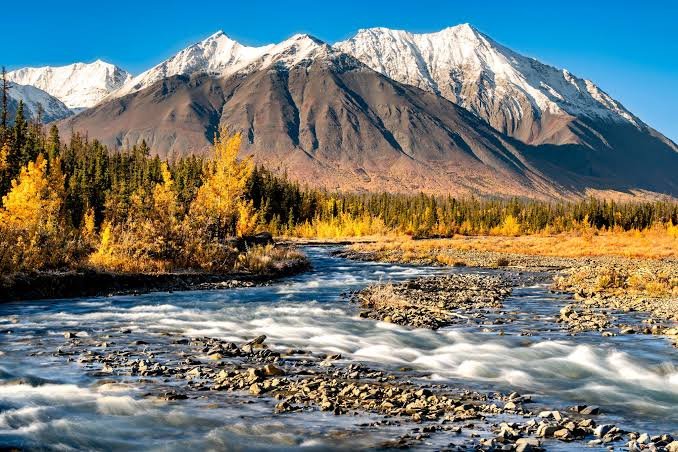
Mount Logan is one of the most remarkable mountains in the world and the highest mountain in Canada. Located in the Saint Elias Mountains of southwestern Yukon, Mount Logan is famous for its enormous size, impressive glaciers, extreme weather conditions, and spectacular natural beauty. With an elevation of approximately 5,959 meters (19,551 feet) above sea level, it is the second-highest mountain in North America, after Denali in Alaska.
Mount Logan is not only an important geographical landmark but also a symbol of Canada’s extraordinary wilderness. Its massive snow-covered peaks, extensive ice fields, and remote location make it one of the most fascinating destinations for mountaineers, researchers, geographers, and nature enthusiasts.
Unlike many famous mountains that attract large numbers of tourists, Mount Logan remains relatively isolated. Reaching the mountain requires careful planning, specialized equipment, and considerable mountaineering experience. Its harsh climate, unpredictable storms, high altitude, and challenging terrain make climbing extremely difficult.
The mountain is part of Kluane National Park and Reserve, an area recognized for its outstanding natural landscapes, glaciers, wildlife, and ecological importance. The surrounding region contains some of the largest non-polar ice fields in the world.
In this complete guide, we will explore Mount Logan’s location, height, geological history, climate, glaciers, wildlife, climbing history, natural environment, tourism, and importance to Canada.
1. Where Is Mount Logan Located?
Mount Logan is located in southwestern Yukon, Canada, within the Saint Elias Mountains. This mountain range stretches across parts of Canada, Alaska, and the United States. It is one of the most impressive mountain systems in North America.
Mount Logan lies inside Kluane National Park and Reserve, a protected wilderness area in Yukon. The park is internationally recognized for its dramatic mountain scenery, enormous glaciers, alpine landscapes, and rich natural heritage.
The mountain is situated relatively close to the Alaska border, although its main location is within Canadian territory. Its remote geographical position contributes to its difficult accessibility and relatively limited human activity.
The surrounding landscape includes high mountain ridges, deep valleys, ice-covered slopes, and extensive glacial systems. The region is also influenced by powerful weather systems coming from the Pacific Ocean.
The nearest communities include Haines Junction and other small settlements in southwestern Yukon. However, Mount Logan itself is far from ordinary roads, towns, and developed tourist facilities.
Its isolated location makes it an extraordinary destination for experienced mountaineers and scientific research teams.
2. How Tall Is Mount Logan?
Mount Logan reaches approximately 5,959 meters (19,551 feet) above sea level. This makes it the highest mountain in Canada and the second-highest mountain in North America.
Its enormous elevation places it among the world’s most impressive mountain peaks. Although it is lower than Denali, Mount Logan is famous for its remarkable mass and extensive mountain structure.
The mountain has a broad summit region containing several high points rather than one simple, narrow summit. Its enormous upper slopes and surrounding glaciers create a mountain landscape that is very different from many steep, pointed peaks.
Mount Logan’s height also makes it an important subject for geographical and geological research. Scientists study its elevation, ice systems, mountain formation, and environmental conditions to understand the development of the Saint Elias Mountains.
The mountain’s great height creates challenging conditions for climbers. As altitude increases, air pressure decreases and less oxygen is available with each breath. This makes physical activity increasingly difficult.
Climbers must also deal with freezing temperatures, strong winds, snowstorms, and rapidly changing weather.
3. Why Is Mount Logan Famous?
Mount Logan is famous for several important reasons.
First, it is the highest mountain in Canada. This geographical distinction makes it one of the country’s most important natural landmarks.
Second, it is one of the largest mountains in the world by mass. Its broad structure and enormous volume distinguish it from many other famous mountains.
Third, Mount Logan is surrounded by spectacular glaciers and ice fields. The Saint Elias Mountains contain some of the most extensive glacial landscapes outside the polar regions.
Fourth, the mountain has a challenging climbing history. Its remote location, difficult terrain, and severe weather conditions make mountaineering expeditions particularly demanding.
Mount Logan is also famous because it is located in a UNESCO World Heritage region. Kluane National Park and Reserve forms part of the larger Kluane/Wrangell-St. Elias/Glacier Bay/Tatshenshini-Alsek protected area, which is recognized for its exceptional natural features.
Together, these characteristics make Mount Logan an important destination for geographical study, environmental protection, and mountain exploration.
4. Geological Formation of Mount Logan
Mount Logan is part of the Saint Elias Mountains, a mountain system formed through complex geological processes involving tectonic plate movement.
The region lies near the boundary between the Pacific and North American tectonic plates. Their interaction has contributed to the uplift, deformation, and development of the surrounding mountain ranges.
Over millions of years, geological forces pushed and folded layers of rock, gradually creating the enormous mountain landscape visible today.
The Saint Elias Mountains contain a variety of rock types and geological structures. Their formation reflects a long history of tectonic activity, erosion, uplift, and glacial modification.
Mount Logan continues to be affected by geological processes. The movement of tectonic plates contributes to the region’s ongoing mountain-building activity.
Glaciers have also played a major role in shaping the mountain. Moving ice gradually erodes rock, transports sediment, and creates deep valleys and rugged mountain features.
The combination of tectonic uplift and glacial erosion has produced one of the most impressive mountain environments in North America.
5. The Saint Elias Mountains
Mount Logan belongs to the Saint Elias Mountains, one of the highest and most dramatic mountain ranges in North America.
This mountain range extends through southwestern Yukon, southeastern Alaska, and northwestern British Columbia. It contains several major peaks, extensive glaciers, and enormous ice-covered landscapes.
The Saint Elias Mountains are particularly famous for their steep elevation changes. Some peaks rise dramatically above nearby coastal landscapes, creating impressive mountain scenery.
The range includes Mount Logan, Mount Saint Elias, Mount Lucania, and many other significant summits.
Mount Saint Elias is another famous mountain in the region. It is located near the Canada-Alaska border and is known for its dramatic appearance.
The Saint Elias Mountains receive considerable moisture from Pacific weather systems. This contributes to extensive snowfall and the development of large glaciers.
The mountain range is also important for studying climate change, glacial movement, biodiversity, and geological development.
6. Kluane National Park and Reserve
Mount Logan is located within Kluane National Park and Reserve, one of Canada’s most spectacular protected wilderness areas.
The park is situated in southwestern Yukon and covers a vast landscape of mountains, glaciers, forests, rivers, and alpine ecosystems.
Kluane is internationally recognized for its natural beauty and exceptional glacial environment. Its landscapes include high mountain summits, extensive ice fields, and remote valleys.
The park protects important wildlife habitats and supports a variety of plant and animal species.
Visitors can explore accessible areas of Kluane through hiking, camping, wildlife observation, and scenic sightseeing. However, reaching Mount Logan itself requires a much more demanding expedition.
Kluane is also culturally significant. The region has deep connections with Indigenous peoples, including the Champagne and Aishihik First Nations, Kluane First Nation, and White River First Nation.
Their traditional knowledge, history, and cultural relationships with the land are important parts of the region’s heritage.
The park’s protected status helps preserve its natural and cultural values for future generations.
7. Mount Logan’s Glaciers and Ice Fields
One of Mount Logan’s most impressive characteristics is its enormous glacial environment.
The mountain is surrounded by extensive glaciers and ice-covered terrain. These glaciers are important components of the Saint Elias Mountains ecosystem.
Glaciers form when accumulated snow gradually compresses into ice over long periods. Under suitable conditions, the ice becomes thick enough to move slowly under its own weight.
As glaciers move, they shape the surrounding landscape. They can carve valleys, transport rock material, and create distinctive mountain features.
Mount Logan’s high elevation and cold climate support extensive snow and ice accumulation.
The surrounding ice fields also provide valuable information about past environmental conditions. Scientists study glacial ice to understand temperature changes, snowfall patterns, and atmospheric conditions.
However, glaciers around the world are responding to climate change. Changes in temperature and precipitation can influence glacier size, movement, and long-term stability.
Monitoring these changes is important for understanding the future of mountain environments.
8. Climate and Weather on Mount Logan
Mount Logan has an extremely cold and unpredictable mountain climate.
Its high elevation creates conditions that are significantly different from those found in nearby valleys and communities.
Temperatures can remain below freezing for much of the year, especially near the summit.
Strong winds are common and can make the environment feel considerably colder. Wind can also create dangerous conditions for mountaineers.
Snowstorms and sudden weather changes are major challenges in the region. Clear conditions can quickly change into periods of poor visibility and severe cold.
The mountain’s weather is influenced by its elevation, geographical position, and surrounding Pacific weather systems.
Lower elevations may experience different seasonal conditions, while the upper mountain remains dominated by snow and ice.
Mount Logan’s weather makes climbing difficult even for experienced mountaineers.
Expeditions must carefully monitor forecasts and prepare for extended periods of poor conditions.
9. Best Time to Explore Mount Logan
The most suitable period for serious mountaineering expeditions on Mount Logan is generally during the late spring and summer climbing season.
However, summer does not mean that conditions are warm or comfortable. Temperatures at high elevations can remain extremely cold, and severe storms can occur at any time.
Expedition timing depends on weather forecasts, snow conditions, route selection, and the experience of the climbing team.
For ordinary visitors who want to explore Kluane National Park, late spring, summer, and early autumn can provide opportunities to enjoy hiking and scenic landscapes in accessible areas.
Summer generally offers longer daylight hours, which can make outdoor activities more convenient.
Autumn brings changing vegetation colors and cooler temperatures. Winter provides a completely different landscape, with snow-covered valleys and challenging outdoor conditions.
Visitors should always check official park information before travelling because weather, access, and activity conditions can change.
10. Mount Logan’s Wildlife
The region surrounding Mount Logan supports a variety of wildlife species.
Although the highest mountain slopes are too cold and exposed for most animals, lower elevations contain forests, valleys, alpine meadows, and other habitats.
Some of the important wildlife species found in the broader Kluane region include:
Grizzly Bears
Grizzly bears are among the most recognizable animals in Yukon. They inhabit different environments, including mountain valleys, forests, and open landscapes.
They play an important role in the ecosystem and are protected wildlife within the region.
Dall Sheep
Dall sheep are adapted to mountainous environments. They are known for their ability to move across steep rocky slopes and alpine terrain.
Their presence is an important part of the mountain ecosystem.
Mountain Goats
Mountain goats inhabit rugged mountain landscapes and are well adapted to steep terrain.
Their thick coats help them survive cold mountain conditions.
Caribou
Caribou are important animals in northern ecosystems. They depend on different habitats throughout the year and are culturally significant to many Indigenous communities.
Wolves
Wolves are important predators in Yukon ecosystems. They help maintain ecological balance by influencing prey populations.
Arctic Ground Squirrels
These small mammals are adapted to cold environments and are commonly associated with open alpine and subalpine habitats.
The wildlife of Kluane National Park demonstrates the remarkable ability of animals to survive in challenging northern environments.
11. Vegetation Around Mount Logan
Vegetation around Mount Logan changes significantly with elevation.
At lower elevations, forests contain trees and shrubs adapted to cold northern conditions.
As elevation increases, trees become less common. Alpine plants, grasses, mosses, and small shrubs may grow in suitable areas.
Near the highest mountain slopes, permanent snow and ice prevent most plant growth.
The growing season in Yukon is relatively short, so plants must complete important stages of their life cycle within a limited period.
Some alpine plants are specially adapted to survive strong winds, freezing temperatures, and thin soils.
The vegetation of Kluane National Park contributes to biodiversity and provides habitat and food for wildlife.
These plant communities are also sensitive to environmental changes, including rising temperatures and changing snowfall patterns.
12. History of Mount Logan
Mount Logan has a fascinating history involving exploration, scientific research, and mountaineering.
Before modern geographical surveys, much of the region remained difficult for outsiders to access because of its remote location and challenging terrain.
Indigenous peoples have longstanding connections with the surrounding lands. Their histories and traditional knowledge existed long before modern mountain expeditions.
During the late nineteenth and early twentieth centuries, geographical exploration increased in the Saint Elias Mountains.
Mount Logan attracted attention because of its enormous height and its importance to Canadian geography.
In 1890, the mountain was named in honour of Sir William Edmond Logan, a Canadian geologist who founded the Geological Survey of Canada.
The naming recognized his major contributions to geological science and the study of Canada’s natural resources.
The mountain later became a major objective for mountaineers interested in exploring the highest summit in Canada.
Its first successful ascent in 1925 became an important event in Canadian mountaineering history.
13. Who Was Sir William Edmond Logan?
Mount Logan was named after Sir William Edmond Logan, one of Canada’s most important early geologists.
He was born in 1798 in Montreal and became internationally respected for his geological research.
Logan played a major role in establishing the Geological Survey of Canada in 1842.
His work helped improve scientific understanding of Canada’s geological structure and mineral resources.
He conducted extensive geological investigations and contributed to the development of geological mapping in Canada.
His research was important for understanding the country’s natural resources and geological history.
Naming Canada’s highest mountain after him recognized his contributions to science and exploration.
Today, Mount Logan remains a lasting geographical tribute to his work.
14. First Successful Climb of Mount Logan
The first successful ascent of Mount Logan took place in 1925.
The expedition was led by Albert H. MacCarthy and included a team of experienced climbers.
The successful climb was an important achievement because the mountain’s remote location, enormous elevation, and difficult weather created major challenges.
The expedition required extensive preparation, equipment, supplies, and careful coordination.
Climbers had to deal with snow, ice, cold temperatures, and the physical demands of high-altitude travel.
Reaching the summit demonstrated the possibilities of organized mountaineering in Canada’s northern wilderness.
The 1925 expedition became an important chapter in the history of Canadian exploration.
15. Why Is Climbing Mount Logan So Difficult?
Climbing Mount Logan is considered a serious mountaineering challenge.
Several factors make the mountain difficult to climb.
Extreme Altitude
At approximately 5,959 meters, Mount Logan is high enough to create significant altitude-related challenges.
The reduced availability of oxygen makes physical activity more demanding.
Severe Weather
The mountain is known for unpredictable weather, strong winds, freezing temperatures, and heavy snowfall.
Remote Location
Mount Logan is located in a remote wilderness area. Reaching the mountain requires logistical planning and specialized expedition support.
Extensive Glaciers
Glaciers create challenging terrain and require appropriate mountaineering knowledge.
Physical Endurance
Climbers need excellent physical conditioning and the ability to manage demanding conditions over an extended period.
Limited Rescue Access
Because the mountain is remote, emergency assistance may be difficult to arrange.
For these reasons, Mount Logan should only be attempted by appropriately experienced mountaineers working with suitable professional support and preparation.
16. Mount Logan Compared With Other Famous Mountains
Mount Logan is one of the highest mountains in North America.
Comparing it with other famous mountains helps explain its geographical importance.
Mount Logan: Approximately 5,959 meters. Located in Yukon, Canada.
Denali: Approximately 6,190 meters. Located in Alaska, United States.
Mount Saint Elias: Approximately 5,489 meters. Located near the Canada-Alaska border.
Mount Kilimanjaro: Approximately 5,895 meters. Located in Tanzania.
Mount Aconcagua: Approximately 6,961 meters. Located in Argentina.
Mount Everest: Approximately 8,849 meters. Located in the Himalayas on the Nepal-China border.
Mount Logan is taller than Kilimanjaro and Mount Saint Elias but lower than Denali, Aconcagua, and Everest.
Its position as Canada’s highest mountain gives it special national and geographical importance.
17. The Natural Beauty of Mount Logan
Mount Logan is famous for its extraordinary natural beauty.
Its snow-covered summits, enormous glaciers, rugged ridges, and surrounding mountain landscapes create an impressive wilderness environment.
The mountain’s upper slopes are often covered with snow and ice, giving the landscape a dramatic appearance.
During periods of clear weather, sunlight can illuminate the surrounding glaciers and mountain ridges.
The region also contains deep valleys, flowing rivers, alpine landscapes, and forested areas.
These different environments create a remarkable natural setting.
Photographers and nature enthusiasts are attracted to the broader Kluane region because of its scenic views and wilderness atmosphere.
Although Mount Logan itself is difficult to reach, visitors can enjoy beautiful mountain scenery from more accessible areas of Kluane National Park.
18. Tourism Around Mount Logan
Tourism in the Mount Logan region is closely connected with Kluane National Park and Reserve.
The park offers a variety of outdoor experiences for visitors who want to explore Yukon wilderness.
Popular activities in accessible parts of the region include:
- Hiking and nature walks
- Camping in designated areas
- Wildlife observation
- Scenic sightseeing
- Photography
- Backpacking
- Learning about glaciers and mountain environments
- Exploring local cultural and natural heritage
The park contains several hiking opportunities, including trails that provide views of mountains, valleys, and surrounding landscapes.
Visitors interested in Mount Logan should understand that viewing the mountain and climbing it are very different activities.
Most tourists do not need to attempt a technical expedition to appreciate the beauty of the region.
Planning a visit requires checking park regulations, weather conditions, seasonal access, and available services.
19. Hiking Opportunities in Kluane National Park
Kluane National Park provides hiking opportunities for visitors with different experience levels.
Some trails are suitable for relatively short walks, while others require greater endurance and preparation.
The park’s hiking environments include forested areas, mountain slopes, river valleys, and alpine landscapes.
Popular hiking areas include routes around Haines Junction and other accessible sections of the park.
Visitors should choose trails according to their experience, physical ability, weather conditions, and available time.
Mountain environments can change quickly, so even shorter hikes require sensible preparation.
Carrying suitable clothing, water, food, navigation equipment, and emergency supplies is important.
Hikers should also respect wildlife and follow official park guidance.
20. Photography and Scenic Views
The Mount Logan region is an excellent destination for nature photography.
Its dramatic mountain scenery offers opportunities to photograph glaciers, snowy summits, forests, rivers, and wildlife.
Different seasons create different photographic conditions.
Summer provides longer daylight hours and opportunities to photograph green valleys and alpine landscapes.
Autumn can produce beautiful seasonal colors in lower-elevation vegetation.
Winter creates snow-covered landscapes and a distinctive northern atmosphere.
Photographers should always respect wildlife distances and avoid disturbing natural habitats.
Because Mount Logan is remote, visitors should plan their photography trips around accessible viewpoints and current park conditions.
21. Mount Logan and Climate Change
Climate change is an important issue for Mount Logan and the surrounding Saint Elias Mountains.
Mountain environments are particularly sensitive to changes in temperature and precipitation.
Glaciers respond to changing climatic conditions through variations in snowfall, melting, and ice movement.
When temperatures rise, glaciers may lose more ice than they gain through snowfall.
Changes in glacier conditions can influence rivers, ecosystems, and water availability.
Scientists study the glaciers of the Saint Elias Mountains to understand long-term environmental changes.
Mount Logan’s high-altitude environment also provides valuable information about past atmospheric conditions.
Ice cores collected from suitable locations can preserve records of historical climate and atmospheric composition.
This scientific information helps researchers understand how the climate has changed over time.
Protecting mountain environments is important for biodiversity, freshwater systems, and future scientific research.
22. Scientific Research on Mount Logan
Mount Logan is an important location for geographical, geological, and environmental research.
Scientists are interested in its glaciers, ice fields, mountain climate, tectonic setting, and high-altitude conditions.
Research in the region can help explain how glaciers develop and respond to environmental changes.
Ice studies provide information about past snowfall and atmospheric conditions.
Geological research helps explain the formation of the Saint Elias Mountains and the movement of tectonic plates.
Climate scientists also study high-altitude environments to understand changing temperatures and precipitation patterns.
Research activities require careful planning because the region is remote and weather conditions can be severe.
Scientific expeditions contribute valuable knowledge about mountain systems and environmental change.
23. Indigenous Heritage and Cultural Importance
The Mount Logan region is part of a landscape with deep Indigenous history.
The surrounding lands are connected to Indigenous peoples who have lived in and travelled through the region for generations.
These communities have developed extensive knowledge of local wildlife, seasonal patterns, rivers, mountains, and natural resources.
The Champagne and Aishihik First Nations, Kluane First Nation, and White River First Nation are among the Indigenous communities connected with the broader Kluane region.
Their cultures and traditional knowledge are important parts of the area’s identity.
Understanding Mount Logan and Kluane National Park requires recognizing that the landscape is not simply an isolated natural environment. It is also a place of cultural history, relationships, and continuing significance.
Responsible tourism should respect Indigenous communities, cultural sites, local guidance, and the history of the land.
24. Environmental Protection Around Mount Logan
Environmental protection is essential for maintaining the natural beauty and ecological importance of Mount Logan.
Kluane National Park and Reserve provides protection for important habitats, glaciers, wildlife, and mountain landscapes.
Visitors can help protect the environment by following park rules and practising responsible outdoor recreation.
Important environmental practices include:
- Staying on designated trails where required.
- Taking all rubbish away.
- Avoiding disturbance to wildlife.
- Respecting protected habitats.
- Following camping regulations.
- Avoiding damage to vegetation.
- Respecting Indigenous cultural heritage.
- Following official safety instructions.
Mountain environments can be fragile, particularly in areas where vegetation grows slowly and recovery from damage may take a long time.
Responsible tourism helps protect these landscapes for future generations.
25. What Makes Mount Logan Different From Other Mountains?
Mount Logan has several characteristics that distinguish it from other famous mountains.
Its enormous mass is one of its most unusual features.
Unlike narrow, pointed mountain summits, Mount Logan has a broad upper mountain structure with several high points.
Its surrounding glaciers and ice fields also contribute to its distinctive appearance.
The mountain is located in a remote northern wilderness, making access more difficult than at many well-known tourist mountains.
Its location within the Saint Elias Mountains creates an impressive geographical setting.
Mount Logan is also important because it is the highest mountain in Canada and a major part of the country’s natural heritage.
These characteristics make it a unique subject for mountaineering, geography, science, and tourism.
26. Interesting Facts About Mount Logan
Here are some interesting facts about Mount Logan:
- Mount Logan is the highest mountain in Canada.
- Its elevation is approximately 5,959 meters above sea level.
- It is the second-highest mountain in North America.
- It is located in southwestern Yukon.
- The mountain belongs to the Saint Elias Mountains.
- It is situated within Kluane National Park and Reserve.
- Mount Logan was named after Canadian geologist Sir William Edmond Logan.
- The mountain was named in 1890.
- Its first successful ascent took place in 1925.
- The mountain is surrounded by extensive glaciers and ice fields.
- Its remote location makes access difficult.
- Severe weather is a major mountaineering challenge.
- The surrounding region contains important wildlife habitats.
- Kluane National Park is part of a UNESCO World Heritage property.
- The mountain is an important location for scientific research.
27. How to Visit the Mount Logan Region
Visitors interested in exploring the Mount Logan region generally begin their journey in southwestern Yukon.
Haines Junction is an important community and access point for visitors exploring Kluane National Park.
Travellers can reach the broader region through road connections from Whitehorse and other parts of Yukon.
Whitehorse is the territorial capital and an important transportation centre.
Once in the region, visitors can explore accessible park areas through approved roads, trails, and visitor facilities.
However, Mount Logan itself is not an ordinary sightseeing destination.
Reaching the mountain requires specialist expedition planning, suitable transport, appropriate equipment, and significant mountaineering experience.
Travellers who simply want to enjoy the landscape can explore the park’s accessible areas without attempting a climb.
Before travelling, visitors should check current park information, weather conditions, transportation options, and local regulations.
28. Safety Considerations for Visitors
Safety should always be a priority when visiting mountain environments.
Weather conditions can change rapidly, especially at higher elevations.
Visitors should prepare for cold temperatures, strong winds, rain, snow, and changing visibility.
Hikers should select routes appropriate to their experience and physical abilities.
They should also inform someone about their plans and expected return time.
Wildlife safety is another important consideration. Animals should never be approached, fed, or disturbed.
Visitors should store food appropriately and follow official wildlife safety guidance.
Anyone planning a technical mountaineering expedition must have appropriate training and professional-level preparation.
Mount Logan is not suitable for inexperienced climbers.
The mountain’s remoteness and harsh environment mean that mistakes can have serious consequences.
29. Mount Logan’s Importance to Canada
Mount Logan holds an important place in Canada’s geographical and natural heritage.
As the country’s highest mountain, it represents one of the most impressive features of Canada’s landscape.
It also highlights the extraordinary natural diversity of Yukon.
The mountain contributes to Canada’s international reputation for wilderness, glaciers, mountain landscapes, and protected natural areas.
Its scientific importance makes it valuable for research into geology, climate, and glacial systems.
Its cultural setting also reminds visitors of the longstanding relationships between Indigenous communities and the land.
Mount Logan is therefore important not only as a mountain peak but also as part of a much larger natural and cultural environment.
30. Mount Logan for Nature Lovers and Adventure Enthusiasts
Mount Logan attracts interest from people who appreciate nature, geography, and adventure.
Experienced mountaineers are fascinated by its height, glaciers, and challenging conditions.
Photographers appreciate the dramatic scenery of the surrounding Saint Elias Mountains.
Scientists value the region for its glaciers, climate records, and geological features.
Nature lovers can explore accessible parts of Kluane National Park and experience its forests, valleys, rivers, and wildlife.
The mountain also provides an opportunity to learn about Canada’s northern wilderness and the importance of environmental conservation.
Even people who never climb Mount Logan can appreciate its importance through its geographical history and natural surroundings.
Conclusion
Mount Logan is one of the most remarkable mountains in North America and an extraordinary symbol of Canada’s natural wilderness. Standing approximately 5,959 meters above sea level, it is the highest mountain in Canada and the second-highest peak in North America.
Located in the Saint Elias Mountains of southwestern Yukon, Mount Logan is famous for its enormous size, extensive glaciers, extreme weather, and challenging mountaineering conditions.
Its history includes geographical exploration, scientific research, and the first successful ascent in 1925. The mountain is also connected with the legacy of Canadian geologist Sir William Edmond Logan, after whom it was named.
The surrounding Kluane National Park and Reserve protects important ecosystems, wildlife habitats, glaciers, and culturally significant landscapes.
Mount Logan is much more than a geographical landmark. It represents the beauty, complexity, and environmental importance of Canada’s northern mountain wilderness.
Whether viewed as a geographical wonder, a scientific research location, or a challenging mountaineering destination, Mount Logan remains one of the most fascinating mountains in the world.
For anyone interested in mountains, glaciers, Canadian geography, and natural environments, Mount Logan is a subject worth exploring.
Frequently Asked Questions About Mount Logan
1. Where is Mount Logan located?
Mount Logan is located in southwestern Yukon, Canada, within the Saint Elias Mountains and Kluane National Park and Reserve.
2. How tall is Mount Logan?
Mount Logan is approximately 5,959 meters (19,551 feet) above sea level.
3. Is Mount Logan the highest mountain in Canada?
Yes. Mount Logan is the highest mountain in Canada.
4. Is Mount Logan the highest mountain in North America?
No. It is the second-highest mountain in North America. Denali in Alaska is higher.
5. Who discovered Mount Logan?
Mount Logan was named in 1890 in honour of Canadian geologist Sir William Edmond Logan. Indigenous peoples had longstanding knowledge of and connections with the region before modern geographical exploration.
6. When was Mount Logan first climbed?
The first successful ascent took place in 1925 by an expedition led by Albert H. MacCarthy.
7. Why is Mount Logan difficult to climb?
Its extreme altitude, severe weather, extensive glaciers, remote location, and demanding terrain make climbing difficult.
8. What mountain range contains Mount Logan?
Mount Logan is part of the Saint Elias Mountains.
9. What national park contains Mount Logan?
Mount Logan is located within Kluane National Park and Reserve in Yukon, Canada.
10. What animals live near Mount Logan?
Wildlife in the broader Kluane region includes grizzly bears, Dall sheep, mountain goats, caribou, wolves, and Arctic ground squirrels.
11. Can tourists visit Mount Logan?
Visitors can explore accessible areas of Kluane National Park and enjoy views of the surrounding mountain region. Reaching Mount Logan itself requires a specialized mountaineering expedition.
12. What is the best season to visit the Mount Logan region?
Summer is generally a popular season for exploring accessible areas of Kluane National Park. Serious mountaineering expeditions usually require careful seasonal and weather planning.
13. Why was Mount Logan named after William Edmond Logan?
The mountain was named in recognition of Sir William Edmond Logan’s important contributions to Canadian geology and the establishment of the Geological Survey of Canada.
14. Is Mount Logan covered with snow?
Its upper elevations are extensively covered by snow and ice, although conditions vary with elevation and weather.
15. Why is Mount Logan important?
Mount Logan is important because it is Canada’s highest mountain, supports extensive glacial environments, contributes to scientific research, and forms part of an internationally recognized protected landscape.
SEO Information
SEO Title: Mount Logan Mountain: Complete Guide to Canada’s Highest Peak
Meta Description: Discover Mount Logan Mountain in Canada, including its height, location, glaciers, climate, wildlife, climbing history, and fascinating facts.
Focus Keyword: Mount Logan Mountain
Secondary Keywords:
- Mount Logan Canada
- Highest mountain in Canada
- Mount Logan height
- Mount Logan location
- Saint Elias Mountains
- Kluane National Park
- Mount Logan climbing history
- Canadian mountains
- Mount Logan glaciers
- Yukon mountain wilderness
Suggested URL Slug: mount-logan-mountain
Article Category: Mountains and Geography
Search Intent: Informational