
Introduction
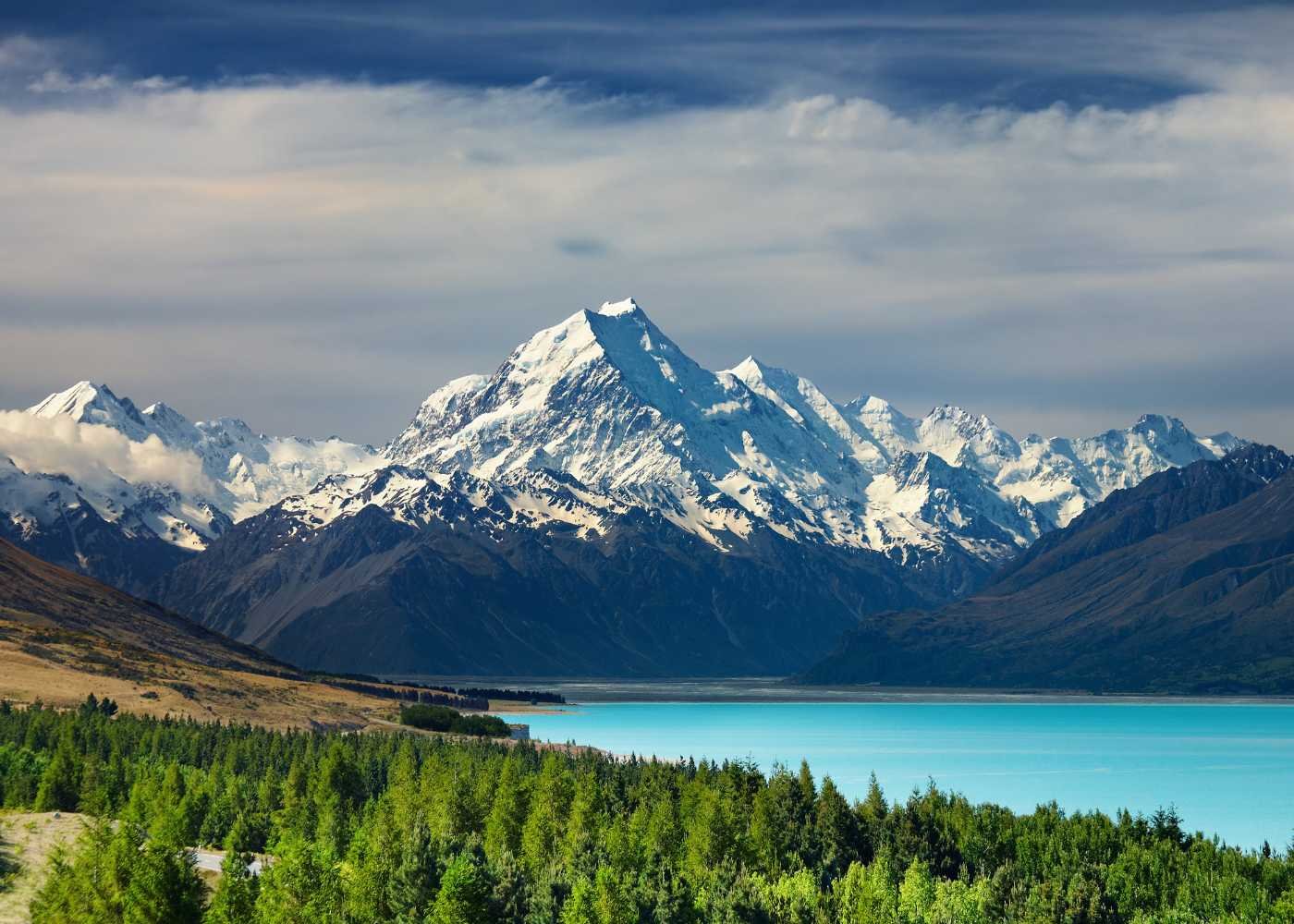
Mount Cook, officially known as Aoraki / Mount Cook, is the highest mountain in New Zealand and one of the most spectacular natural landmarks in the Southern Alps. Located on the South Island of New Zealand, this magnificent mountain attracts climbers, hikers, photographers, nature lovers, and adventure travelers from around the world. With its impressive height, dramatic peaks, enormous glaciers, and breathtaking alpine scenery, Mount Cook represents the extraordinary beauty of New Zealand’s natural environment.
Standing at approximately 3,724 meters (12,218 feet) above sea level, Aoraki / Mount Cook dominates the surrounding landscape. Its snow-covered summit, steep rocky slopes, and surrounding glaciers create a remarkable mountain environment. The mountain is located within Aoraki / Mount Cook National Park, an internationally recognized destination famous for its natural beauty, outdoor recreation, and exceptional mountain scenery.
Mount Cook is more than simply a geographical landmark. It holds deep cultural and spiritual significance for Māori communities, particularly the Ngāi Tahu people. The name Aoraki comes from Māori tradition and reflects the mountain’s importance in the cultural history of the region.
The surrounding national park offers numerous opportunities for visitors to experience the Southern Alps. Popular activities include hiking, scenic flights, glacier sightseeing, mountaineering, stargazing, and wildlife observation.
This complete guide explores Mount Cook’s location, geography, history, geology, climate, glaciers, wildlife, hiking opportunities, tourism, cultural importance, and conservation. Whether you are researching New Zealand’s mountains or planning a future visit, understanding Aoraki / Mount Cook reveals why it is one of the country’s most extraordinary natural treasures.
1. Where Is Mount Cook Located?
Mount Cook is located on the South Island of New Zealand within the Southern Alps, a major mountain range that stretches along much of the island’s western side.
The mountain stands inside Aoraki / Mount Cook National Park, which is part of the Canterbury region and is surrounded by spectacular alpine landscapes. The national park includes numerous mountains, glaciers, valleys, rivers, and alpine lakes.
Mount Cook Village is the main settlement and visitor base near the mountain. It provides accommodation, visitor facilities, restaurants, and access to several popular walking tracks.
The nearest major towns include Twizel and Lake Tekapo. These destinations are frequently used as starting points for travelers exploring the Mackenzie Basin and Aoraki / Mount Cook region.
The mountain’s location makes it particularly impressive because it rises dramatically above the surrounding valleys and glaciers. Visitors can see enormous differences in elevation over relatively short distances.
The Southern Alps create a natural geographical barrier between the eastern and western parts of New Zealand’s South Island. This mountain system influences weather patterns, rainfall distribution, vegetation, and regional ecosystems.
Aoraki / Mount Cook is therefore an important geographical feature as well as a major tourism destination.
2. Height and Physical Characteristics of Mount Cook
Mount Cook is approximately 3,724 meters high, making it the tallest mountain in New Zealand.
Its height and steep mountain structure distinguish it from many other peaks in the Southern Alps. The mountain has three principal summits commonly identified as the Low Peak, Middle Peak, and High Peak.
The highest point is the High Peak.
The mountain’s slopes include exposed rock, permanent snowfields, ice formations, and glacier-covered terrain. Its upper sections are particularly challenging because of steep gradients, changing weather, and complex alpine conditions.
The mountain’s shape has been influenced by millions of years of geological activity, glacial erosion, and natural weathering.
Several glaciers surround Mount Cook, contributing to its impressive appearance. These glaciers have carved valleys and shaped the surrounding landscape over long periods.
The mountain is also notable for its changing appearance throughout the day. During sunrise and sunset, sunlight can illuminate its snow-covered summit with golden, pink, and orange colors.
Clouds frequently move across the mountain, creating dramatic scenery and changing visibility.
These natural characteristics make Mount Cook one of the most photographed mountain landscapes in New Zealand.
3. The Meaning of Aoraki / Mount Cook
The official name Aoraki / Mount Cook reflects both Māori cultural heritage and European history.
Aoraki is a name deeply connected to Māori traditions, especially those of Ngāi Tahu, the principal iwi associated with much of the South Island.
In Māori tradition, Aoraki is an important ancestral figure. Traditional accounts describe Aoraki and his brothers traveling across the ocean in a canoe. Their journey became associated with the creation of the Southern Alps and the surrounding landscape.
According to one traditional account, the canoe became the South Island, while its passengers were transformed into mountains.
These stories are important expressions of Māori relationships with the natural environment.
The name Mount Cook comes from Captain James Cook, the British explorer whose voyages contributed to European knowledge of New Zealand.
Today, the combined official name Aoraki / Mount Cook recognizes both the Māori cultural significance and the mountain’s historical European name.
Understanding the traditional name helps visitors appreciate that the mountain is not simply a beautiful tourist attraction. It is also a place of cultural identity, ancestry, and spiritual importance.
4. History of Mount Cook
The history of Mount Cook includes geological development, Māori traditions, European exploration, mountaineering achievements, and the establishment of protected national park areas.
For generations, Māori communities have maintained cultural connections with Aoraki and the surrounding landscapes.
The region later became known to European explorers and settlers during the nineteenth century.
As geographical exploration increased, the Southern Alps attracted people interested in mapping, natural science, and mountain exploration.
Mountaineering gradually developed into an important activity in the region.
Early climbing attempts were difficult because of limited equipment, uncertain weather forecasts, and a lack of established routes.
The first successful recorded ascent of Mount Cook took place in 1894. The climbing team included Tom Fyfe, George Graham, and Jack Clarke.
Their achievement became an important moment in New Zealand mountaineering history.
Over the following decades, improvements in climbing equipment, mountain huts, weather information, and rescue services helped develop mountaineering in the region.
Mount Cook National Park was established in 1953, helping protect its mountains, glaciers, ecosystems, and natural landscapes.
Today, the region is internationally recognized for its environmental importance and outdoor recreation opportunities.
5. Geological Formation of Mount Cook
Mount Cook is part of the Southern Alps, a mountain range formed through powerful geological processes associated with the movement of tectonic plates.
New Zealand is located near the boundary between the Pacific Plate and the Australian Plate.
The interaction between these plates has played a major role in shaping the country’s landscapes.
Along the South Island, the Alpine Fault is one of the most important geological features. It marks a major boundary where tectonic forces have helped uplift and deform the Earth’s crust.
Over millions of years, repeated geological movement contributed to the formation and elevation of the Southern Alps.
Mount Cook developed as part of this complex mountain-building process.
The mountain’s landscape has also been shaped by erosion. Rain, snow, wind, freezing temperatures, and moving glaciers gradually change the mountain’s surface.
Glaciers are particularly important because they can remove rock, deepen valleys, and transport large amounts of sediment.
The combination of tectonic uplift and erosion has produced the dramatic landscape visible today.
Geologists continue studying the region because it provides valuable information about mountain formation, earthquakes, erosion, and landscape development.
6. Aoraki / Mount Cook National Park
Aoraki / Mount Cook National Park is one of New Zealand’s most important protected natural areas.
The park covers approximately 722 square kilometers and contains some of the country’s highest mountains.
Its landscape includes glaciers, snowfields, alpine valleys, rocky ridges, rivers, and unique mountain ecosystems.
The park is famous for its exceptional scenery and opportunities for outdoor recreation.
Visitors can explore walking tracks, enjoy mountain views, participate in guided activities, and learn about the area’s natural and cultural heritage.
The park also protects important habitats for native plants and animals.
Because the environment is fragile, conservation management plays an important role in maintaining its natural character.
Visitors are encouraged to follow marked tracks, respect wildlife, take their rubbish away, and follow official safety guidance.
The national park is managed to balance tourism, conservation, scientific research, and cultural values.
7. The Glaciers of Mount Cook
Glaciers are among the most remarkable features of the Aoraki / Mount Cook region.
These enormous bodies of ice develop when accumulated snow remains over many years and gradually transforms into dense ice.
The Southern Alps contain several important glaciers, including the Tasman Glacier and Hooker Glacier.
The Tasman Glacier is one of the largest glaciers in New Zealand.
It extends through a long alpine valley below the surrounding mountains.
The glacier has been changing over time because of variations in temperature, snowfall, and regional climate conditions.
The Hooker Glacier is another important feature of the region. It contributes to the landscape surrounding the popular Hooker Valley walking track.
Glaciers are important because they store freshwater, influence river systems, and provide evidence of historical climate conditions.
They also create impressive scenery through their ice formations, surrounding rock landscapes, and glacial lakes.
However, glaciers worldwide are experiencing significant changes because of global warming.
The glaciers around Mount Cook are valuable natural indicators of environmental change.
8. Tasman Glacier
The Tasman Glacier is one of the most famous glaciers in the Mount Cook region.
Located within Aoraki / Mount Cook National Park, it extends through a dramatic mountain valley.
Its enormous scale makes it an important attraction for visitors interested in glaciers and alpine landscapes.
The glacier is surrounded by steep mountains and rocky terrain. Meltwater contributes to the formation of glacial lakes and connected river systems.
Tasman Glacier has experienced substantial changes in recent decades.
Rising temperatures have contributed to ice loss and changes in the glacier’s shape.
The terminal lake at the glacier’s lower end has also developed as the ice has retreated.
Visitors can explore designated viewpoints and guided sightseeing opportunities in the surrounding area.
The glacier provides an excellent example of how climate and geological processes influence mountain environments.
9. Hooker Glacier and Hooker Valley
Hooker Glacier is another important glacier associated with Mount Cook.
It lies within the Hooker Valley, one of the most popular scenic areas in Aoraki / Mount Cook National Park.
The valley is surrounded by impressive mountain scenery, with Mount Cook forming a dramatic background.
The Hooker Valley Track is particularly popular because it allows visitors to experience the alpine environment without requiring advanced mountaineering skills.
Along the walking route, visitors can enjoy views of mountain streams, suspension bridges, glacial landscapes, and alpine vegetation.
At the end of the track, a viewpoint overlooks Hooker Lake, where floating icebergs may sometimes be visible.
The valley demonstrates the powerful influence glaciers have had on shaping New Zealand’s mountain landscapes.
10. Climate and Weather at Mount Cook
Mount Cook experiences an alpine climate characterized by cold temperatures, strong winds, snowfall, and rapidly changing weather.
Conditions vary considerably depending on altitude, season, and geographical location.
The lower valleys can experience relatively mild temperatures during summer, while higher mountain areas remain extremely cold.
Winter brings colder conditions and increased snowfall in many parts of the region.
However, snow can occur at high elevations throughout the year.
Weather conditions in the Southern Alps can change quickly.
Clear skies may become cloudy within a short period, and strong winds can develop unexpectedly.
The mountain also receives significant precipitation because moist air moving across the region rises over the Southern Alps.
This process contributes to the formation of clouds, rainfall, and snowfall.
Weather forecasting is especially important for climbers and hikers.
Visitors should check official forecasts before entering mountain environments and understand that conditions at higher elevations may differ from those in nearby villages.
11. Best Time to Visit Mount Cook
Mount Cook can be visited throughout the year, but the best time depends on individual interests and preferred activities.
Summer
Summer generally offers longer daylight hours and relatively warmer conditions in the valleys.
December, January, and February are popular months for hiking and sightseeing.
Many walking tracks are more accessible during this period, although mountain weather can still change quickly.
Summer is particularly suitable for photography, scenic walks, and exploring the national park.
Autumn
March, April, and May bring cooler temperatures and changing seasonal colors.
The surrounding landscape can become especially beautiful as vegetation changes.
Autumn may offer quieter visitor experiences compared with the busiest summer period.
Winter
Winter generally brings colder temperatures and snow-covered landscapes.
June, July, and August are attractive months for visitors interested in winter scenery and snow-covered mountain photography.
However, many outdoor activities require additional preparation because of snow, ice, and challenging weather.
Spring
September, October, and November bring changing weather and the gradual transition toward warmer conditions.
Snow may remain on higher mountains, while lower areas begin showing signs of spring.
Spring can be an interesting season for photography and nature observation.
No season guarantees safe or favorable mountain conditions. Visitors should always check local weather and track information before traveling.
12. Popular Hiking Trails Around Mount Cook
Aoraki / Mount Cook National Park offers several walking and hiking opportunities.
Some tracks are suitable for casual visitors, while others require significant experience and preparation.
Hooker Valley Track
The Hooker Valley Track is among the most popular walking routes in the national park.
It provides spectacular views of Mount Cook, the Hooker River, surrounding glaciers, and alpine valleys.
The route includes several suspension bridges and leads toward Hooker Lake.
Its beautiful scenery makes it a favorite destination for photographers and nature lovers.
Track conditions can change because of weather, maintenance, and natural events, so visitors should check current information before starting.
Kea Point Track
Kea Point Track is another popular walking option.
The route offers impressive views of Mount Cook and surrounding mountain landscapes.
It is a useful option for visitors who want to experience alpine scenery without attempting a demanding mountain climb.
The viewpoint provides excellent opportunities for photography.
Tasman Glacier Viewpoint
The Tasman Glacier area offers designated walking routes and viewpoints.
Visitors can observe the glacier and surrounding landscape from established viewing locations.
The area provides an opportunity to learn about glacier formation and environmental change.
Sealy Tarns Track
Sealy Tarns Track is known for its steep climbing sections and impressive views.
The route leads toward small alpine tarns located above the surrounding valley.
The hike requires good physical preparation because of its considerable elevation gain.
Mueller Hut Route
The Mueller Hut route is a challenging alpine hiking experience.
It provides extraordinary views of surrounding peaks, glaciers, and valleys.
The route requires suitable preparation, appropriate equipment, and awareness of changing mountain conditions.
In some seasons, snow and ice can make the route particularly demanding.
13. Mountaineering at Mount Cook
Mount Cook has an important place in international mountaineering.
Its height, steep terrain, glaciers, and unpredictable weather make it a challenging mountain.
Climbing Mount Cook requires advanced alpine mountaineering skills.
The mountain is not an ordinary hiking destination.
Its upper slopes contain difficult terrain, including steep snow and ice sections, crevasses, and exposed ridges.
Weather conditions can change rapidly, increasing the difficulty of climbing.
Experienced mountaineers carefully consider route conditions, weather forecasts, equipment, and rescue arrangements before undertaking an expedition.
Many climbers visit the region to develop alpine skills or explore other mountains in the Southern Alps.
The mountain has also played an important role in the development of New Zealand mountaineering culture.
Its climbing history includes remarkable achievements as well as serious accidents that demonstrate the importance of mountain safety.
14. Wildlife Around Mount Cook
The Mount Cook region contains several native species adapted to the challenging alpine environment.
One of its best-known birds is the kea.
The kea is an intelligent alpine parrot found in the South Island of New Zealand.
It is famous for its curiosity and ability to explore objects in its environment.
Kea are often seen around mountain villages and popular visitor areas.
Other native birds found in alpine environments include the New Zealand pipit and various species associated with mountain and grassland habitats.
The region also supports insects, lizards, and specialized alpine invertebrates.
Some animals have developed remarkable adaptations to survive cold temperatures, strong winds, and limited food availability.
Wildlife conservation is important because introduced predators, habitat disturbance, and human activity can affect native populations.
Visitors should observe animals from a respectful distance and avoid feeding them.
15. Plants and Vegetation of Mount Cook
The vegetation around Mount Cook changes with altitude and environmental conditions.
Lower valleys support grasses, shrubs, and other plants adapted to mountain environments.
Higher elevations contain specialized alpine vegetation capable of surviving cold temperatures, strong winds, and short growing seasons.
One famous plant associated with New Zealand’s Southern Alps is the Mount Cook buttercup, also known as the Mount Cook lily.
Despite its common name, it is a member of the buttercup family rather than a true lily.
This plant produces attractive white flowers and grows in alpine environments.
Other vegetation includes tussock grasses, mosses, herbs, and specialized flowering plants.
Alpine plants are important because they stabilize soil, support insects, and contribute to the ecological balance of mountain habitats.
Because these plants can grow slowly and may be sensitive to disturbance, visitors should remain on established tracks.
16. Mount Cook Village
Mount Cook Village is the main visitor settlement within the national park.
It is surrounded by spectacular mountain scenery and provides convenient access to many walking tracks and sightseeing locations.
The village includes accommodation options, visitor services, restaurants, and facilities for travelers.
Visitors can stay overnight to experience the changing appearance of the mountain throughout the day.
The village is also a useful base for organized sightseeing activities.
Because it is located in a remote alpine environment, services are more limited than in large cities.
Travelers should plan accommodation and essential supplies in advance, particularly during busy holiday periods.
Mount Cook Village is an excellent place to appreciate the natural beauty of the national park.
17. Tourism and Visitor Activities
Tourism plays an important role in the Mount Cook region.
Visitors travel from different parts of New Zealand and overseas to experience its dramatic mountain scenery.
Popular activities include:
- Hiking and walking.
- Mountain photography.
- Scenic flights.
- Glacier sightseeing.
- Guided nature experiences.
- Stargazing.
- Landscape photography.
- Educational visits.
- Alpine mountaineering for experienced climbers.
Scenic flights provide an opportunity to observe the Southern Alps from above.
Depending on conditions and available services, flights may include views of glaciers, mountain peaks, and remote alpine landscapes.
Visitors can also enjoy the surrounding national park through shorter walks and designated viewpoints.
Responsible tourism helps protect the environment while supporting local communities and visitor services.
18. Stargazing at Mount Cook
The Mount Cook region is famous for its remarkable night skies.
It lies within the Aoraki Mackenzie International Dark Sky Reserve, an internationally recognized dark-sky area.
The reserve is valued for its efforts to protect natural darkness and reduce unnecessary light pollution.
Clear nights can provide excellent opportunities to observe stars, planets, and other celestial objects.
The remote location and limited artificial lighting make the area especially attractive to astronomy enthusiasts.
Visitors may participate in guided stargazing experiences or enjoy the night sky independently from suitable locations.
Weather conditions are important because clouds can reduce visibility.
The night sky adds another dimension to the Mount Cook experience, showing that the region is remarkable both during daylight and after sunset.
19. Photography at Mount Cook
Mount Cook is one of New Zealand’s most attractive destinations for landscape photography.
Its dramatic peaks, glaciers, alpine lakes, and changing weather create countless photographic opportunities.
Sunrise and sunset are especially popular times for photography.
During these periods, sunlight can illuminate the mountain with warm colors.
The Hooker Valley, Tasman Glacier viewpoints, and areas around Mount Cook Village are popular locations for capturing mountain scenery.
Photographers often focus on reflections in lakes, cloud formations, snow-covered peaks, and contrasting colors in the landscape.
Winter photography can produce beautiful scenes of snow-covered valleys and frozen landscapes.
Visitors should always prioritize safety and avoid entering restricted or unstable areas for photographs.
20. Cultural Importance of Aoraki
Aoraki holds deep cultural importance for Māori communities.
For Ngāi Tahu, the mountain is connected to ancestry, identity, and traditional knowledge.
It is considered a sacred place and represents an important part of the cultural landscape of the South Island.
Māori traditions explain relationships between people, mountains, rivers, and other natural features.
These traditions provide a perspective that differs from viewing mountains only through scientific or recreational interests.
The official dual name Aoraki / Mount Cook recognizes the importance of Māori heritage.
Visitors are encouraged to learn about the cultural history of the region and approach the mountain with respect.
Understanding its cultural significance adds depth to the experience of visiting this remarkable landscape.
21. Environmental Importance of Mount Cook
Mount Cook and its surrounding national park play an important role in New Zealand’s natural environment.
The mountains influence regional weather, support alpine ecosystems, and contribute to freshwater systems.
Glaciers store freshwater and release meltwater into rivers and lakes.
Mountain habitats support specialized plants and animals.
The region also provides important opportunities for scientific research.
Researchers study climate change, glacial movement, geological processes, biodiversity, and alpine ecology.
The park’s protected status helps maintain important natural values.
However, environmental challenges remain.
Climate change, invasive species, visitor pressure, and changing glacier conditions can affect the ecosystem.
Conservation programs and responsible visitor behavior are essential for protecting the region.
22. Climate Change and Its Impact on Mount Cook
Climate change is one of the major environmental challenges affecting the Southern Alps.
Rising global temperatures influence snowfall, glacier mass, snow cover, and alpine ecosystems.
Glaciers around Mount Cook have experienced changes in size and shape over time.
When temperatures rise, glaciers can lose more ice than they gain through snowfall.
This process may contribute to glacier retreat and changes in glacial lakes.
Climate change can also influence the timing of seasonal snowmelt and freshwater availability.
Mountain ecosystems are particularly sensitive because many plants and animals depend on specific temperature and habitat conditions.
Scientists monitor glaciers and mountain environments to understand long-term changes.
Protecting the natural environment requires international efforts to reduce greenhouse gas emissions as well as local conservation measures.
23. Safety Considerations for Visitors
Mountain environments can be unpredictable.
Even visitors planning only short walks should understand basic safety precautions.
Weather conditions may change quickly, and temperatures can drop significantly at higher elevations.
Visitors should check official weather forecasts and track conditions before starting an activity.
Suitable footwear and clothing are important.
Water, food, sun protection, and appropriate emergency supplies should be considered according to the planned route.
Some tracks may become slippery or difficult after heavy rain, snow, or ice.
Visitors should stay on designated tracks and follow warning signs.
Anyone planning an advanced alpine activity should obtain appropriate professional guidance and understand the specific risks involved.
Emergency services in remote mountain environments may take time to reach people, so preparation is essential.
24. How to Reach Mount Cook
Mount Cook is accessible by road from several destinations on New Zealand’s South Island.
Many visitors travel through the Mackenzie Basin, enjoying views of open landscapes, lakes, and distant mountains.
The journey from Christchurch generally takes several hours by car, depending on traffic, road conditions, and stops.
Travelers from Queenstown can also reach the region by road through scenic inland routes.
Twizel and Lake Tekapo are popular stopping points.
Public transport and organized tours may also be available depending on the season and service providers.
Because the region is remote, travelers should check fuel availability, road conditions, and weather before departure.
Driving carefully is especially important during winter and periods of poor weather.
25. Accommodation Near Mount Cook
Visitors have several accommodation options in and around the Mount Cook region.
Mount Cook Village offers convenient access to the national park.
Accommodation choices may include hotels, lodges, hostels, and other visitor facilities.
Additional options are available in nearby towns such as Twizel and Lake Tekapo.
Staying near the national park allows travelers to enjoy early morning and evening views of the mountain.
Accommodation availability can vary throughout the year.
Summer is a popular travel season, so advance planning is recommended.
Travelers seeking quieter experiences may consider visiting outside the busiest holiday periods.
26. Interesting Facts About Mount Cook
Mount Cook has many fascinating features that make it one of New Zealand’s most famous mountains.
- Mount Cook is officially known as Aoraki / Mount Cook.
- It is the highest mountain in New Zealand.
- Its height is approximately 3,724 meters.
- It is located on the South Island.
- It forms part of the Southern Alps.
- It is surrounded by Aoraki / Mount Cook National Park.
- The first successful recorded ascent occurred in 1894.
- The mountain has three principal summits.
- The Tasman Glacier is one of the largest glaciers in New Zealand.
- The region is famous for its beautiful alpine scenery.
- The mountain has deep cultural significance for Māori communities.
- The national park supports unique alpine ecosystems.
- The area offers excellent opportunities for landscape photography.
- The region is part of an internationally recognized dark-sky reserve.
- The Hooker Valley Track is one of the most popular walking routes nearby.
These facts demonstrate the mountain’s geographical, historical, cultural, and environmental importance.
27. Mount Cook Compared with Other New Zealand Mountains
New Zealand contains many impressive mountains, particularly within the Southern Alps.
Mount Cook stands above all other peaks in the country in terms of elevation.
Mount Tasman is another major mountain in the Southern Alps and is located relatively close to Mount Cook.
Other notable peaks include Mount Dampier, Mount Hicks, and Mount Sefton.
These mountains contribute to the spectacular alpine character of the region.
Although Mount Cook is the highest, other peaks also attract mountaineers, photographers, and outdoor enthusiasts.
Together, they create one of the most impressive mountain landscapes in the Southern Hemisphere.
28. Mount Cook and Scientific Research
The Aoraki / Mount Cook region provides valuable opportunities for scientific research.
Geologists investigate tectonic activity, mountain uplift, earthquakes, and erosion.
Glaciologists study glacier movement, ice loss, and changing environmental conditions.
Ecologists examine alpine plants, wildlife, and the effects of climate change on mountain ecosystems.
Meteorologists study mountain weather patterns and the influence of the Southern Alps on regional climate.
The region is particularly useful for understanding how geological and environmental processes interact.
Scientific research helps improve knowledge about natural hazards, freshwater systems, biodiversity, and long-term climate trends.
The mountain environment therefore has value beyond tourism and recreation.
29. Responsible Tourism at Mount Cook
Responsible tourism is essential for protecting the natural environment of Aoraki / Mount Cook National Park.
Visitors should understand that alpine ecosystems can be fragile.
Walking on established tracks helps prevent damage to vegetation and soil.
Taking rubbish away reduces pollution and protects wildlife.
Visitors should avoid disturbing native animals and should never feed wildlife.
Respecting cultural heritage is equally important.
Travelers should learn about the significance of Aoraki and follow local guidance.
Choosing responsible tourism services and respecting park regulations can help preserve the region for future generations.
Small actions by individual visitors can contribute to the long-term protection of this extraordinary natural area.
30. Why Mount Cook Is a Must-Visit Destination
Mount Cook is one of New Zealand’s most extraordinary natural destinations.
Its impressive height, dramatic glaciers, beautiful valleys, and cultural significance make it unique.
Visitors can enjoy a wide range of experiences, from peaceful nature walks to challenging mountaineering activities.
The surrounding national park provides opportunities to observe wildlife, discover alpine plants, photograph spectacular scenery, and learn about geological history.
The mountain is also an important symbol of New Zealand’s natural heritage.
For international travelers, it offers a memorable introduction to the Southern Alps.
For researchers, it provides valuable opportunities to study glaciers, geology, and environmental change.
For local communities, it represents a place of cultural identity and historical importance.
These different perspectives explain why Mount Cook remains one of the country’s most respected natural landmarks.
31. The Future of Mount Cook
The future of Mount Cook will depend on the continued protection of its natural and cultural values.
Climate change is likely to remain a major influence on glaciers, snow cover, and alpine ecosystems.
Conservation organizations, scientists, local communities, and government agencies will continue playing important roles in protecting the region.
Tourism management will also be important.
As visitor numbers change, maintaining walking tracks, protecting sensitive habitats, and providing accurate safety information will remain essential.
Scientific monitoring can help identify environmental changes and guide conservation decisions.
Respect for Māori cultural heritage must also remain central to the management and interpretation of Aoraki.
Through responsible planning and environmental protection, future generations can continue experiencing the remarkable beauty of this mountain.
Conclusion
Aoraki / Mount Cook is much more than the highest mountain in New Zealand. It is a remarkable natural landmark with extraordinary geographical, geological, historical, cultural, and environmental importance.
Located in the Southern Alps on the South Island, the mountain rises approximately 3,724 meters above sea level. Its impressive summit, surrounding glaciers, and dramatic alpine valleys create some of the most beautiful scenery in the country.
Aoraki / Mount Cook National Park provides opportunities for hiking, photography, glacier sightseeing, wildlife observation, stargazing, and scientific exploration.
The mountain also holds deep cultural significance for Māori communities, particularly Ngāi Tahu.
Its glaciers and alpine ecosystems demonstrate the importance of protecting mountain environments in a changing climate.
Whether viewed as a mountaineering destination, a scientific landscape, a cultural landmark, or a natural wonder, Mount Cook represents the extraordinary beauty and diversity of New Zealand.
Its combination of towering peaks, ancient traditions, fascinating geology, and remarkable scenery makes it one of the world’s most memorable mountain destinations.
Frequently Asked Questions (FAQs)
1. Where is Mount Cook located?
Mount Cook is located on the South Island of New Zealand within the Southern Alps and Aoraki / Mount Cook National Park.
2. What is the height of Mount Cook?
Mount Cook is approximately 3,724 meters (12,218 feet) above sea level.
3. What is the Māori name for Mount Cook?
Its Māori name is Aoraki. The official name is Aoraki / Mount Cook.
4. Why is Mount Cook famous?
Mount Cook is famous for being New Zealand’s highest mountain, its spectacular glaciers, alpine scenery, climbing history, and cultural significance.
5. Can beginners visit Mount Cook?
Yes. Beginners can enjoy several accessible walking tracks and scenic viewpoints. However, climbing the mountain itself requires advanced mountaineering experience.
6. What is the best time to visit Mount Cook?
Summer is popular for hiking and sightseeing, while winter offers beautiful snow-covered scenery. Every season has different advantages.
7. Which glacier is near Mount Cook?
Important glaciers in the area include Tasman Glacier and Hooker Glacier.
8. Is Mount Cook inside a national park?
Yes. It is located within Aoraki / Mount Cook National Park.
9. Is Mount Cook suitable for photography?
Yes. Its glaciers, mountains, lakes, valleys, and night skies make it an excellent destination for landscape photography.
10. Is Mount Cook difficult to climb?
Yes. Mount Cook is a technically challenging alpine mountain. Its ascent requires advanced mountaineering skills, careful preparation, and suitable conditions.
11. What animals live around Mount Cook?
The region supports native alpine wildlife, including kea parrots, native insects, and other species adapted to mountain environments.
12. Why is Aoraki culturally important?
Aoraki is an important ancestral figure in Māori traditions and holds deep cultural and spiritual significance for Ngāi Tahu.
SEO Information
SEO Title: Mount Cook Mountain: Complete Guide to Aoraki, New Zealand
Meta Description: Discover Mount Cook, New Zealand’s highest mountain. Explore its glaciers, hiking trails, history, wildlife, climate, and breathtaking alpine scenery.
Focus Keyword: Mount Cook Mountain
Secondary Keywords:
- Aoraki Mount Cook
- Highest Mountain in New Zealand
- Mount Cook National Park
- Mount Cook Hiking Trails
- Tasman Glacier
- Hooker Valley Track
- Southern Alps New Zealand
- Mount Cook Travel Guide
- Mount Cook Facts
- New Zealand Mountain Tourism
Suggested URL Slug: mount-cook-mountain-guide
Article Category: Mountains and Nature
Suggested Tags: Mount Cook, Aoraki, New Zealand, Southern Alps, Mountains, Glaciers, National Parks, Travel Guide, Nature
Article End