
Introduction
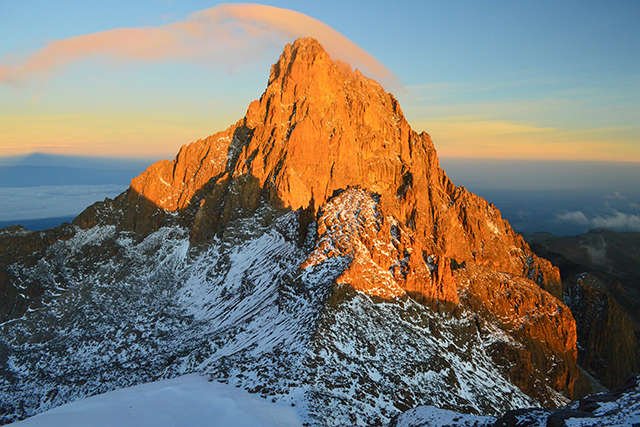
Mount Kenya is one of the most beautiful and remarkable mountains in Africa. Located in central Kenya, this magnificent mountain is famous for its dramatic peaks, spectacular landscapes, unique wildlife, ancient glaciers, and breathtaking natural scenery. Standing at approximately 5,199 meters (17,057 feet) above sea level, Mount Kenya is the second-highest mountain in Africa, after Mount Kilimanjaro in Tanzania.
Mount Kenya is much more than a geographical landmark. It is an important natural treasure, a UNESCO World Heritage Site, a source of inspiration for travelers, and a significant part of Kenya’s cultural and environmental heritage. Its snow-covered peaks, green mountain forests, alpine valleys, rocky cliffs, and clear mountain lakes create an extraordinary environment that attracts climbers, hikers, photographers, researchers, and nature lovers from around the world.
The mountain is located near the equator, making its permanent glaciers and snow-covered summits particularly interesting. Despite its tropical location, the highest parts of Mount Kenya experience extremely cold conditions. The mountain also supports several different ecosystems, including tropical forests, bamboo vegetation, heathlands, and alpine environments.
Mount Kenya is an important destination for adventure tourism and environmental research. Visitors can explore its national park, observe rare wildlife, discover beautiful landscapes, and learn about the ecological importance of mountain environments.
This comprehensive guide explores Mount Kenya’s location, geographical features, history, climate, wildlife, vegetation, climbing routes, tourism opportunities, cultural significance, conservation challenges, and many other interesting facts.
1. Where Is Mount Kenya Located?
Mount Kenya is located in central Kenya, an East African country known for its diverse wildlife, beautiful national parks, and remarkable landscapes. The mountain lies approximately 150 kilometers northeast of Nairobi, Kenya’s capital city.
It is situated close to the equator, which makes its climate and natural environment especially interesting. Although the surrounding region experiences a generally tropical climate, temperatures become significantly colder as elevation increases.
Mount Kenya is surrounded by several counties, including:
- Nyeri County
- Meru County
- Kirinyaga County
- Embu County
- Tharaka-Nithi County
The mountain forms part of the central highlands of Kenya and dominates the surrounding landscape. Its massive volcanic structure can be seen from considerable distances on clear days.
Mount Kenya National Park protects much of the mountain’s important natural environment. The protected area includes mountain forests, alpine vegetation, glaciers, valleys, rivers, and other remarkable geographical features.
The mountain’s location makes it accessible from several parts of Kenya. Visitors commonly travel from Nairobi before continuing toward towns and park entrances near the mountain.
Because of its location, Mount Kenya is an important destination for domestic and international tourism.
2. How Tall Is Mount Kenya?
Mount Kenya reaches an elevation of approximately 5,199 meters (17,057 feet) above sea level at Batian, its highest summit.
It is the second-highest mountain in Africa, making it one of the continent’s most important geographical landmarks.
The mountain has three principal peaks:
- Batian: Approximately 5,199 meters.
- Nelion: Approximately 5,188 meters.
- Point Lenana: Approximately 4,985 meters.
Batian and Nelion are the mountain’s highest rocky summits. They are technically challenging climbing destinations that require suitable mountaineering experience and equipment.
Point Lenana is lower but is the most popular trekking summit. It is generally more accessible to experienced hikers who follow established routes with appropriate preparation and guidance.
The differences in elevation create several distinct climatic and ecological zones. Lower slopes support dense forests, while higher elevations contain alpine vegetation, exposed rocks, and glacial landscapes.
The impressive height of Mount Kenya makes it an important natural laboratory for studying mountain climates, biodiversity, and environmental changes.
3. Geological Formation of Mount Kenya
Mount Kenya is an extinct stratovolcano that formed millions of years ago through volcanic activity.
Its geological history began during a period when magma rose from deep beneath the Earth’s surface and reached the upper crust. Repeated volcanic eruptions gradually built a massive volcanic mountain.
Over millions of years, erosion, weathering, and glacial activity changed its original volcanic structure.
The mountain’s original volcanic summit was much higher than its present-day peaks. Scientists believe that its original elevation may have exceeded 7,000 meters.
Long periods of erosion removed significant portions of the volcanic structure, creating the dramatic peaks and valleys visible today.
The mountain contains different types of volcanic rocks, including basalt and other igneous materials.
Its central region contains steep rocky towers, ridges, cliffs, and deep valleys. These geological features provide evidence of the powerful natural processes that shaped the mountain.
Glaciers also played an important role in forming the mountain’s landscape. Moving ice gradually carved valleys and modified rocky surfaces.
Today, Mount Kenya is an important location for geological research because it provides valuable information about volcanic activity, erosion, and long-term environmental change.
4. The Three Main Peaks of Mount Kenya
Mount Kenya is famous for its three principal summits: Batian, Nelion, and Point Lenana.
Each peak has different geographical characteristics and attracts different types of mountain visitors.
Batian Peak
Batian is the highest summit of Mount Kenya, reaching approximately 5,199 meters above sea level.
It is a dramatic rocky peak located in the central part of the mountain. Its steep walls, exposed ridges, and challenging climbing conditions make it an important destination for experienced mountaineers.
Batian is named after a traditional Maasai leader.
Climbing this summit generally requires technical rock-climbing experience, appropriate equipment, careful planning, and professional guidance.
Nelion Peak
Nelion is the second-highest summit, standing at approximately 5,188 meters.
It is located close to Batian and is separated from it by a narrow gap known as the Gate of the Mists.
The two peaks create one of the most recognizable mountain landscapes in Africa.
Nelion is also a technically demanding climbing destination. Its steep rock formations and high-altitude environment require advanced mountaineering skills.
The summit offers remarkable views of surrounding mountain landscapes when weather conditions are favorable.
Point Lenana
Point Lenana reaches approximately 4,985 meters above sea level.
Unlike Batian and Nelion, Point Lenana is a popular trekking destination. Many visitors choose this summit because it offers an opportunity to experience the spectacular high-altitude environment of Mount Kenya without undertaking the same technical climbing challenges associated with the higher peaks.
The summit provides impressive views of surrounding valleys, rocky peaks, glaciers, and alpine landscapes.
Point Lenana is particularly popular among hikers who want to experience a high mountain adventure in East Africa.
5. History of Mount Kenya
Mount Kenya has a fascinating history involving geological development, traditional communities, European exploration, scientific research, and modern conservation.
For centuries, the mountain has been an important landmark for communities living in the surrounding regions.
Long before modern geographical exploration, local communities were familiar with the mountain and its natural resources.
The mountain was particularly significant to the Kikuyu people, who traditionally regarded it as a sacred place associated with Ngai, the creator in their traditional belief system.
The Embu, Meru, and other communities also developed important cultural relationships with the surrounding mountain environment.
In the nineteenth century, European explorers began documenting Mount Kenya in greater detail.
The German missionary Johann Ludwig Krapf reported seeing a snow-covered mountain near the equator in 1849. His account attracted considerable attention because many people outside East Africa found the idea of permanent snow near the equator surprising.
Later expeditions improved geographical understanding of the mountain.
In 1899, the British explorer Halford Mackinder led an expedition that achieved the first recorded ascent of Batian.
This expedition became an important event in the history of African mountaineering.
During the twentieth century, Mount Kenya attracted increasing attention from climbers, scientists, conservationists, and tourists.
The establishment of Mount Kenya National Park helped protect its extraordinary natural environment.
In 1997, Mount Kenya National Park and the surrounding forest reserve were recognized as a UNESCO World Heritage Site.
This international recognition highlighted the mountain’s outstanding natural beauty, biodiversity, and ecological importance.
6. Mount Kenya National Park
Mount Kenya National Park is one of Kenya’s most important protected natural areas.
It was established to conserve the mountain’s unique ecosystems, wildlife, vegetation, glaciers, and geographical features.
The national park protects a wide range of environments, from lower mountain forests to high-altitude alpine landscapes.
Visitors can experience dramatic scenery, mountain lakes, waterfalls, valleys, and unusual vegetation.
The park is especially important for biodiversity conservation.
Its forests provide habitats for elephants, buffaloes, monkeys, antelopes, and many bird species.
Higher elevations support specialized plants and animals that have adapted to cold temperatures and challenging environmental conditions.
The park also protects important water catchment areas. Rainfall and melting snow contribute to rivers that support agriculture, communities, and ecosystems in surrounding regions.
Tourism plays an important role in the local economy. Visitors contribute through park entry fees, accommodation, transportation, guiding services, and other tourism-related activities.
Mount Kenya National Park is therefore important for both environmental protection and sustainable economic development.
7. UNESCO World Heritage Site
Mount Kenya received UNESCO World Heritage recognition in 1997.
The designation recognizes the mountain’s exceptional natural features and ecological importance.
The protected property includes Mount Kenya National Park and surrounding forest areas.
UNESCO recognition highlights several important characteristics.
First, Mount Kenya contains spectacular natural scenery. Its dramatic peaks, glacial valleys, rocky formations, and mountain forests create a landscape of exceptional beauty.
Second, the mountain supports remarkable biodiversity. Different elevation zones provide habitats for a wide variety of plants and animals.
Third, its ecosystems are important for water conservation and regional environmental stability.
The mountain’s forests help regulate water flow, reduce soil erosion, and support surrounding communities.
International recognition also encourages research, conservation funding, environmental education, and responsible tourism.
However, UNESCO status does not automatically eliminate environmental threats. Continued conservation efforts are necessary to protect the mountain’s natural heritage.
8. Climate of Mount Kenya
Mount Kenya has a highly varied climate because of its great elevation and location near the equator.
The lower slopes generally experience relatively warm conditions, while the highest elevations can become extremely cold.
Temperature, rainfall, wind, and cloud cover change significantly across different elevations.
The mountain generally has two main rainy seasons associated with Kenya’s regional climate patterns.
The long rains usually occur around March to May, while the short rains commonly occur around October to December. Actual conditions vary from year to year.
The mountain’s lower forest zones receive considerable rainfall, supporting dense vegetation and diverse wildlife.
Higher elevations experience colder conditions, stronger winds, and occasional snowfall.
Temperatures near the summit can fall below freezing, particularly at night.
The mountain’s tropical location creates unusual daily temperature variations. Visitors may experience relatively mild daytime sunshine followed by very cold nighttime conditions.
Weather conditions can change quickly. Clouds, rain, strong winds, and reduced visibility can affect mountain travel.
Understanding these climatic conditions is essential for anyone planning to visit Mount Kenya.
9. The Glaciers of Mount Kenya
One of the most remarkable features of Mount Kenya is its glaciers.
Although the mountain is located near the equator, its highest elevations have historically supported permanent ice.
These glaciers developed because temperatures at high elevations remain sufficiently cold to preserve ice over long periods.
Mount Kenya has several named glaciers, including:
- Lewis Glacier
- Tyndall Glacier
- Darwin Glacier
- Gregory Glacier
- Forel Glacier
- Diamond Glacier
These glaciers are important geographical and scientific features.
They influence the mountain’s landscape and provide evidence of historical climate conditions.
However, Mount Kenya’s glaciers have experienced significant retreat over the past century.
Rising temperatures, changing precipitation patterns, and other environmental factors have contributed to their reduction.
Scientists study these glaciers to understand regional climate change and the future of tropical mountain environments.
The decline of mountain ice is also important for water resources, ecosystems, and environmental planning.
Protecting surrounding forests and reducing broader climate-related pressures are essential parts of long-term conservation.
10. Vegetation Zones of Mount Kenya
Mount Kenya contains several vegetation zones because of its changing elevation and climate.
Each zone supports different types of plants and ecological communities.
Lower Mountain Forest
The lower slopes contain montane forests with a wide variety of trees and other vegetation.
These forests provide shelter and food for numerous animal species.
They also help regulate water flow and protect the soil.
Bamboo Forest
Bamboo vegetation occurs in parts of the mountain’s forest belt.
Bamboo forests provide important habitats and contribute to the mountain’s ecological diversity.
Hagenia-Hypericum Zone
At higher elevations, forests gradually transition into open woodland and vegetation dominated by species adapted to cooler conditions.
Hagenia trees and Hypericum plants are characteristic examples of vegetation found in some parts of this transition zone.
Moorland Zone
The mountain’s moorlands contain unusual vegetation adapted to cold nights, strong sunlight, and significant temperature changes.
Giant groundsels and giant lobelias are among the most recognizable plants in this environment.
Alpine Zone
The highest vegetation zone contains sparse plants, grasses, mosses, lichens, and other specialized species.
Plant growth becomes limited because of low temperatures, strong winds, and thin soils.
These vegetation zones make Mount Kenya an important destination for botanical research and nature observation.
11. Giant Plants of Mount Kenya
Mount Kenya is famous for its unusual giant plants.
Some of these plants have developed remarkable adaptations to survive in the mountain’s high-altitude environment.
Giant groundsels are among the most recognizable examples.
These plants belong to the genus Dendrosenecio and can develop large trunks and clusters of leaves.
Their distinctive appearance creates an almost prehistoric landscape in certain mountain valleys.
Giant lobelias are another remarkable group of plants.
They have adapted to extreme temperature differences between daytime and nighttime conditions.
Some species develop special structures that help protect their growing tissues from cold temperatures.
These unusual plants are important examples of evolutionary adaptation.
They also contribute to the distinctive appearance of Mount Kenya’s alpine landscapes.
Botanists and researchers study these plants to understand how vegetation responds to extreme environmental conditions.
12. Wildlife of Mount Kenya
Mount Kenya supports a rich variety of wildlife.
Its forests, grasslands, bamboo zones, and alpine environments provide habitats for numerous mammals, birds, reptiles, and insects.
Wildlife distribution changes according to elevation and habitat conditions.
Some animals prefer dense forests, while others live in open mountain vegetation.
The mountain’s protected ecosystems are especially important for species that depend on natural forest habitats.
Wildlife observation is one of the attractions of visiting Mount Kenya National Park.
Although animals are not always easy to see, visitors may encounter evidence of their presence through tracks, sounds, and movement in the forest.
The mountain’s biodiversity also makes it important for scientific research and conservation.
13. Mammals Found Around Mount Kenya
Several mammal species live in the forests and surrounding ecosystems of Mount Kenya.
African Elephants
African elephants are among the most recognizable animals found in the mountain’s forest habitats.
They are large herbivores that play important ecological roles.
Elephants influence vegetation patterns, disperse seeds, and help shape forest environments.
African Buffaloes
African buffaloes are powerful herbivores that commonly inhabit forest edges and grassland areas.
They generally live in groups and depend on suitable vegetation and water sources.
Black-and-White Colobus Monkeys
Colobus monkeys are known for their distinctive black-and-white fur and long tails.
They spend much of their time in trees and feed mainly on leaves and other plant materials.
Sykes’ Monkeys
Sykes’ monkeys are another primate species found in East African forest environments.
They are active animals that feed on fruits, leaves, and other natural food sources.
Bushbucks
Bushbucks are forest-dwelling antelopes that prefer areas with thick vegetation.
Their ability to remain hidden makes them difficult to observe.
Hyenas and Leopards
Large carnivores, including leopards and hyenas, occur in the wider mountain region.
They are generally secretive and are rarely seen by ordinary visitors.
These mammals contribute to the ecological balance of Mount Kenya’s natural environments.
14. Birdlife of Mount Kenya
Mount Kenya is an excellent destination for birdwatching.
Its different vegetation zones support a wide range of bird species.
Birds are found in the mountain forests, open moorlands, and surrounding landscapes.
Some species are associated with particular habitats, while others move between different elevation zones.
The African crowned eagle is one of the notable birds associated with forest habitats in the region.
Sunbirds are also important members of the mountain’s birdlife.
They are often recognized by their colorful appearance and feeding habits.
Other birds found in the wider region include turacos, hornbills, starlings, and various mountain forest species.
Birdwatching can be particularly rewarding during periods of increased bird activity.
Visitors interested in ornithology should bring suitable binoculars and a field guide.
Protecting mountain forests is essential for maintaining healthy bird populations.
15. Rivers and Water Resources
Mount Kenya is one of Kenya’s most important natural water towers.
Its forests, mountain soils, rainfall, and historical glaciers contribute to water resources used by surrounding communities.
Several rivers originate from the mountain.
Important rivers associated with Mount Kenya include the Tana River and Ewaso Ng’iro system.
The Tana River is Kenya’s longest river and plays an important role in agriculture, hydropower generation, and water supply.
The mountain’s forests help regulate the movement of water through the landscape.
Healthy forest ecosystems reduce soil erosion and help maintain water quality.
They also support the gradual release of water into streams and rivers.
These benefits are especially important during periods when rainfall is limited.
Mount Kenya’s water resources support millions of people directly or indirectly through regional river systems and related infrastructure.
This makes forest conservation an important national priority.
16. Mountain Lakes and Valleys
Mount Kenya contains beautiful lakes and valleys that add to its remarkable scenery.
These features were shaped by volcanic activity, erosion, and glacial processes.
The mountain’s valleys contain streams, waterfalls, vegetation, and rocky formations.
Some valleys are particularly famous for their unusual alpine plants.
The Teleki Valley is one of the best-known geographical features of Mount Kenya.
It is associated with spectacular mountain scenery and high-altitude vegetation.
The valley is named after the Hungarian explorer Sámuel Teleki.
Mountain lakes also attract visitors and researchers.
Their clear water and dramatic surroundings make them important features of the mountain’s natural landscape.
Lake Michaelson is one of the notable lakes in the mountain region.
These lakes and valleys provide important habitats for specialized organisms and contribute to the mountain’s ecological diversity.
17. Popular Climbing and Trekking Routes
Mount Kenya has several established trekking and climbing routes.
Different routes provide different landscapes, difficulty levels, and experiences.
The most commonly discussed trekking routes include:
- Naro Moru Route
- Sirimon Route
- Chogoria Route
- Burguret Route
- Timau Route
Each route has its own characteristics.
The Naro Moru Route is known for its relatively direct approach toward the higher mountain areas.
The Sirimon Route is popular because of its scenic landscapes and gradual approach through different vegetation zones.
The Chogoria Route is particularly famous for its spectacular valleys, mountain lakes, cliffs, and dramatic scenery.
Some routes can be combined to create a longer trekking journey.
Visitors should select a route according to their fitness, experience, available time, weather conditions, and the latest park regulations.
Professional guides and established tourism operators can help visitors understand the requirements of different routes.
18. Naro Moru Route
The Naro Moru Route is one of the traditional approaches to Mount Kenya.
It is popular among trekkers because it provides access to the mountain’s higher regions.
The route passes through several ecological zones, allowing visitors to observe changes in vegetation and landscape.
The lower sections contain forest environments.
Higher sections gradually transition into open moorland and alpine terrain.
The route is known for its challenging sections and changing weather conditions.
Trekkers should allow sufficient time for acclimatization and should obtain current information before beginning their journey.
The Naro Moru approach is an important part of Mount Kenya’s established trekking network.
19. Sirimon Route
The Sirimon Route is another popular way to explore Mount Kenya.
It approaches the mountain from its northwestern side.
Many visitors appreciate this route because of its scenic landscapes and gradual elevation changes.
The route passes through forests, open mountain vegetation, and high-altitude environments.
It offers opportunities to observe different plant species and enjoy impressive views of surrounding valleys.
The route is frequently used by trekkers attempting Point Lenana.
Accommodation and camping arrangements vary according to the itinerary and current park conditions.
The Sirimon Route is often combined with another route to create a varied mountain experience.
20. Chogoria Route
The Chogoria Route is widely recognized for its spectacular scenery.
It approaches Mount Kenya from the eastern side.
The route offers beautiful views of cliffs, valleys, lakes, waterfalls, and unusual mountain vegetation.
Its dramatic landscapes make it one of the most attractive approaches for visitors interested in natural scenery.
The surrounding environment includes remarkable geological features created by erosion and glacial activity.
Many photographers and nature enthusiasts appreciate this route because of its variety of landscapes.
As with other mountain routes, weather conditions and trail circumstances can change.
Visitors should follow current park guidance and travel with appropriate local support.
21. The Best Time to Visit Mount Kenya
Choosing the right time to visit Mount Kenya is important for enjoying the mountain’s scenery and outdoor activities.
The mountain can be visited throughout the year, but weather conditions influence the overall experience.
The relatively drier periods are generally preferred for trekking.
January and February are commonly considered favorable months.
July through September can also offer suitable conditions, although weather varies across the mountain.
The rainy seasons generally occur around March to May and October to December.
During wetter periods, trails can become muddy, visibility may decrease, and mountain conditions can become more challenging.
However, rainfall can also make forests and vegetation especially beautiful.
Visitors should check recent weather forecasts and park information before traveling.
There is no guarantee of perfect weather in a high mountain environment.
Good preparation and flexibility are essential.
22. Tourism at Mount Kenya
Tourism is an important part of the economy surrounding Mount Kenya.
The mountain attracts international travelers, domestic visitors, adventure enthusiasts, researchers, and nature lovers.
Tourism activities include trekking, mountain climbing, wildlife observation, birdwatching, camping, photography, and cultural experiences.
Visitors can explore different areas of Mount Kenya National Park and surrounding conservation landscapes.
Local communities benefit from tourism through employment and business opportunities.
Tourism-related services include accommodation, transportation, restaurants, guiding, equipment support, and cultural activities.
Responsible tourism can help support conservation and local livelihoods.
Visitors should respect wildlife, follow park rules, avoid littering, and support legitimate local businesses.
23. Accommodation Near Mount Kenya
Several accommodation options are available around Mount Kenya.
These include hotels, lodges, guesthouses, campsites, and mountain huts.
The choice depends on a visitor’s budget, travel style, and planned activities.
Some visitors prefer comfortable accommodation in nearby towns.
Others choose lodges located closer to the national park.
Mountain trekking itineraries may include designated huts or camping arrangements.
Accommodation availability can change depending on the season and demand.
Travelers should confirm reservations and facilities before arriving.
Choosing accommodation near the intended park entrance can make transportation and trip planning easier.
24. How to Reach Mount Kenya
Most international visitors begin their journey in Nairobi.
Jomo Kenyatta International Airport is Kenya’s main international airport and an important entry point for travelers.
From Nairobi, visitors can continue toward towns surrounding Mount Kenya by road.
Common starting areas include Nanyuki, Naro Moru, Chogoria, and other nearby communities.
Travel time depends on the destination, road conditions, traffic, and weather.
Public transportation, private vehicles, and organized tour transfers may be available.
Visitors should arrange transportation before beginning a trekking itinerary.
It is also important to confirm the location of the correct park entrance because Mount Kenya has several access points.
25. Cultural Importance of Mount Kenya
Mount Kenya has deep cultural significance for communities living around it.
For the Kikuyu people, the mountain has traditionally been regarded as a sacred place.
In traditional beliefs, Mount Kenya is associated with Ngai, the creator.
The mountain is known as Kirinyaga in the Kikuyu language, a name commonly associated with brightness or a shining mountain.
Traditional cultural practices have historically connected the mountain with spirituality, identity, and the natural environment.
Other surrounding communities, including the Embu and Meru, also have cultural relationships with the mountain.
These traditions demonstrate that Mount Kenya is not simply a geographical feature.
It is also a meaningful part of local history and cultural heritage.
Visitors should respect these traditions and learn about the mountain through responsible cultural tourism.
26. Mount Kenya and Local Communities
Communities surrounding Mount Kenya depend on the mountain’s natural resources in many ways.
Agriculture is an important economic activity in the surrounding highlands.
The mountain’s water resources support farming, livestock, and household needs.
Forests also provide ecological benefits that contribute to local livelihoods.
Tourism creates employment opportunities for guides, porters, drivers, hospitality workers, and small businesses.
Local communities also participate in conservation activities.
Community-based conservation programs can help protect forests and wildlife while supporting sustainable development.
However, balancing economic development with environmental protection remains an important challenge.
Long-term cooperation between government agencies, local communities, conservation organizations, and tourism businesses is essential.
27. Environmental Importance of Mount Kenya
Mount Kenya plays a major role in maintaining regional ecological balance.
Its forests help regulate water systems, protect soil, store carbon, and provide habitats for wildlife.
Mountain forests are especially important because they influence the movement of water through surrounding landscapes.
They also help reduce erosion and protect river catchments.
The mountain supports different ecological zones that contain specialized plant and animal communities.
These ecosystems provide opportunities for scientific research and environmental education.
The mountain’s environmental importance extends far beyond its immediate geographical boundaries.
Healthy ecosystems on Mount Kenya contribute to the well-being of communities in surrounding regions.
28. Conservation Challenges Facing Mount Kenya
Despite its protected status, Mount Kenya faces several environmental challenges.
Some of the most important include climate change, forest degradation, habitat fragmentation, illegal resource use, invasive species, and increasing pressure from human activities.
These problems can affect biodiversity, water resources, and the long-term health of mountain ecosystems.
Climate Change
Rising temperatures have contributed to the retreat of Mount Kenya’s glaciers.
Changes in rainfall patterns can also influence vegetation, wildlife, and water availability.
Forest Degradation
Deforestation and unsustainable land use can reduce forest cover.
This affects wildlife habitats, soil stability, and water regulation.
Habitat Fragmentation
Human development and agricultural expansion can divide natural habitats into smaller areas.
Fragmentation may limit wildlife movement and reduce ecological connectivity.
Human-Wildlife Conflict
As human settlements and agricultural activities expand, interactions between people and wildlife can become more complicated.
Effective land management and conservation planning are important for reducing conflict.
Pollution and Waste
Tourism can create environmental pressure when visitors leave waste or fail to follow park regulations.
Responsible visitor behavior is essential for protecting sensitive mountain habitats.
29. Climate Change and the Future of Mount Kenya
Climate change is one of the most important long-term concerns affecting Mount Kenya.
The mountain’s glaciers have been shrinking over many decades.
Their retreat is a visible example of environmental changes occurring in tropical mountain regions.
Rising temperatures can also affect the distribution of vegetation.
Plants adapted to colder environments may experience changes in suitable habitat conditions.
Wildlife may also respond to changing food availability, vegetation patterns, and water resources.
Mountain ecosystems are particularly sensitive because species adapted to high elevations often have limited opportunities to move farther uphill.
Scientists continue studying Mount Kenya to better understand these changes.
Long-term monitoring can help conservation organizations develop appropriate strategies.
Reducing global greenhouse gas emissions is important for protecting mountain environments.
Local conservation measures, including forest protection and ecosystem restoration, can also strengthen environmental resilience.
30. Interesting Facts About Mount Kenya
Mount Kenya has many fascinating characteristics that make it one of Africa’s most remarkable mountains.
Here are some interesting facts:
- Mount Kenya is the second-highest mountain in Africa.
- Its highest summit is Batian, at approximately 5,199 meters.
- It is located close to the equator.
- It is an extinct stratovolcano.
- The mountain has three principal peaks: Batian, Nelion, and Point Lenana.
- Mount Kenya contains tropical mountain glaciers.
- It became a UNESCO World Heritage Site in 1997.
- Its forests support elephants, buffaloes, monkeys, and numerous bird species.
- It contains unusual giant plants adapted to high-altitude conditions.
- Several important rivers originate from its slopes.
- The mountain is an important source of water for surrounding communities.
- It has different vegetation zones according to elevation.
- Point Lenana is a popular trekking destination.
- The Chogoria Route is famous for its beautiful scenery.
- Mount Kenya has major cultural significance for the Kikuyu people.
These facts demonstrate why Mount Kenya is important from geographical, ecological, cultural, and tourism perspectives.
31. Mount Kenya Compared with Mount Kilimanjaro
Mount Kenya and Mount Kilimanjaro are two of the most famous mountains in Africa.
Both are located in East Africa and are known for their high elevations and remarkable landscapes.
However, they have several differences.
Mount Kilimanjaro is located in Tanzania and reaches approximately 5,895 meters.
Mount Kenya is located in Kenya and reaches approximately 5,199 meters.
Kilimanjaro is Africa’s highest mountain, while Mount Kenya is the second-highest.
Both mountains have volcanic origins and support different ecological zones.
Kilimanjaro is particularly famous for its large volcanic structure and popular trekking routes.
Mount Kenya is known for its dramatic rocky summits, glacial valleys, unusual alpine vegetation, and technical climbing opportunities.
Both mountains have experienced glacier retreat.
They are also important tourism destinations and valuable natural environments.
32. Photography Opportunities on Mount Kenya
Mount Kenya offers many opportunities for nature and landscape photography.
Its dramatic peaks, changing clouds, rocky cliffs, alpine vegetation, lakes, and forests create a wide variety of photographic subjects.
The mountain’s appearance changes throughout the day.
Morning light can reveal clear views of the major summits.
Cloud formations may create dramatic landscapes during the afternoon.
Sunrise and sunset can produce beautiful lighting conditions across mountain valleys and rocky formations.
Wildlife photography is another attraction.
Visitors may photograph birds, monkeys, antelopes, and other animals from suitable locations.
Photographers should respect park regulations and avoid disturbing wildlife.
Protecting natural habitats is more important than obtaining a photograph.
33. Scientific Research on Mount Kenya
Mount Kenya is an important location for scientific research.
Researchers study its geology, climate, glaciers, vegetation, wildlife, hydrology, and ecological processes.
The mountain provides valuable information about tropical mountain environments.
Its glaciers are especially useful for understanding historical climate patterns.
Botanists study the unusual plants that have adapted to high-altitude conditions.
Ecologists investigate how different species interact within mountain ecosystems.
Hydrologists examine the relationship between forests, rainfall, and river systems.
Climate researchers monitor environmental changes that may influence water resources and biodiversity.
Scientific research supports conservation planning and helps governments and organizations make informed environmental decisions.
34. Responsible Tourism Guidelines
Responsible tourism is essential for protecting Mount Kenya.
Visitors should understand that mountain environments can be sensitive to human activity.
Following basic environmental guidelines can help preserve the area.
Important recommendations include:
- Follow all national park regulations.
- Use authorized guides where required.
- Avoid disturbing wildlife.
- Carry personal waste back to designated disposal locations.
- Stay on established trails.
- Respect local traditions and cultural practices.
- Avoid damaging vegetation.
- Use designated camping areas.
- Follow fire restrictions.
- Support responsible local tourism businesses.
Visitors should also prepare carefully for changing weather and high-altitude conditions.
Responsible tourism benefits both the environment and the communities that depend on the mountain.
35. Safety and Preparation for Visitors
Mount Kenya is a high mountain environment, and visitors should prepare appropriately.
Altitude can affect people differently, even when they are physically active.
Acclimatization is important when traveling to higher elevations.
Visitors should avoid rushing their ascent and should pay attention to how they feel.
Mountain weather can change quickly.
Cold temperatures, rain, strong winds, and reduced visibility are possible.
Suitable clothing and reliable equipment are important.
Travelers should arrange appropriate food, drinking water, and accommodation.
Professional guides can provide valuable local knowledge and help visitors understand route conditions.
People with concerns about their ability to undertake high-altitude travel should seek appropriate professional advice before their trip.
The mountain should always be approached with respect and careful preparation.
36. Economic Importance of Mount Kenya
Mount Kenya contributes to the economy of the surrounding region in several ways.
Tourism is one of its most visible economic activities.
Visitors spend money on transportation, accommodation, food, guiding services, and other travel-related activities.
This creates employment opportunities for local residents.
Agriculture is another important activity supported by the mountain’s natural resources.
Water from the mountain supports agricultural production in surrounding areas.
Forests also provide environmental services that benefit the wider economy.
These include water regulation, soil protection, carbon storage, and biodiversity conservation.
Maintaining healthy ecosystems is therefore important for long-term economic stability.
37. Educational Value of Mount Kenya
Mount Kenya is an excellent subject for education.
Students can learn about volcanic formation, mountain ecosystems, climate zones, glaciers, biodiversity, and conservation.
Its geographical features provide examples of geological processes that have shaped the Earth’s surface.
Its vegetation zones demonstrate how environmental conditions change with elevation.
Its glaciers provide opportunities to study climate history and global warming.
The mountain’s cultural importance also offers lessons about the relationship between communities and natural landscapes.
Schools, universities, and research institutions can use Mount Kenya as a valuable educational case study.
Environmental education can help future generations understand the importance of protecting natural heritage.
38. Mount Kenya as an Adventure Tourism Destination
Mount Kenya is one of East Africa’s most recognized adventure tourism destinations.
Its landscapes attract people interested in trekking, climbing, camping, and nature exploration.
The mountain offers different experiences depending on a visitor’s abilities and interests.
Some people prefer forest walks and wildlife observation.
Others choose multi-day trekking journeys through alpine valleys.
Experienced climbers may be interested in its technical rocky summits.
Adventure tourism can also help visitors develop an appreciation for environmental conservation.
However, adventure activities should always be organized responsibly.
Visitors should respect mountain conditions, follow official guidance, and choose activities appropriate to their experience.
39. Why Mount Kenya Is Important to Kenya
Mount Kenya is an important national symbol and natural resource.
It represents the country’s geographical diversity, ecological richness, and cultural heritage.
Its forests provide water-related environmental services.
Its national park protects wildlife and important natural habitats.
Its tourism industry creates opportunities for local communities.
Its glaciers and alpine ecosystems support scientific research.
Its cultural traditions connect the mountain to the history and identity of surrounding communities.
Protecting Mount Kenya is therefore important for environmental, social, educational, and economic reasons.
The mountain is not simply a destination for tourists. It is a natural system that supports life and contributes to the well-being of many people.
40. The Future of Mount Kenya
The future of Mount Kenya depends on effective conservation, responsible tourism, scientific research, and cooperation between local communities and national institutions.
Climate change is expected to remain a major challenge.
Glacier retreat, changes in rainfall, and ecosystem shifts require continued scientific monitoring.
Forest protection is also essential.
Healthy forests support biodiversity, improve water regulation, and protect soil.
Tourism should be managed in ways that reduce environmental pressure while providing economic benefits.
Local communities should remain important partners in conservation planning.
Environmental education can also encourage visitors and residents to protect the mountain.
By combining scientific knowledge, community involvement, and sustainable management, Kenya can strengthen the long-term protection of this extraordinary natural landmark.
Conclusion
Mount Kenya is one of Africa’s most extraordinary natural landmarks. As the continent’s second-highest mountain, it is famous for its dramatic peaks, tropical glaciers, beautiful valleys, unusual alpine plants, diverse wildlife, and remarkable geographical history.
Its three principal summits, Batian, Nelion, and Point Lenana, create an impressive mountain landscape that attracts climbers and trekkers from around the world.
Beyond its physical beauty, Mount Kenya has enormous ecological, cultural, scientific, and economic importance. Its forests support wildlife and help maintain important water systems. Its alpine ecosystems contain specialized plants and animals. Its cultural traditions connect the mountain to the history of surrounding communities.
The mountain also faces important environmental challenges, particularly climate change, glacier retreat, and pressure on natural habitats.
Protecting Mount Kenya requires responsible tourism, effective conservation policies, scientific research, and cooperation with local communities.
For travelers, researchers, students, and nature enthusiasts, Mount Kenya offers an opportunity to discover one of the most remarkable mountain environments in the world.
Its natural beauty and ecological importance make it a treasured part of Kenya’s heritage and an essential landscape for future generations.
Frequently Asked Questions (FAQs)
1. Where is Mount Kenya located?
Mount Kenya is located in central Kenya, East Africa, approximately 150 kilometers northeast of Nairobi.
2. How tall is Mount Kenya?
Mount Kenya reaches approximately 5,199 meters (17,057 feet) at its highest summit, Batian.
3. Is Mount Kenya the highest mountain in Africa?
No. Mount Kenya is the second-highest mountain in Africa. Mount Kilimanjaro in Tanzania is the highest.
4. What are the three main peaks of Mount Kenya?
The three main peaks are Batian, Nelion, and Point Lenana.
5. Is Mount Kenya a volcano?
Yes. Mount Kenya is an extinct stratovolcano that developed through volcanic activity millions of years ago.
6. Does Mount Kenya have glaciers?
Yes. Mount Kenya has historically supported several glaciers, although they have significantly decreased in size over time.
7. Why is Mount Kenya famous?
Mount Kenya is famous for its high peaks, glaciers, alpine vegetation, wildlife, beautiful valleys, and UNESCO World Heritage status.
8. Can tourists visit Mount Kenya?
Yes. Tourists can visit Mount Kenya National Park for trekking, wildlife observation, nature exploration, and other permitted activities.
9. What is the easiest peak to trek on Mount Kenya?
Point Lenana is the most commonly visited trekking summit and is generally more accessible than the technical peaks of Batian and Nelion.
10. When is the best time to visit Mount Kenya?
January and February, as well as July through September, are commonly preferred periods for trekking, although weather conditions can vary.
11. What animals live on Mount Kenya?
Animals found in the mountain region include elephants, buffaloes, colobus monkeys, Sykes’ monkeys, bushbucks, and various bird species.
12. Why is Mount Kenya important to local communities?
The mountain provides water resources, supports agriculture, creates tourism opportunities, and has important cultural and spiritual significance.
13. Is Mount Kenya a UNESCO World Heritage Site?
Yes. Mount Kenya National Park and the surrounding forest reserve received UNESCO World Heritage recognition in 1997.
14. What is the most popular trekking route on Mount Kenya?
The Naro Moru, Sirimon, and Chogoria routes are among the best-known approaches to Mount Kenya.
15. Why are Mount Kenya’s glaciers disappearing?
Rising temperatures and changing climatic conditions have contributed to the retreat of its glaciers.
SEO Information
SEO Title: Mount Kenya Mountain: Complete Guide to Africa’s Second-Highest Peak
Meta Description: Discover Mount Kenya, Africa’s second-highest mountain. Explore its famous peaks, glaciers, wildlife, trekking routes, history, climate, and natural beauty.
Focus Keyword: Mount Kenya Mountain
Secondary Keywords:
- Mount Kenya
- Mount Kenya National Park
- Africa’s Second-Highest Mountain
- Mount Kenya Height
- Mount Kenya Peaks
- Mount Kenya Wildlife
- Mount Kenya Trekking
- Mount Kenya Climbing Routes
- Mount Kenya Glaciers
- Mount Kenya Tourism
Suggested URL Slug: mount-kenya-mountain
Article Category: Mountains and Geography
Suggested Tags: Mount Kenya, African Mountains, Kenya Tourism, Mountain Climbing, National Parks, Geography, Wildlife, Nature and Conservation